
During the night, in the villages on the rural outskirts of Istanbul, a smell arrives so strong that many families are forced to keep their windows closed even in summer. It would arrive, residents say, from the gigantic Silivri municipal landfill, where around 10 thousand tonnes of waste are disposed of every day.
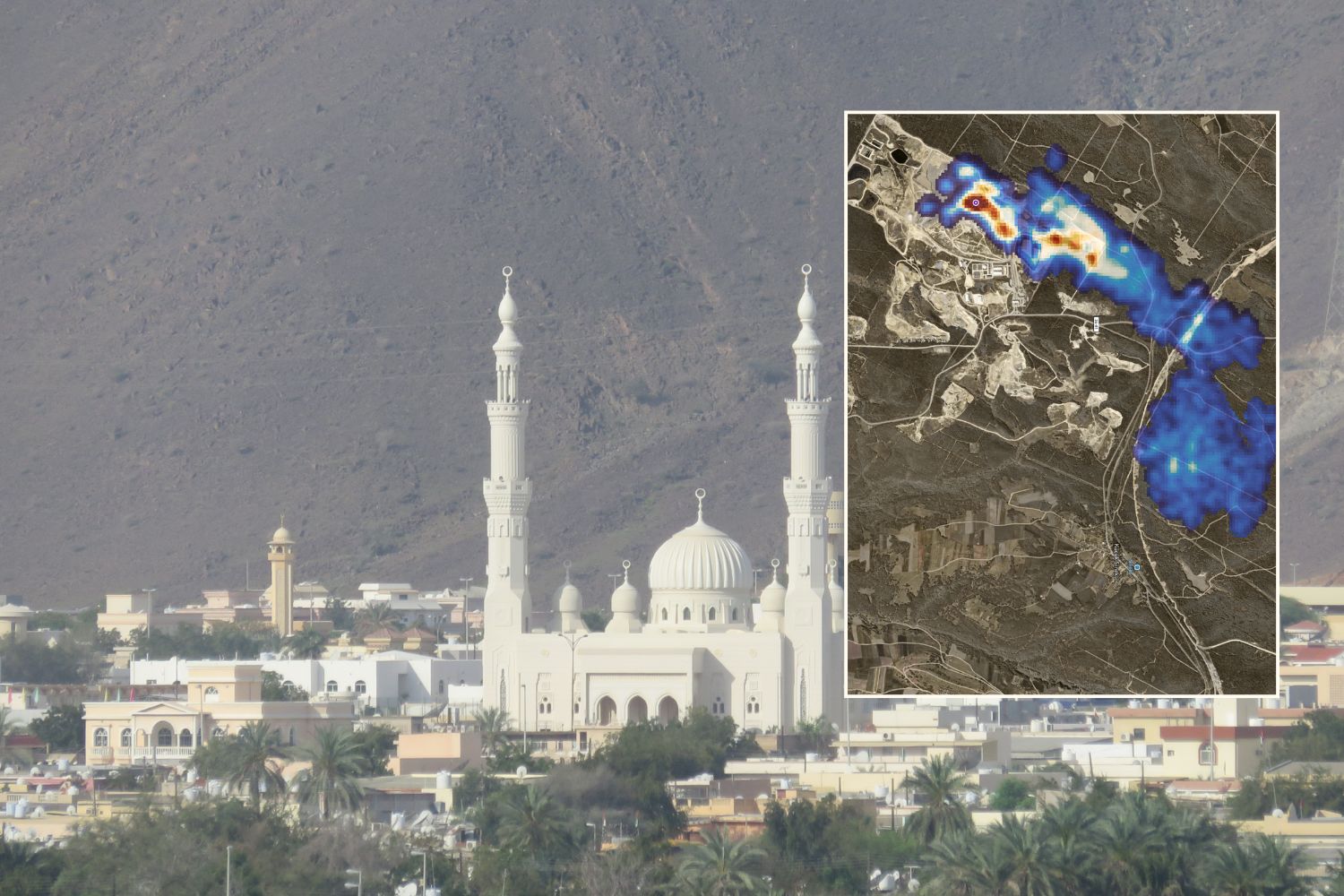
But what you breathe in the surrounding area is only the most obvious part of the problem: enormous quantities of methane, one of the most powerful greenhouse gases, are released from the landfill in volumes so high that they can be detected by satellites.
This was revealed by an investigation by the Guardian, based on satellite data from Carbon Mapper and the analysis of a group of researchers from the University of California at Los Angeles, UCLA. And the discovery comes at a particularly delicate moment: Turkey itself will host COP31, the next United Nations climate conference, in November and has indicated the reduction of methane emissions among the priorities of its agenda.
What happens in Silivri
The Silivri landfill appears to be the worst Turkish disposal site among those identified as “super-emittersAccording to the analysis, an average of 7.4 tons of methane would be released from the structure every hour. To give an idea of the size of the phenomenon, the impact on global warming would be comparable to that produced by approximately 1.5 million high-consumption SUVs.
The landfill has a plant that extracts approximately 6 thousand cubic meters of gas per hour to use it as fuel and produce energy. And not only that: another large landfill on the outskirts of Istanbul, in the Şile area, would release around 4 tonnes of methane per hour, with a climate impact comparable to that of around 800 thousand SUVs. Other large plumes were detected by satellite between İzmir, Ankara and Antalya.
@Carbon Mapper
Cara Horowitz, who leads the UCLA Stop Methane project, called some of the observed rates “disconcerting in size“, explaining that it is “some of the largest single anthropogenic sources of methane emissions in the world”.
Methane is produced when organic waste – especially food waste – decomposes in the absence of oxygen in landfills. It is a much more potent greenhouse gas than CO2 in the short term and contributes significantly to global warming. Rapidly reducing emissions is considered by experts to be one of the most effective tools for slowing down the rise in temperatures in the coming decades. Precisely for this reason, methane cutting is often defined as a sort of climate “emergency brake”: unlike CO2, which can remain in the atmosphere for centuries, methane is removed much more quickly.
The problem is that its atmospheric concentrations have increased rapidly since 2007, fueling scientists’ concerns about the risk of further accelerating global warming.
Turkey’s contradiction
The issue takes on particular weight because in a few weeks Turkey will host COP31 in Antalya. The Minister of the Environment Murat Kurumdesignated president of the conference, indicated the reduction of methane and waste management among the priority themes of the Turkish climate agenda.
Reducing methane emissions is one of the fastest and most effective strategies to slow the rise in temperatures in the short term – wrote Kurum in a letter addressed to the participating countries, indicating the waste sector as one of the areas with the greatest potential for immediate intervention.
Furthermore, Turkey is not among the countries that have joined the Global Methane Pledge, the international initiative that aims to reduce global methane emissions by 30% by 2030.
The problem, however, is not completely unknown to the Turkish authorities. Suffice it to say that in the official inventory of greenhouse gas emissions presented by Turkey to the United Nations, the uncontrolled release of methane from landfills is indicated as one of the main contributions to emissions from the waste sector. Yet, the monitoring system introduced by the recent Turkish emissions legislation mainly takes into account CO2 and does not include facilities that use biomass, such as landfills.
The result is a vacuum on one of the gases that the country, in view of COP31, claims it wants to reduce most quickly.
A paradox therefore opens up for Turkey that is difficult to ignore: the country that wants to bring methane cutting to the center of COP31 hosts, at the same time, some of the landfills with the largest losses ever observed by satellites.
And precisely for this reason, experts say, intervening could transform a huge critical issue into one of the most concrete opportunities to demonstrate that climate commitments can be translated into real actions.
