
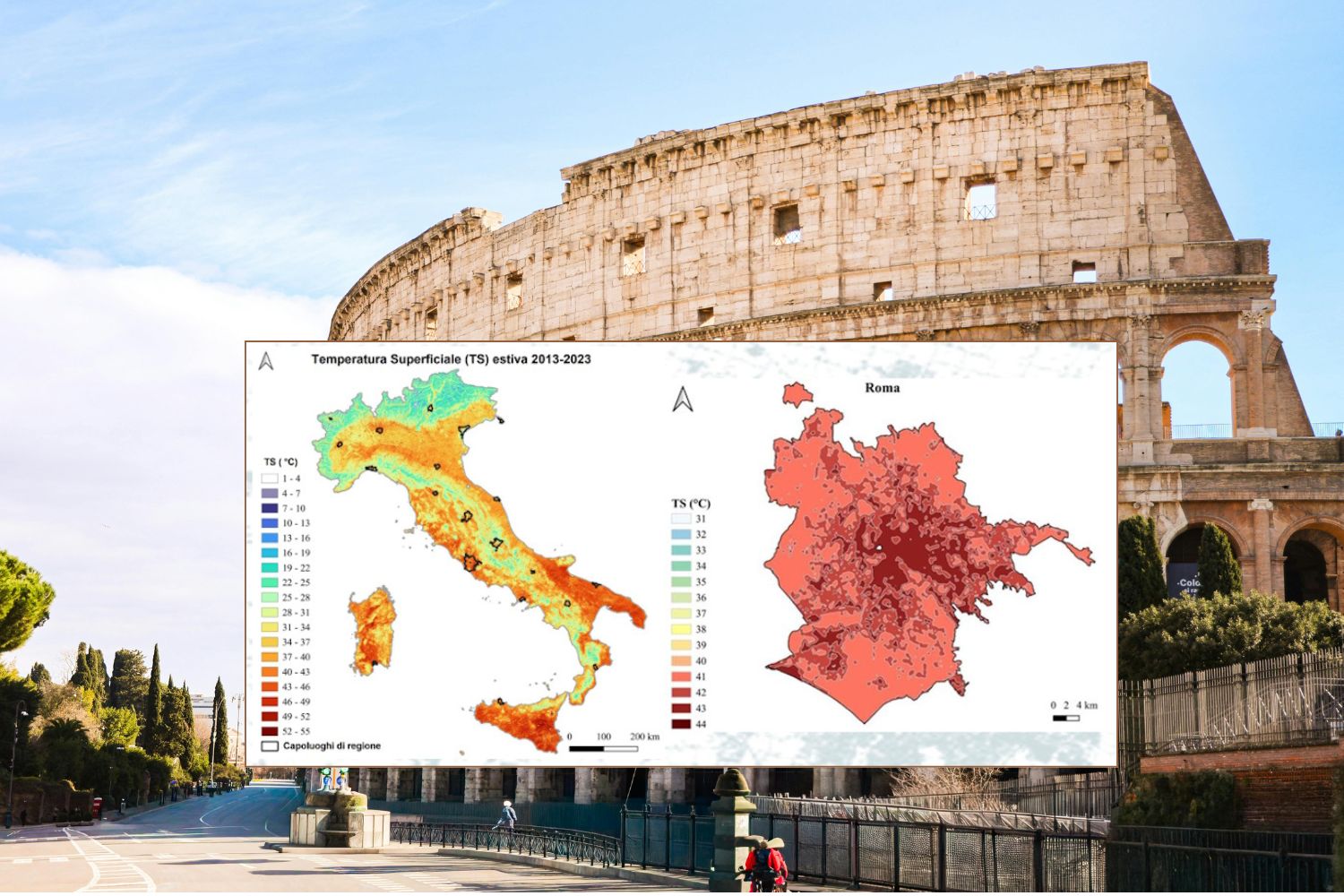
Cities can become much cooler, even without resorting to expensive technologies. Planting trees, increasing green spaces and replacing asphalt with pavements capable of reflecting heat could lower urban temperatures by up to 4°C in the hottest hours of the day.
The Mirificus project demonstrates this (Monitoring of reforestation interventions for the urban heat island via satellites), coordinated by the Institute for Bioeconomy of the National Research Council (Cnr-Ibe) with the collaboration of Ispra and the support of the Italian Space Agency (ASI).
Through satellite simulations, the researchers essentially examined the effects of urban reforestation and depaving interventions in two sample areas of Rome and Florence, showing how possible it is to mitigate one of the most evident effects of the climate crisis in cities.
@Mirificus
Up to 4 degrees less in the hottest hours
The simulations involved the Settecamini neighborhood in Rome and the Mercafir-Piazza Artom area in Florence. Here, the introduction of new trees, the creation of green spaces and the use of “cold” paving, i.e. materials capable of absorbing less heat than traditional asphalt, have produced significant results.
@Mirificus
In the hours between 9am and 3pm, when the sun is most intense, the surface temperature drops by more than 4°C compared to the current situation. But the benefit is not limited to the most critical moments: throughout the entire day the cooling remains stable, remaining between 2 and 2.2°C, a sign that the effects are continuous and not temporary.
@Mirificus
Italian cities are increasingly hotter
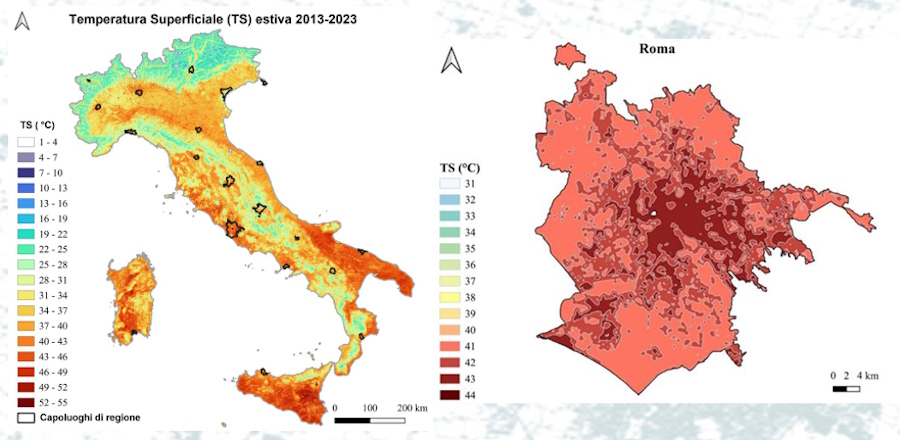
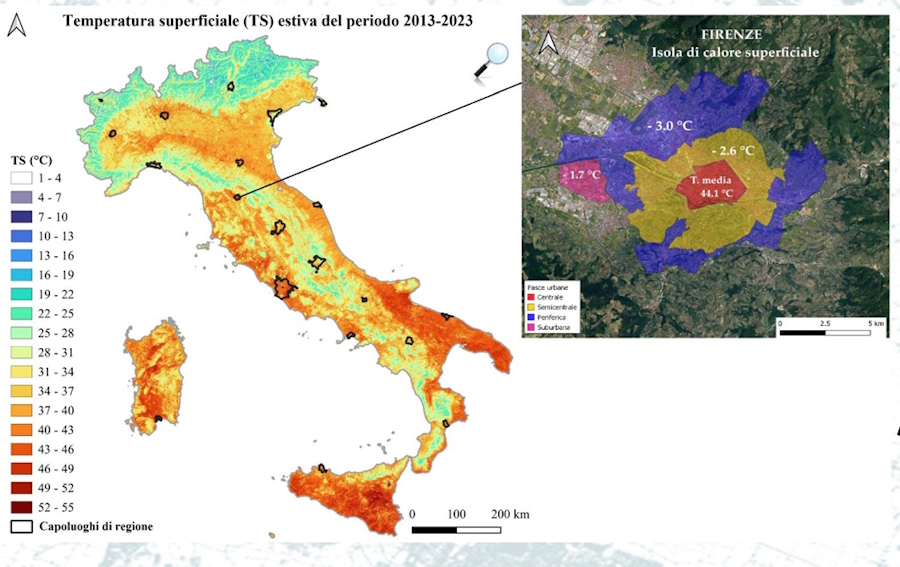
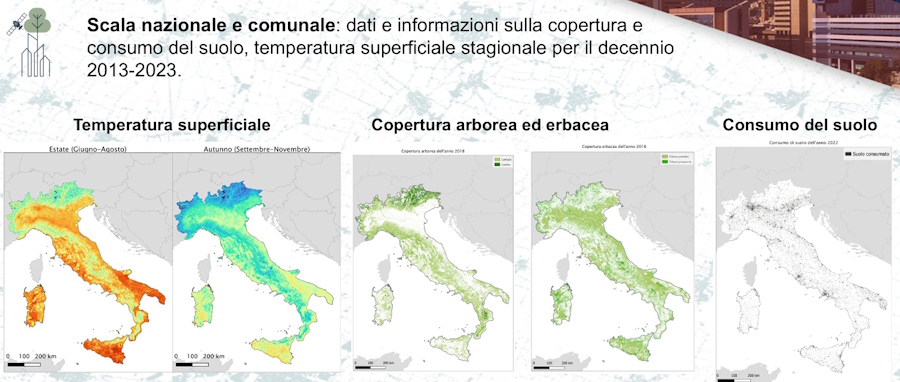
The project also reconstructed an archive of surface temperatures recorded between 2013 and 2023, offering a snapshot of urban heat islands in Italy. The data shows how almost all the main capitals now exceed 40°C surface temperatures during the summer:
The surrounding rural areas are on average 5.6°C cooler, with differences reaching as much as 9.4°C in some cities, such as Naples.
@Mirificus
The reason is known: concrete, asphalt and impervious surfaces accumulate and release heat, while the scarcity of trees and natural soil reduces the city’s ability to cool itself.
Not just green
The study also highlights another aspect that is often underestimated: the way neighborhoods are built directly affects temperature. Researchers speak of a real “climate DNA” of cities, determined by the layout of buildings, their height, building density and the materials used.
In Florence, for example, neighborhoods characterized by compact buildings reach surface temperatures of around 44.6°C, while in areas with urban forests they drop to 35.9°C, with natural cooling of almost 9°C. In Rome, however, industrial areas with large asphalted surfaces and no vegetation reach temperatures as high as 57.2°C.
In short, with increasingly frequent and intense heat waves, Italian cities are called to rethink their urban development. The Mirificus results confirm what numerous scientific studies have been supporting for years: more trees, less concrete and surfaces capable of reflecting heat represent some of the most effective strategies for making cities more livable.
It’s not just about lowering the thermometer, but also about reducing health risks, improving air quality, limiting energy consumption for cooling buildings and increasing urban resilience in the face of a climate crisis that makes summers increasingly extreme
