
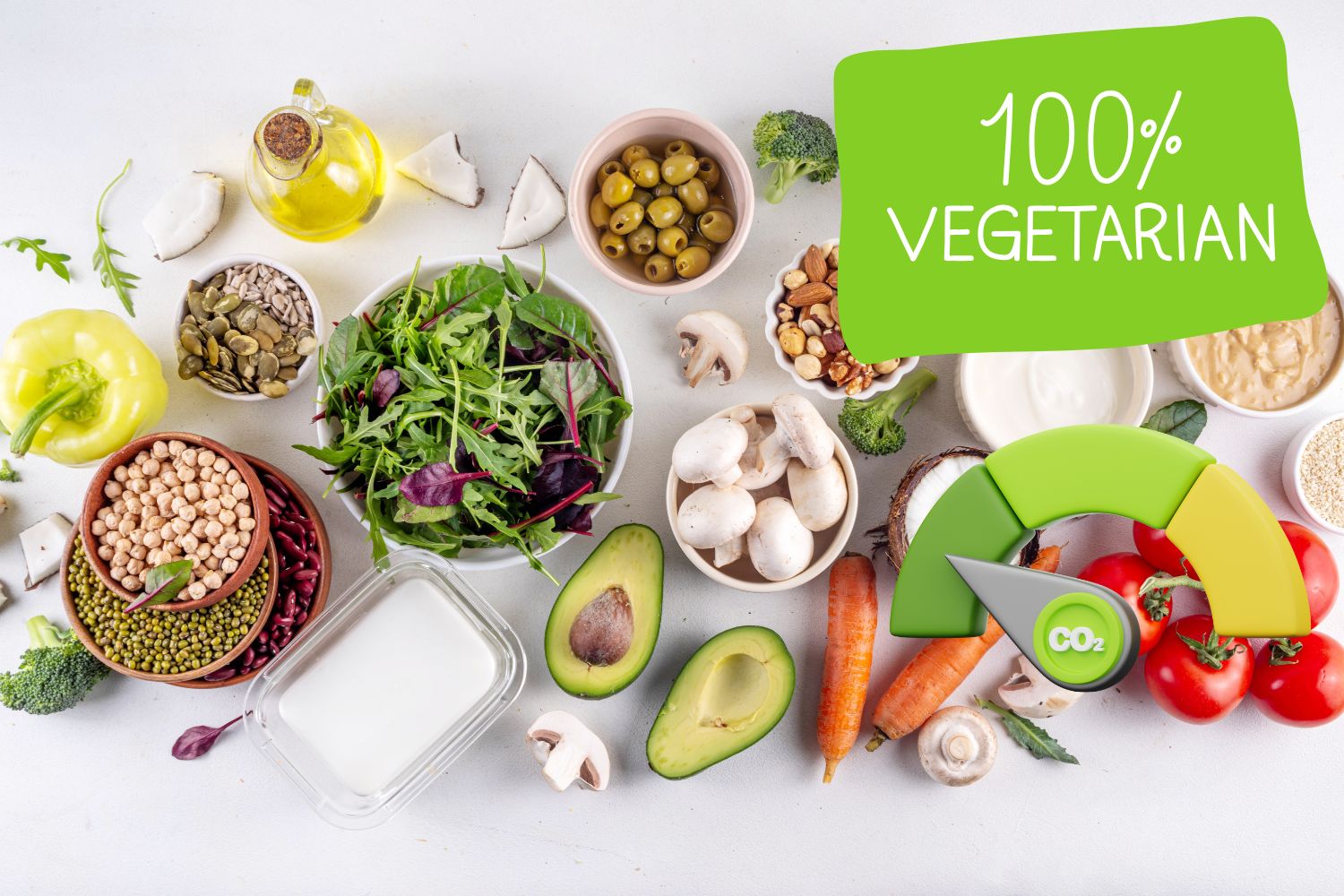
Eating more sustainably is no longer just an ethical choice: it is a concrete way to lighten the burden that each of us leaves on the planet. Research published in Frontiers in Nutrition has precisely calculated how much a vegan diet can reduce emissions, land consumption and even the water needed to produce the food we bring to the table.
Today only 1.1% of the world’s population follows a completely plant-based diet, but the numbers are growing: in Germany, for example, vegans doubled between 2016 and 2020; in the UK, the share rose to 4.7% in just two years. A choice that no longer concerns only personal well-being – given that abandoning the classic Western diet can reduce the risk of premature death by 20% – but also the health of the planet.
Less meat, more plants
The team led by researcher Noelia Rodríguez-Martín, from the University of Granada, compared four 2,000 calorie per day diets: Mediterranean omnivore, peach-vegetarian, ovo-lacto-vegetarian and vegan. Each menu included breakfast, lunch, dinner and snack, all balanced according to the guidelines of the European Food Safety Authority (EFSA) and the US National Academy of Medicine.
The results are clear: a vegan diet produces 46% less CO₂ than an omnivorous Mediterranean diet. Not only that: it consumes 33% less agricultural land and 7% less water. The other “intermediate” versions – vegetarian or with fish – also show important improvements, but the clearest difference is recorded when foods of animal origin are completely eliminated.
To evaluate the environmental impact, researchers used public databases such as AGRIBALYSE and FoodData Central, calculating every indicator: from climate change to water eutrophication, up to the toxicity of ecosystems. Each “veg” meal allows you to save over half of the emissions and pollutants generated by a traditional menu. In other words, if an omnivorous diet generates on average 3.8 kg of CO₂ per day, a vegan one produces just 2.1.
Health, balance and some extra attention
From a nutritional point of view, the menus studied were complete and balanced. Only three nutrients require more attention: vitamin D, vitamin B12 and iodine, which can be easily integrated with fortified foods or supplements, as Rodríguez-Martín explains:
Our analyzes show that all plant-based diets provide necessary nutrients and significantly reduce the impact on the environment and human health. You don’t need to be 100% vegan to make a difference. Even small steps towards a more plant-based diet reduce emissions and help save precious resources. Every plate with more plants is a step towards a healthier planet.
Basically, every meal counts. Even choosing to reduce meat and dairy products — without eliminating them completely — is already a way to contribute to a real and measurable change.
You might also be interested in:
