
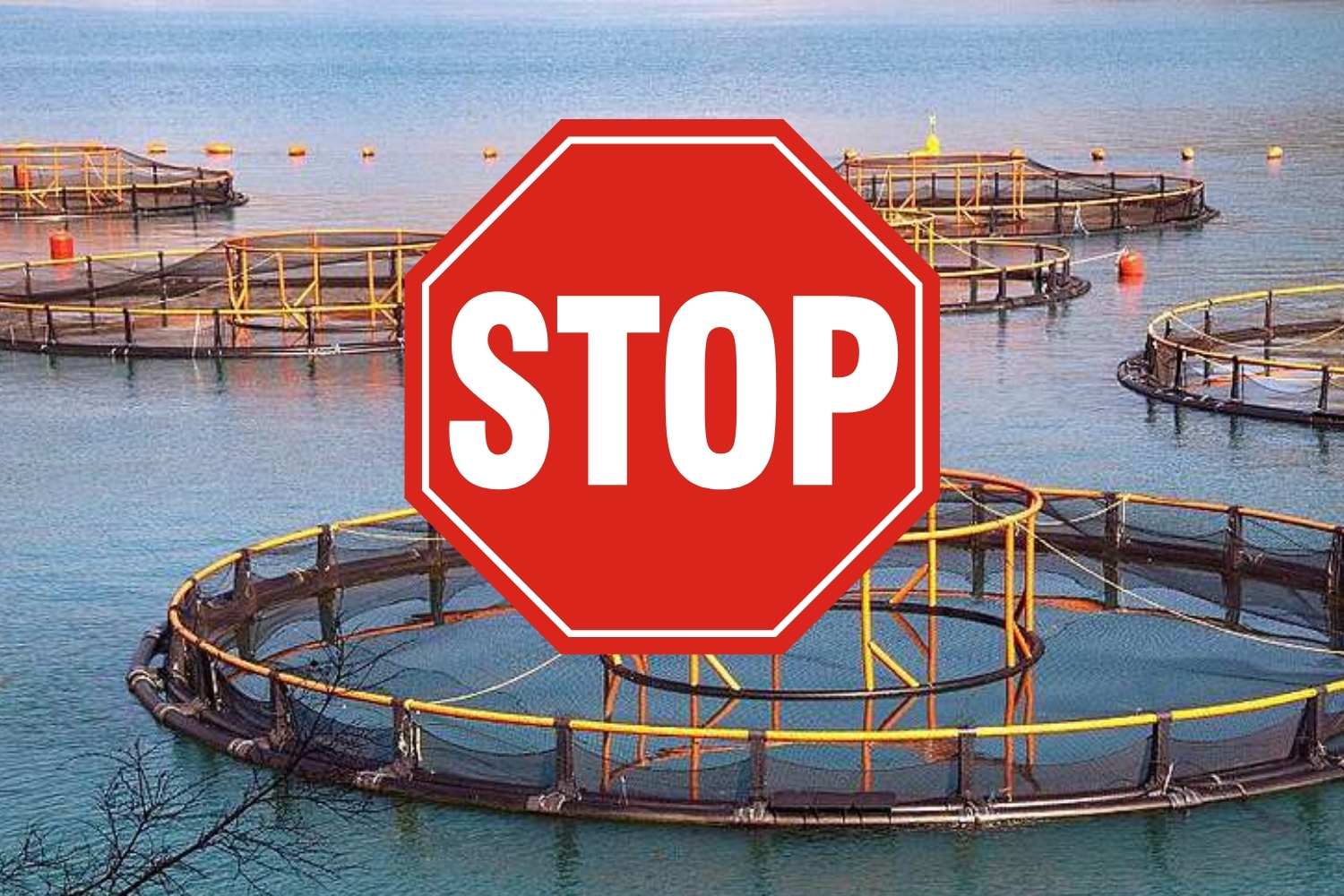
Good news comes from Battipaglia where the municipal administration has canceled the concession issued to Tuna Sud for a red tuna breeding. The company wanted to occupy almost 50,000 square meters of sea, about seven kilometers from the coast, for its fattening system. But apparently the area was not even the responsibility of the Municipality.
It all started with the denunciation of Greenpeace, who already in his report “Red gold hunt“He had highlighted how clear and transparent rules for tuna farms are missing.
After the checks requested by the mayor Cecilia French and the commissioner Vincenzo Chiera, it emerged that the statements of the company did not correspond to reality.
It is curious that only after the publication of our relationship, in which in clear letters have we denounced the lack of mechanisms of transparency in this sector, the administration has moved to verify the correctness of the authorization already granted – comments Valentina di Miccoli, the Campaigner Sea of Greenpeace Italy.
The return of red tuna and the risks of intensive farms
In recent years, thanks to international limits on fishing and the commitment of environmental associations, the population of red tuna in the Mediterranean has started to recover, going from almost extinction to minimum risk. An important result, the result of years of commitment.
But now this fragile recovery risks being compromised by the new intensive farms. According to the official database of the Combet, in Italy there are at least 13 registered systems, but only a few have clear information on their size and productive capacity. Four plants, those with larger production, cover 80% of the tuna bred in the country and are registered to the Ministry of Agriculture, although not operational. A paradox that leaves doubts about the real functioning of the system.
Alessandro Giannì, director of the Greenpeace campaigns, explains:
It seems that the Comcot database is being used as a sort of booking for future systems, without transparency or control.
The case of Battipaglia
The Battipaglia case confirms these suspicions. Tuna Sud, the beneficiary company of the concession, has no employees or turnover and has obtained authorization without any environmental evaluation.
The plant was expected about seven kilometers from the coast, in a stretch of sea already subjected to strong environmental pressures. In that area, in fact, bathing was often prohibited due to the excessive presence of intestinal enterococci and Escherichia coli, caused by the discharges of the Tusciano river treated inefficient.
The concession involved six cages in a 48,900 square meter mirror of water, just below the 50,000 square meters threshold that would have made an environmental impact assessment (via) mandatory.
They were not available, or had not been shared, public details on the project regarding the management plan and the density foreseen within the cages. This lack of transparency had worried and not a little residents, above all because the system could also have compromised the nearby Lido Lago, which in times of maximum diffusion of the Ascorichia coli often remained one of the few bathing areas in the area.
Greenpeace reiterates that the sea is a common good and that the management of intensive farms must be regulated in a transparent and shared way. Without rules, aquaculture risks becoming a profit tool for a few, with irreversible damage to marine ecosystems. The real risk is that public money and European funds end up in the wrong hands, while the Mediterranean and the species that live in it continue to pay the highest price.
In short, the future of red tuna depends on political choices: if we put profit from the protection of the sea, we risk frustrating years of recovery of the species. In the case of Battipaglia, however, it seems to have gone in the right direction.
Don’t you want to lose our news?
You may also be interested in:
