
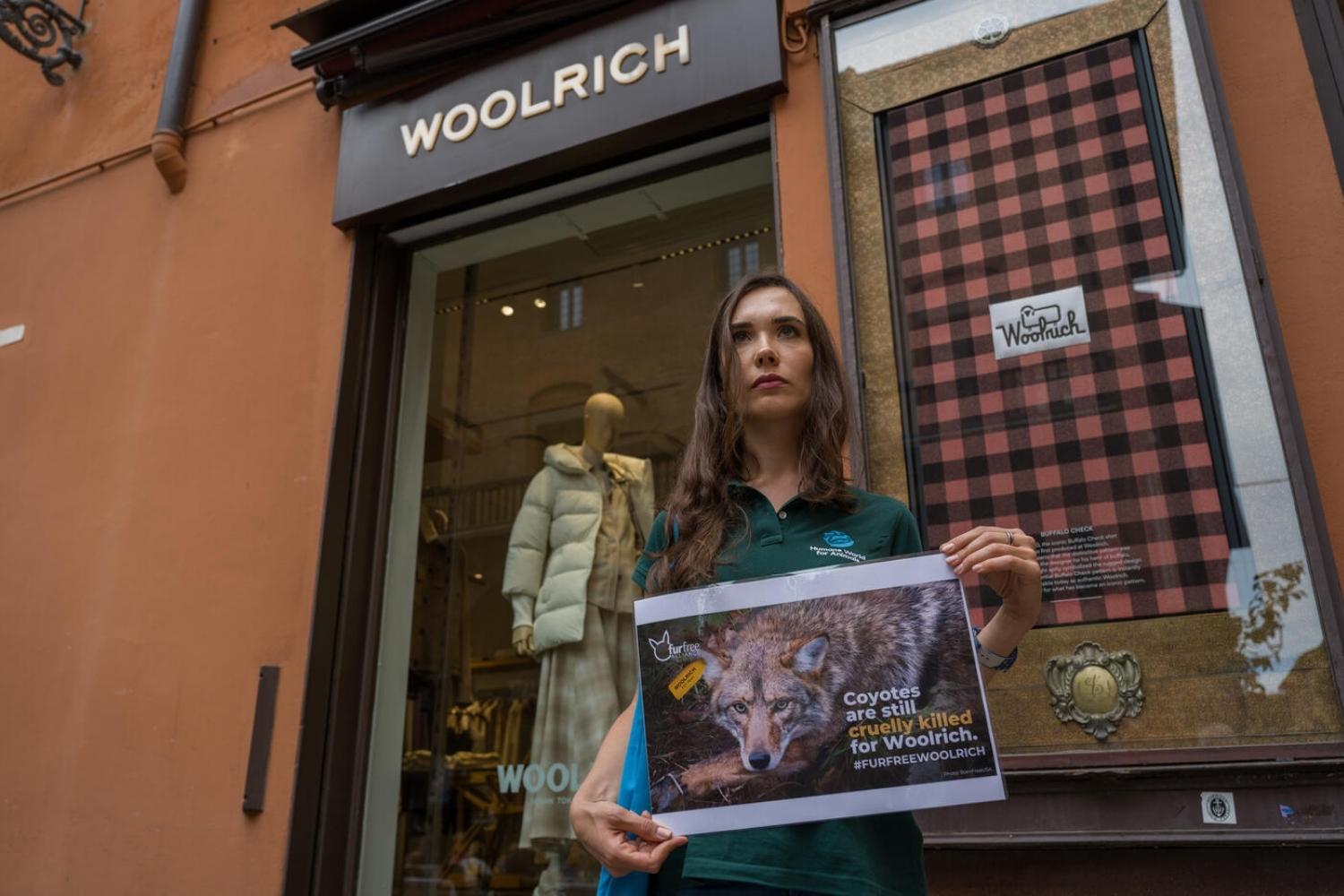
For almost two centuries fur has been one of the symbols of his famous winter parkas. Now, however, Woolrich Europe – the European division of the historic American outdoor clothing brand founded in 1830 – is also changing direction. And it does so after a maxi mobilization by the Fur Free Alliance which involved thousands of people across Europe: over 200 thousand protest emails, demonstrations in front of shops and months of pressure from animal rights associations. The result? From 2027 the new Woolrich Europe collections will be without animal fur. A significant turning point for one of the historic outdoor clothing brands, which comes after the acquisition by the Italian BasicNet group and marks another victory in the battle to free fashion from fur.
It is particularly significant that a brand that began producing fur-trimmed coats for trappers is now choosing to forego them. The new owner, BasicNet, clearly demonstrates that it understands that today’s consumers want nothing to do with an archaic and cruel industry and are instead demanding more ethical materials, more respectful of animals and the planet. – commented Joh Vinding, President of the Fur Free Alliance – Congratulations to BasicNet for having been able to grasp the signs of change and contributed to bringing Woolrich into the 21st century.
View this post on Instagram
When will the era of animal fur end for Woolrich Europe?
The agreement requires Woolrich Europe to stop producing new garments containing animal fur by the end of 2026. The new collections will be completely fur-free starting from 2027, with the autumn-winter season marking the debut of the first collection entirely developed under the guidance of BasicNet. However, there is an important clarification: this does not mean that from next year all products with fur will immediately disappear from shops. The company has in fact clarified that items from previous collections will be able to continue to be sold until stocks run out. The commitment therefore concerns future production, not the withdrawal of products already made. Woolrich Europe has also joined the Fur Free Retailer Program, an international initiative in which around 1,700 brands and retailers around the world participate. The choice will apply to the European operations controlled by BasicNet, while the company has committed to promoting the same policy also at Woolrich operations outside of its control.
From the protests in front of the shops to the turning point: the animal rights campaign
Behind this announcement there was a great mobilization that lasted months. In September 2025, during fashion weeks, the Fur Free Alliance launched an international campaign to ask Woolrich to definitively abandon fur, following the example of brands such as Canada Goose, Moncler, Napapijri and Parajumpers. At the center of the protests was above all the use of fur from animals such as coyotes, foxes and raccoon dogs, bred or captured for the production of trims and other details of clothing. The campaign denounced the conditions of animals on fur farms, often confined to small cages, and the capture methods used for wild ones. The over 200 thousand emails sent to the company and the demonstrations organized in front of European shops – including in Italian stores – have contributed to keeping attention on the case high. Then, with Woolrich Europe’s move to BasicNet, came the change of direction.
©Stefano Belacchi/Humane World for Animals
Founded in 1830 in the United States, Woolrich represents one of the historic outdoor clothing brands. Over its long history it has created clothing for the American Civil War and for expeditions to Antarctica. Today, almost two centuries after its birth, the brand is facing a transformation that affects not only the materials used, but also the very way of conceiving winter clothing.
LAV: «A clear signal for the entire sector»
The decision was welcomed positively by animal rights organisations, who for years have been asking the fashion industry to abandon the use of fur.
For Joh Vinding, president of the Fur Free Alliance, it is particularly significant that a brand historically linked to clothing also intended for fur trappers today chooses to become fur-free. Satisfaction also on the part of LAV, which through Simone Pavesi, head of the Animal Free Fashion Area, underlines the symbolic value of this decision: «Over the years we have welcomed many fur-free adverts. Woolrich Europe’s decision, however, has a particular weight: it is a historic outerwear brand, a sector in which fur has long been considered an integral part of the product.”
According to Pavesi, the choice of BasicNet represents an important signal for the entire fashion sector, because it demonstrates that even companies historically linked to the use of fur can change their production policies. Woolrich thus joins an increasingly long list of big names that have decided to abandon animal fur. In recent years the Fur Free Alliance has helped secure similar commitments from brands such as Gucci, Armani, Prada, Hugo Boss and Max Mara.
Meanwhile, Europe has yet to decide on the ban on fur farms
Woolrich’s announcement comes at a particularly delicate time for the future of the fur industry in Europe. The European Commission is in fact called to express its opinion on the European citizens’ initiative Fur Free Europe, which has collected over 1.5 million signatures calling for a ban on fur animal farming in the European Union and restrictions on the marketing of products obtained from these farms. The response, initially expected for March 2026, has been postponed. As late as July, the Commission confirmed that assessments were underway on the possible measures to be adopted.
Several European countries have already introduced bans on fur farming, while elsewhere restrictions on sales have been adopted, such as in California.
In this scenario, Woolrich Europe’s decision represents another step towards abandoning fur in fashion. It does not yet equate to their complete disappearance from the shops, considering that the old collections will continue to be marketed, but it marks a precise choice for the future of the brand.
And it also tells something broader: what was once considered a distinctive feature of luxury clothing and winter outerwear is becoming, for a growing number of companies, a material to give up.
