
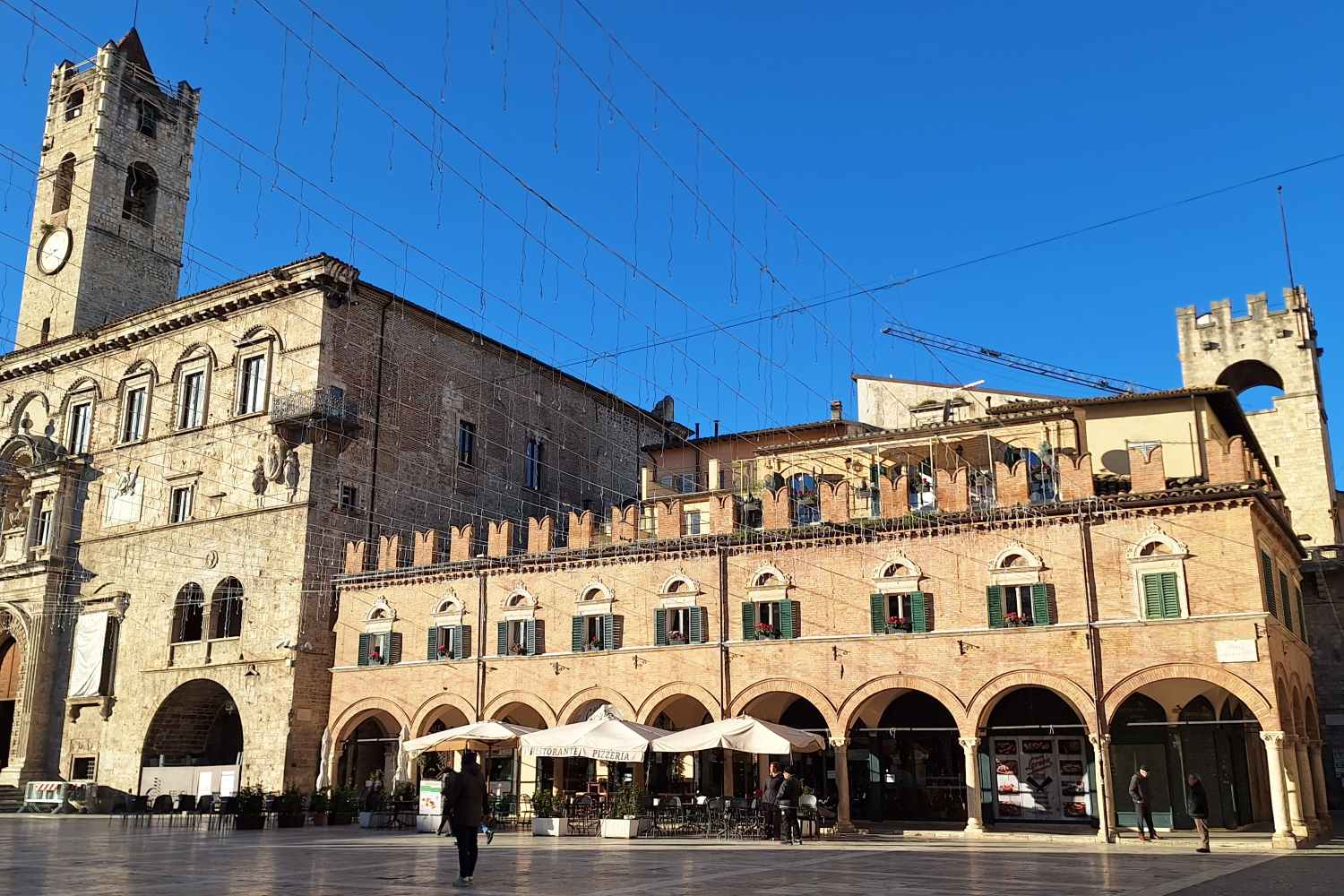
As soon as we set foot in Ascoli Piceno, we immediately realized that we had entered an open-air history book, where local stone is not a simple building material but the beating soul of the entire urban landscape. Walking along the characteristic and evocative streets of the historic centre, we were enchanted by that heritage of unique architecture which earned the town the nickname of the city of a hundred towers, imposing testimonies of a glorious past which still today proudly soar towards the sky. Walking with our noses in the air, we admired the famous Torre degli Ercolani, the fascinating twin towers and the Torre degli Alvereti, discovering how many of these structures have been skilfully integrated into the urban fabric or transformed into the bell towers of the city churches.
@RebeccaManzi/GreenMe
The magnificent harmony of Piazza del Popolo
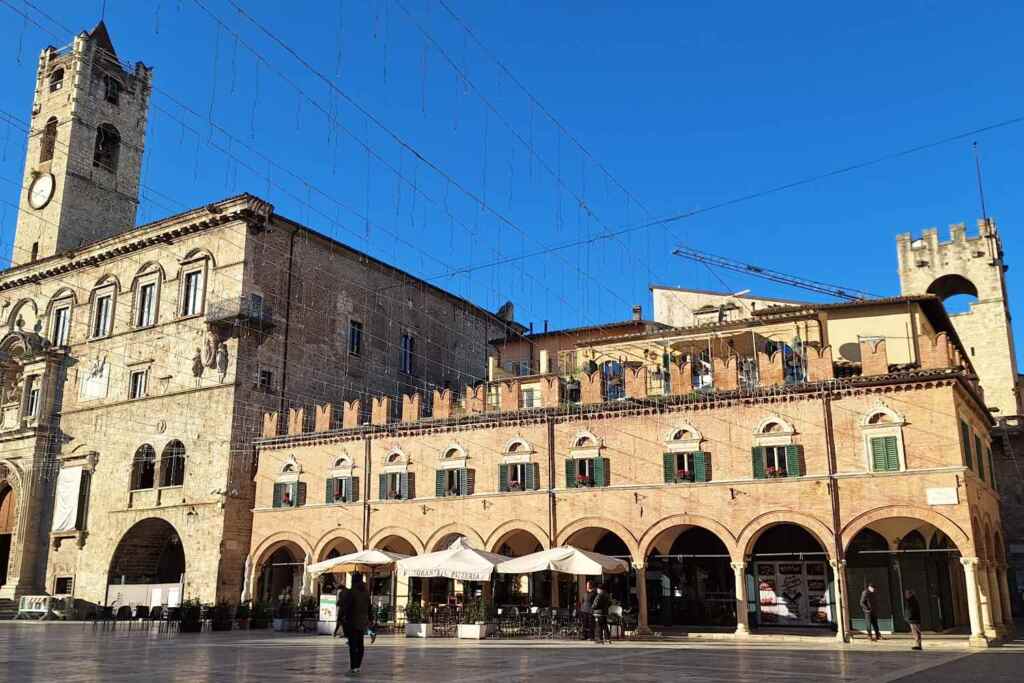
But we experienced the real heartbreak when we suddenly emerged into the magnificent Piazza del Popolo, a Renaissance architectural lounge entirely paved with light travertine that reflects the sunlight in a breathtaking spectacle.
@RebeccaManzi/GreenMe
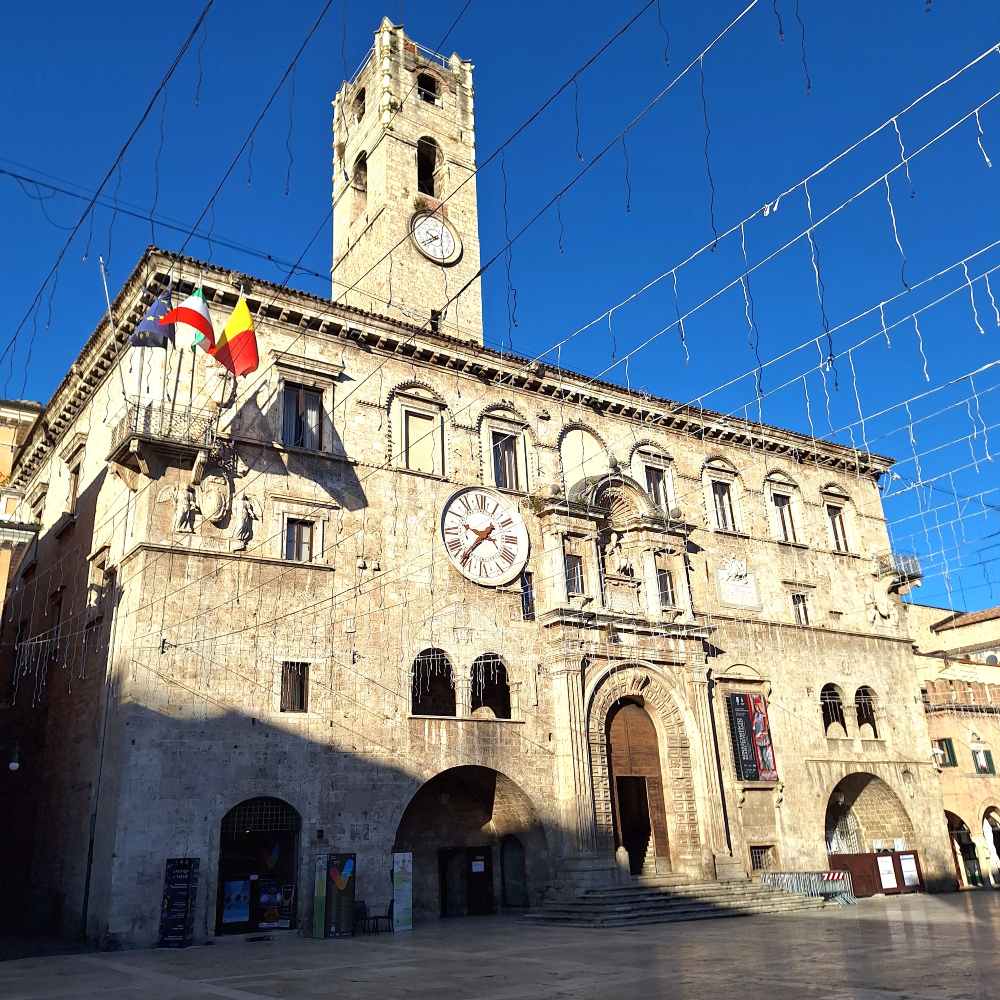
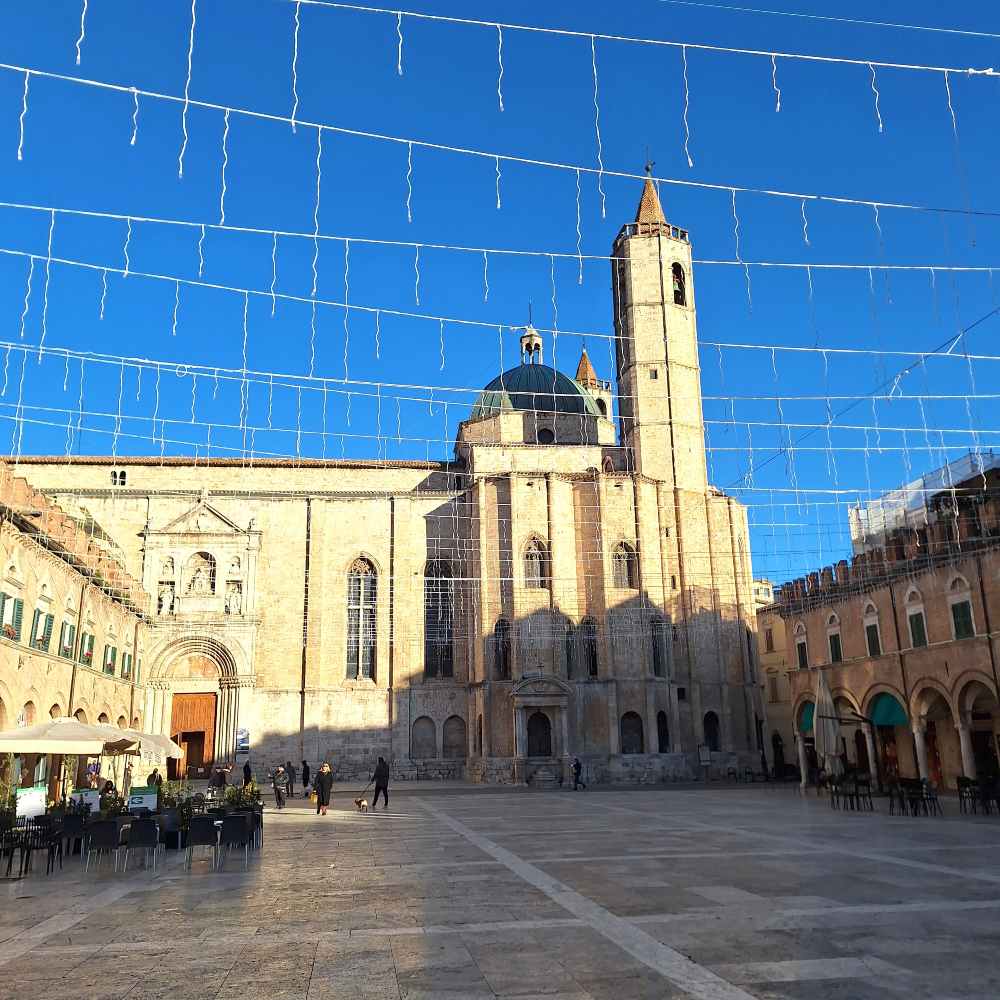
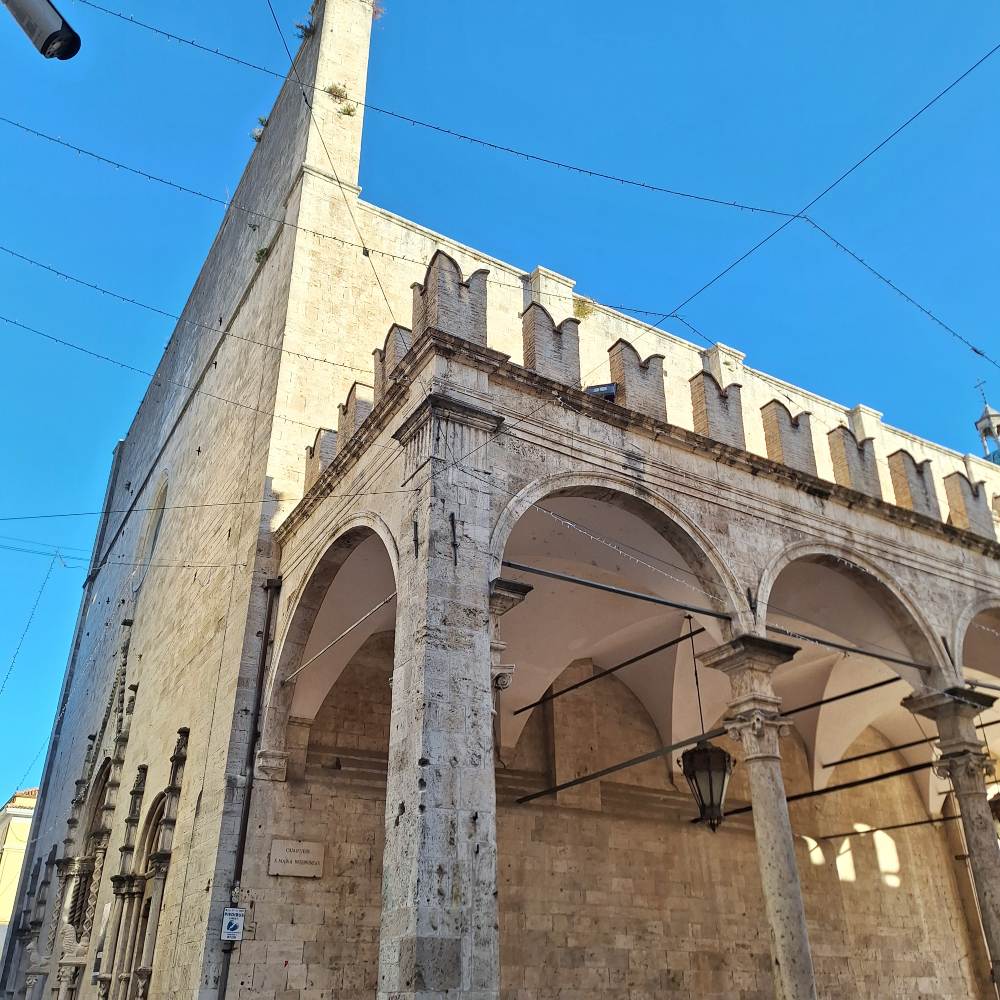
Here, surrounded by a perfect loggia made up of 59 elegant arches and embellished by the imposing presence of the Palazzo dei Capitani del Popolo, the austere Church of San Francesco and the splendid Loggia dei Mercanti built in the 16th century by the Wool Corporation with its five colonnaded arches and crown of battlements, we understood the value of that rigorous 16th century urban planning regulation which imposed uniform heights and red bricks, giving us one of the most harmonious urban panoramas in Italy.
@RebeccaManzi/GreenMe
@RebeccaManzi/GreenMe
@RebeccaManzi/GreenMe
From the wonders of Piazza Arringo to the timeless charm of Santa Maria Intervineas
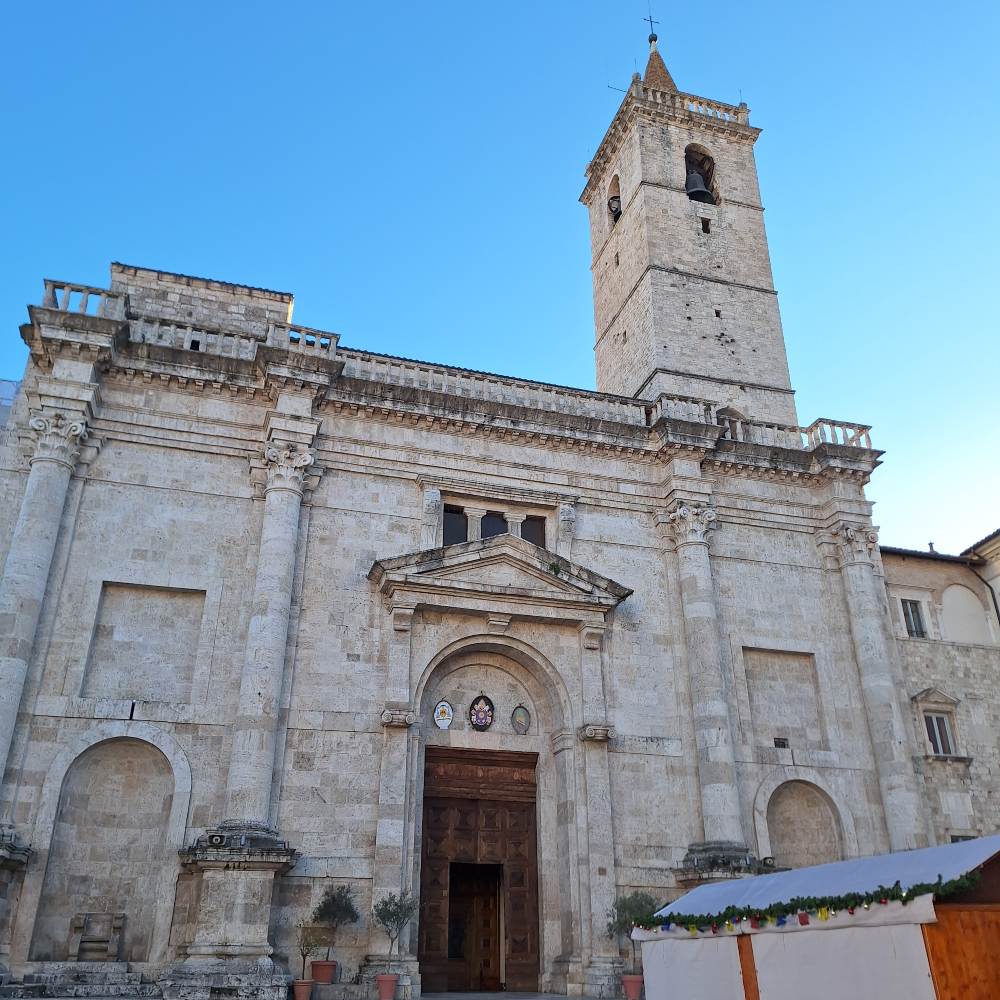
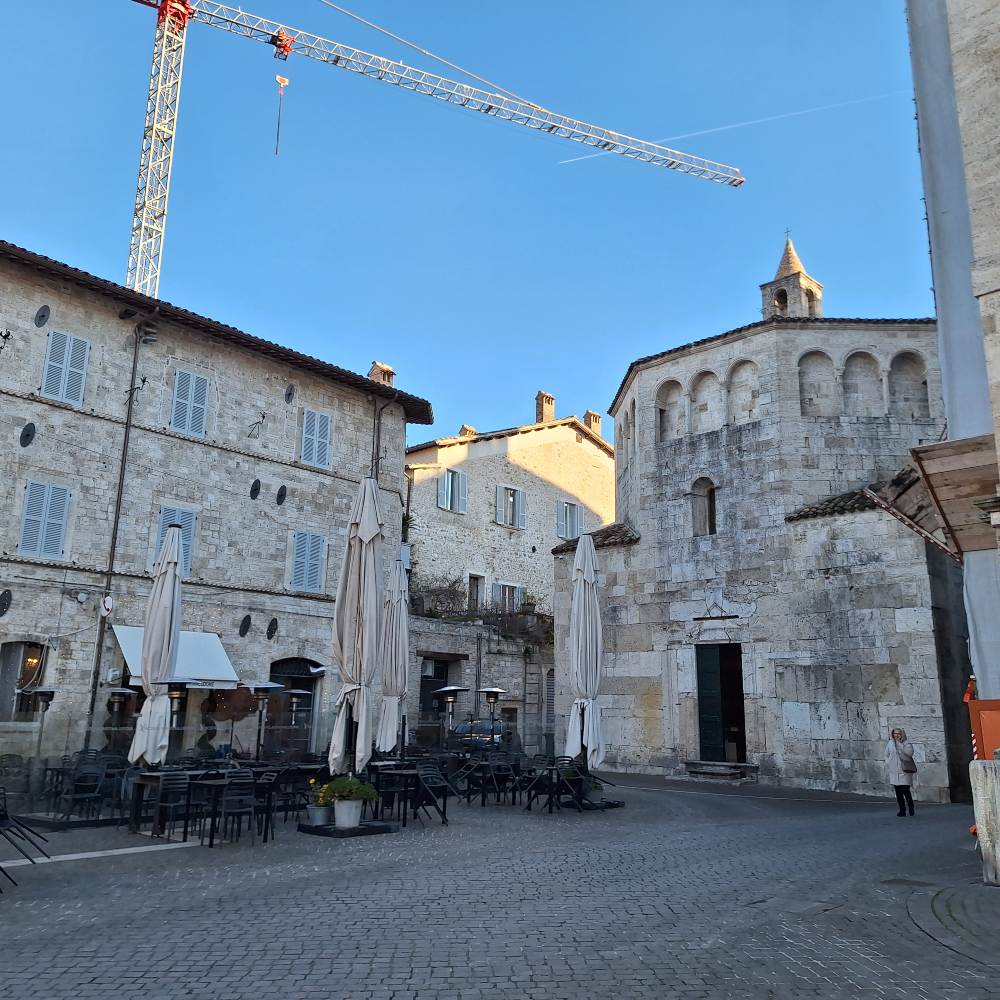
Our itinerary continued without stopping towards the monumental Piazza Arringo, the oldest square in the city, where we were breathless in front of the travertine façade of the Cathedral of Sant’Emidio and the Romanesque architecture of the adjacent Baptistery of San Giovanni. Crossing the threshold of the majestic Cathedral allowed us to admire the wonders kept inside, such as the precious polyptych by Carlo Crivelli and the suggestive underground crypt punctuated by dozens of columns.
@RebeccaManzi/GreenMe
@RebeccaManzi/GreenMe
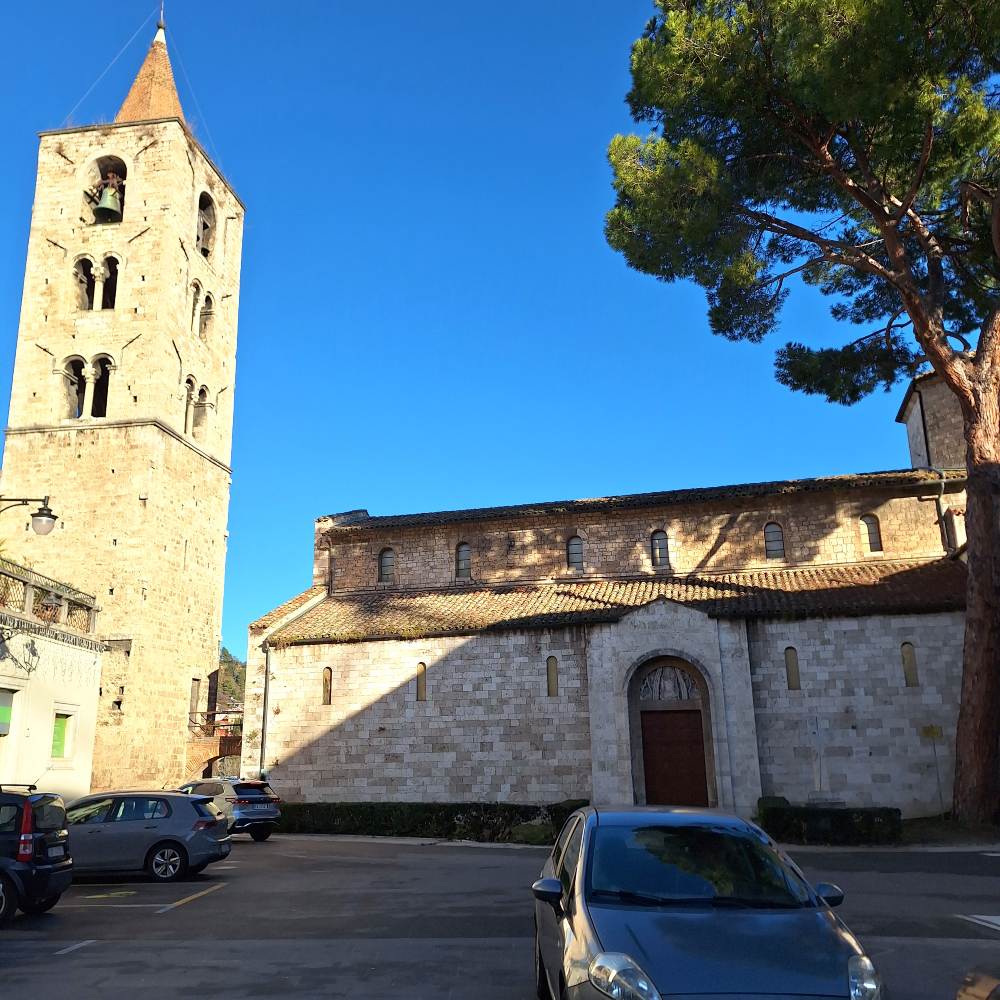
After which we enjoyed a stop to discover the Church of Santa Maria Intervineas in Largo del Cremore, a precious transitional treasure between the late Romanesque and early Gothic dating back to the 13th century, characterized by a bell tower that arises from an ancient private watchtower and a suggestive side entrance portal.
@RebeccaManzi/GreenMe
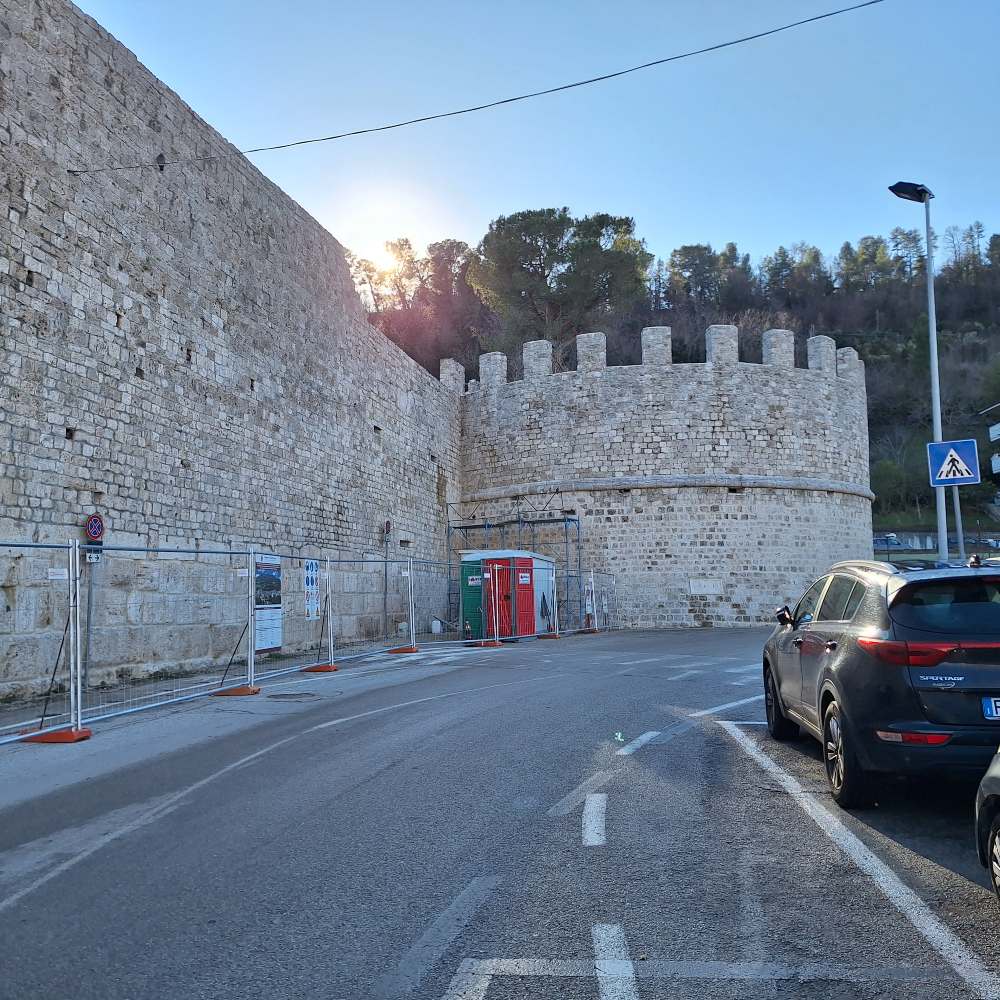
But we were not satisfied with the surface and we also wanted to explore the deepest roots of this extraordinary territory, pushing ourselves towards the most ancient edges of the urban fabric, we were fascinated by the mighty Bastion of Porta Romana, built in 1530 with its typical circular and squat shape and battlements at the top, originally designed to resist the hits of the first artillery right at the beginning of the climb that leads to the historic Fortezza Pia.
@RebeccaManzi/GreenMe
Every single corner of this journey gave us the authentic emotion of an unrepeatable discovery, leaving in our hearts the deep desire to soon return to walk among the golden stones of this wonderful Marche gem.
