
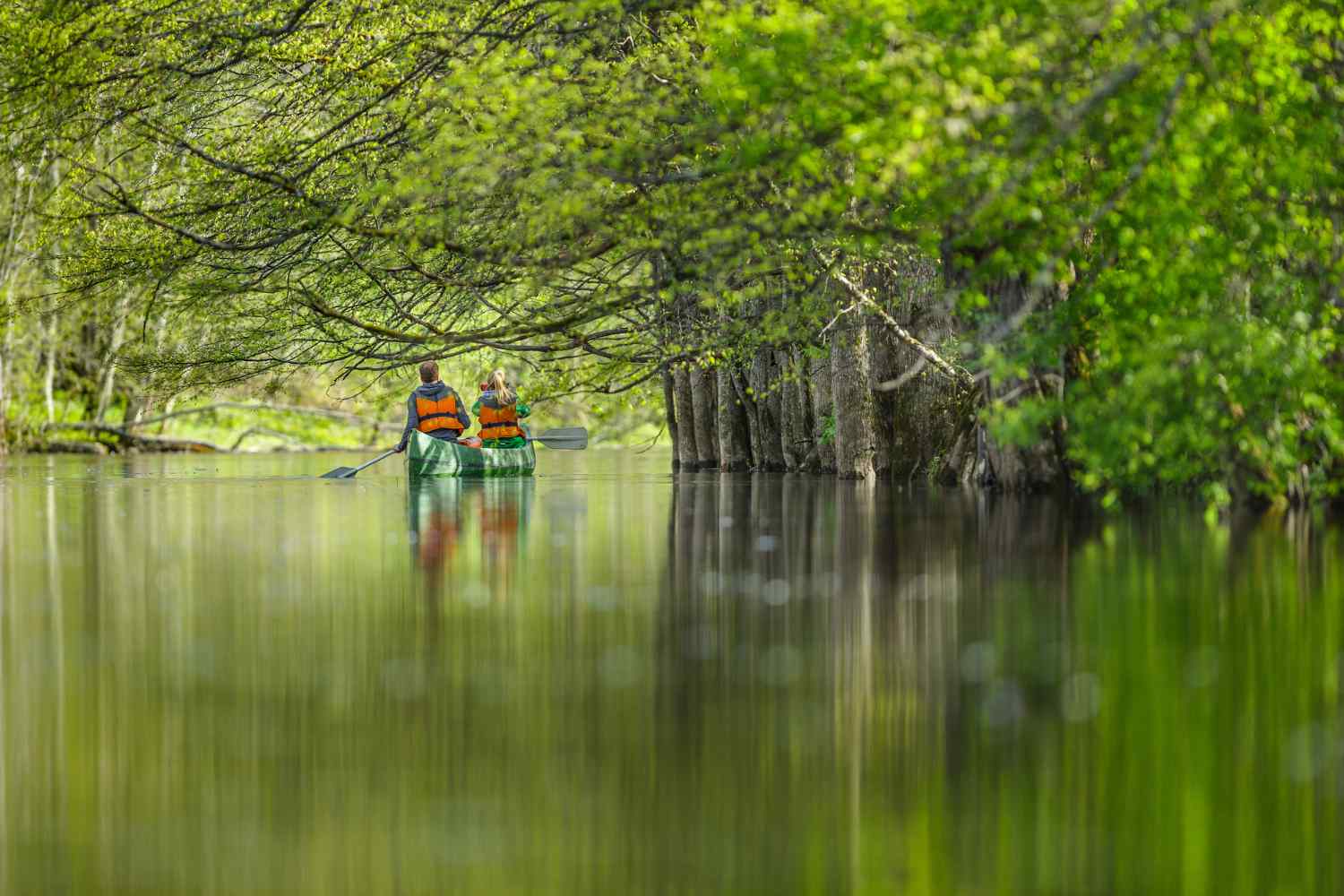
There are places that are not easy to visit, but are worth that little extra effort. Soomaa National Park, in the heart of southwestern Estonia, is one of these: I understood this even before leaving, when I started gathering information. Few facilities, no resort. But silent peat bogs and rivers that abandon their banks every spring and a centuries-old tradition inscribed in the UNESCO Intangible Heritage.
@Ken Murk
And above all a fifth season.
Season 5: When Water Takes Charge
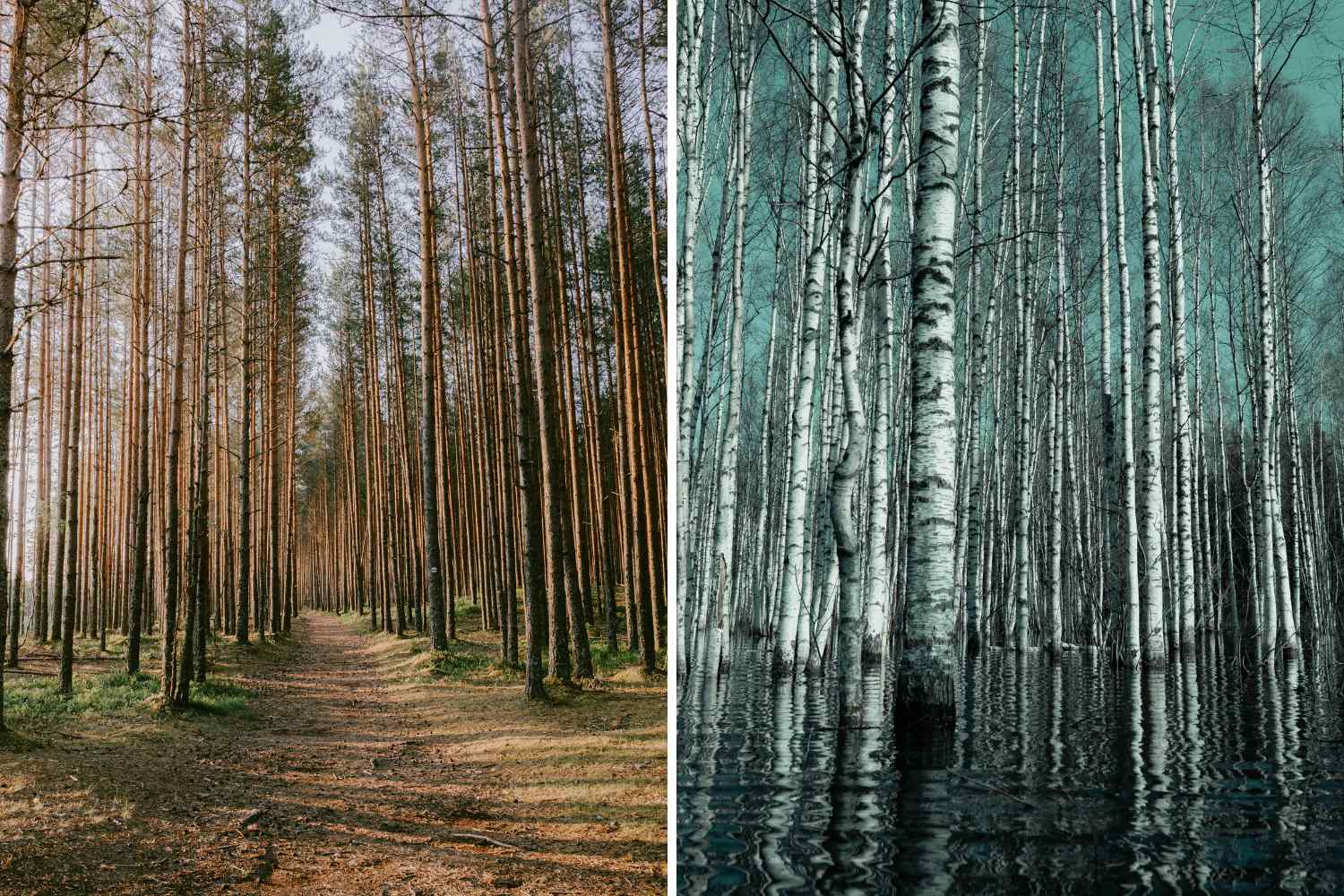
Estonians, I discovered, count the seasons differently from the rest of Europe. Between winter and spring, when the snow melts and heavy rains swell the park’s rivers — Halliste, Raudna, Navesti and Lemmõegi — comes the viienda aastaaegthe fifth season. The waters overflow and submerge up to 17,500 hectares of forests, meadows and roads. Entire areas of the park can only be crossed by canoe, and the residents’ homes have had a boat moored near the exit for generations. Here no one experiences it as a calamity: it’s a rhythm.
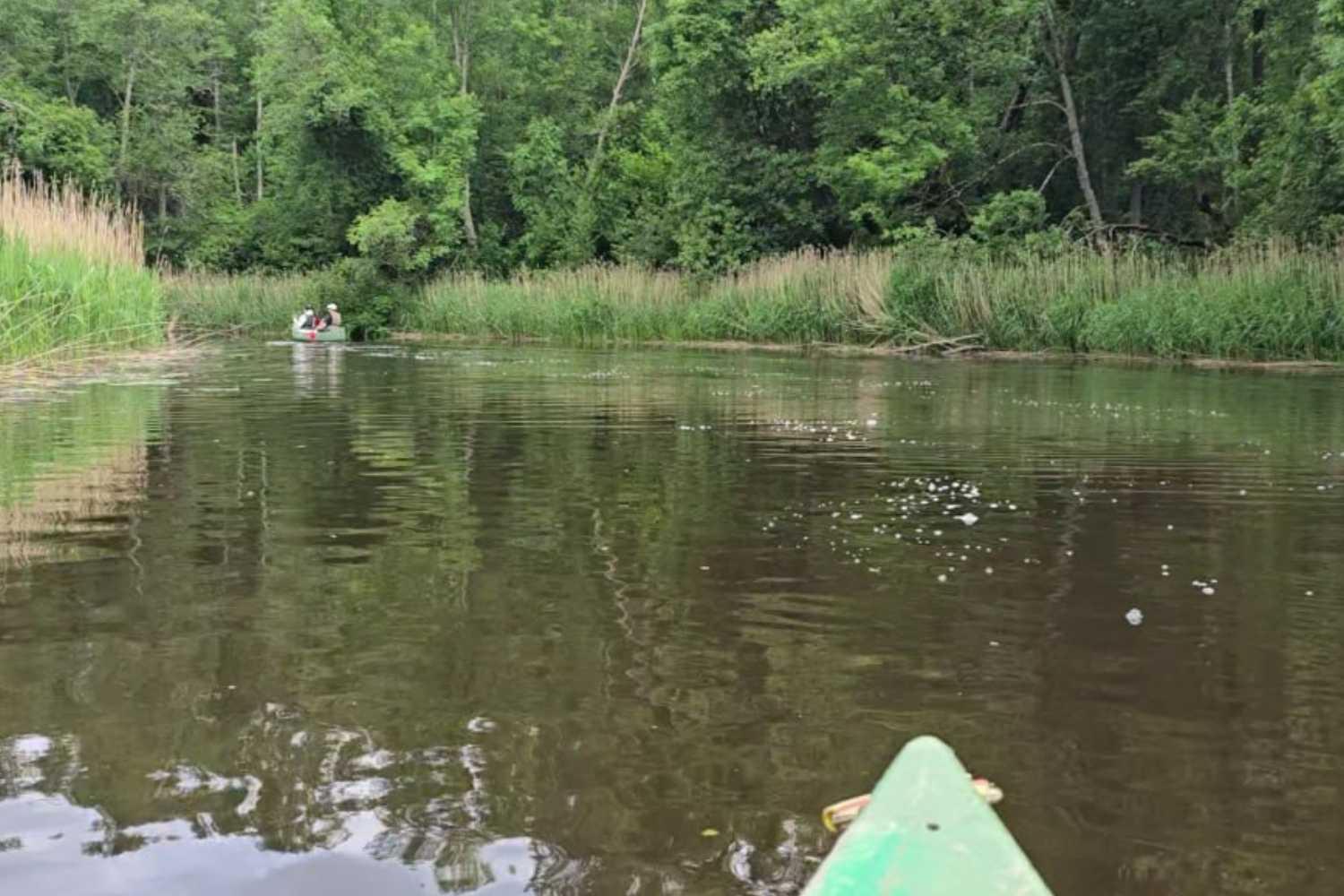
The fifth season usually arrives between the end of March and the beginning of April, but the exact time is impossible to predict weeks or days in advance: it depends on the melting snow and the skies. It is not possible to book a certain date months in advance, there are only a few hours’ notice. And be careful with your clothing: it could even snow with the sun, literally!
In exchange, you might get something rare: a landscape that’s like no other.
The haabjas: a boat that saved a tradition
The haabjastraditional Estonian monoxle canoes carved from aspen wood, were once widespread throughout Europe, but elsewhere the tradition has been lost. In Estonia it survived thanks to the Soomaa floods: when the water rises, thehaabjas remains the most reliable means of transport there is. During the Soviet occupation, many inhabitants were deported to Siberia, the farms were collectivized, and traditional life was broken. The canoe remained, however, because no one can stop the spring water.
In 2021, UNESCO listed the construction and use ofhaabjas in the List of the Intangible Cultural Heritage of Humanity. My guide, Indrek Vainu, learned from the masters before him and now passes the techniques on to subsequent generations, including with workshops open to visitors. He explained to me a process that has remained essentially unchanged for centuries: after carving the trunk, the wood is softened with heat and water, then sticks are inserted into the body of the boat to progressively widen the opening. It takes a week to build it, working in 3-4 at a fast pace.
Five seasons, five amazing atmospheres
@Leon Metsallik @Mihkel Sillaots
Soomaa is not just the fifth season. The park, established in 1993 to protect one of the largest wetland systems in Europe, offers radically different experiences all year round, and has received the EUROPARC Federation’s quality recognition for the sustainable development of nature tourism.
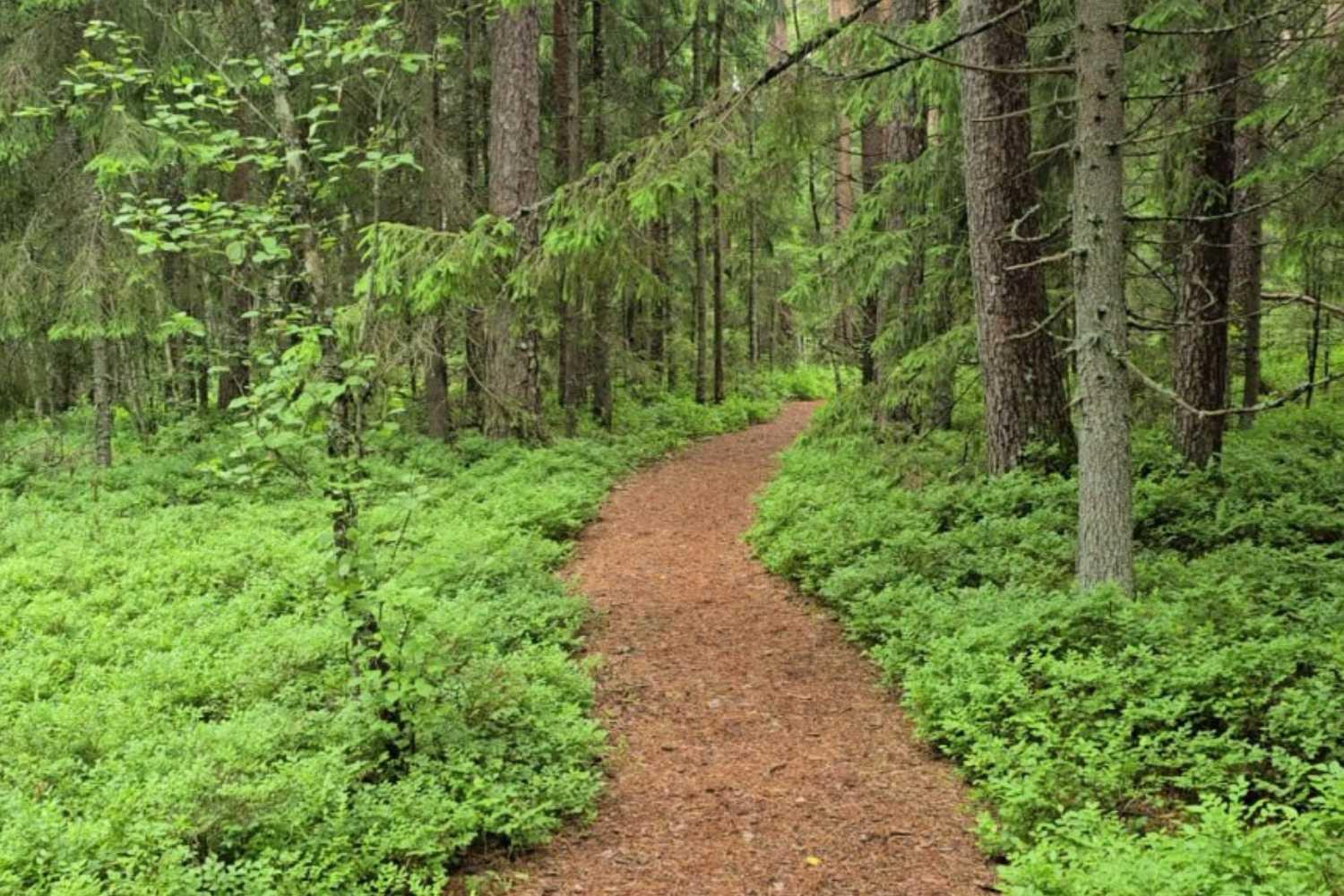
In spring, among the scent of wild garlic and the song of the gray woodpecker, you walk, observe, breathe, immerse yourself in the forest and peat bog. Then, you get into the canoe and slide into cool, clear waters, or at least that’s how I saw it: the water a perfect mirror, the centenary trunks reflected on the motionless surface, the sun’s rays filtering through the branches and/or the clouds redesigning the landscape at every appearance.
In summer it is like in spring with greater chances of walking along the paths and rivers with the sun and with a temperature around 20° (the heat here is rare). On the rivers, the animals do the same thing and early in the morning you can see the beavers at work, leaving traces everywhere: dams, broken trees, tracks along the banks. There would also be wolves and bears, but it is not common to encounter them.
In autumn the peat bogs catch fire in red and ochre. With them räätsa — swamp snowshoes — you cross the Kuresoo, the largest peat bog in the park, up to the peat lakes where you can bathe in the very clear, but brown and ferrous waters. In October, cranberries are harvested from the spongy soil of the swamp.
In winter, when the water in the floodplains freezes, Soomaa becomes an open-air ice rink in the woods. You slide on natural ice, travel along sled paths (with skates) – and the silence of the park becomes even more absolute.
And then there’s season five.
Local guides build experiences around respect for the territory. The combined excursions — bogshoe hike and canoe — are accessible but authentic, and along the way I heard stories: of the floods, of the animals, of the life that has organized itself around the water here instead of fighting it. At a certain point the guide Indrek even started singing traditional songs. I don’t know how much was planned. One of the memories I took home.
A tourism that leaves little mark and receives many vivid memories
The park welcomes a limited number of visitors, it is much better to book. I arrived during the week in mid-June and I had the water, the paths and the silence almost all to myself. The guides who work here – small local businesses, often families who have lived in the park for generations – do not sell standardized packages: they sell knowledge of the area and respect for an ecosystem that took centuries to form.
Traveling to Soomaa means accepting not to control everything, adapting to the rhythm of the changing water and light. I returned with fewer photographs than expected. And with much more silence inside me.
Soomaa National Park is located in the Pärnu-Viljandi region in southwestern Estonia. To plan a visit: visitsoomaa.ee. EUROPARC certified guides offer excursions all year round, with reservations required.
