
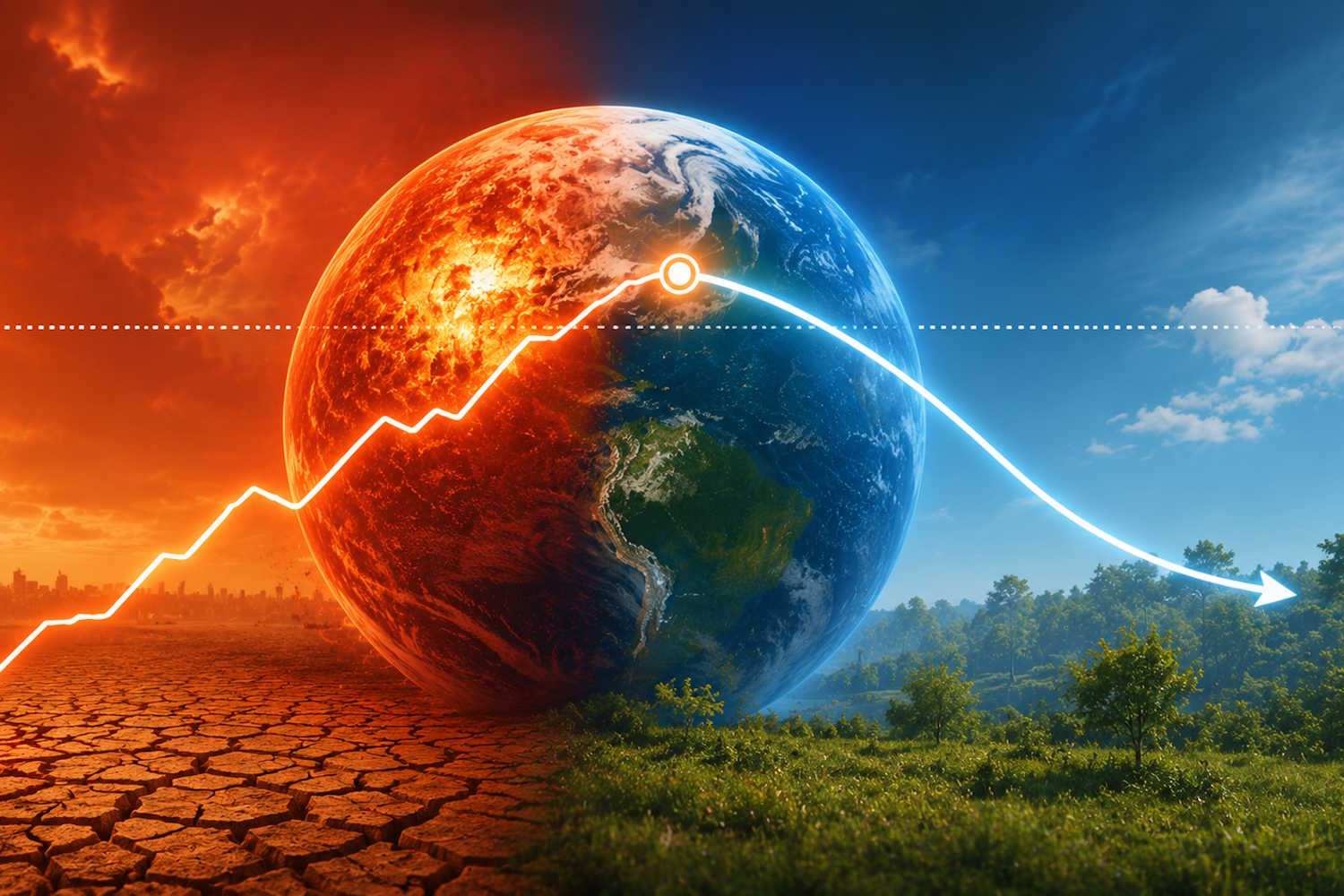
Overshoot. This is the word destined to enter the lexicon of the climate crisis more and more often. It means temporarily exceeding the threshold of 1.5°C of global warming compared to pre-industrial levels, reaching a peak and then, if climate policies are rapid and ambitious enough, gradually bringing temperatures back down.
This is the scenario at the center of Limiting Overshootthe new report from the United Nations Environment Program (UNEP), just published and which warns: the world is destined to exceed 1.5°C, probably already in the next few years. But this does not mean that every scenario is now equivalent or that it no longer makes sense to act.
On the contrary, according to UNEP, the difference between stopping at 1.8°C, exceeding 2°C or remaining above 1.5°C for decades can translate into vastly different consequences for people, ecosystems and economies.
What is overshoot and why is it so important
With the deadline overshoot a trajectory is indicated in which global warming temporarily exceeds 1.5°C, reaches a maximum level and subsequently decreases. The objective, therefore, is not to accept a new climate threshold, but to make exceeding it as low and short as possible.
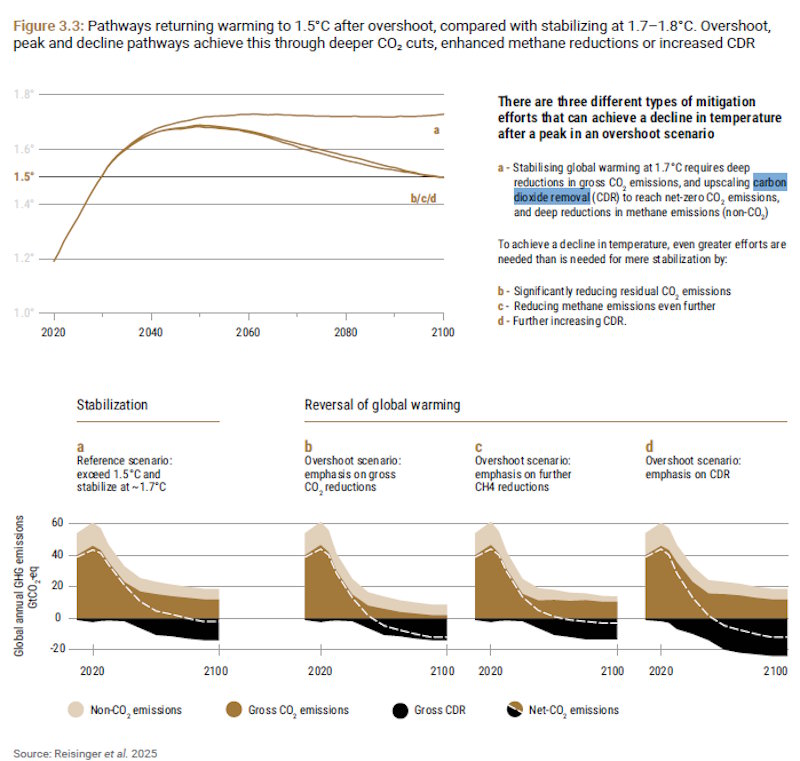
The most optimistic scenario examined by the report foresees a peak of around 1.8°C above pre-industrial levels. Many other scenarios, however, indicate temperatures above 2°C. The trajectory that UNEP considers today to be the best remaining option is defined as “overshoot, peak and decline”: overshoot, peak and decline. The lower the peak and the less time we spend above 1.5°C, the less damage will be.
@UNEP
Every tenth of a degree increases the risks
The report insists on one point: every fraction of a degree counts. Beyond 1.5°C the frequency and severity of extreme weather events, the loss of ecosystems and the risks to health, water availability, food security, infrastructure and economies progressively increase.
Among the most vulnerable areas are small island states and low-lying coastal cities, which are increasingly exposed to rising sea levels. The probability of overcoming the so-called is also growing tipping pointsthresholds beyond which some climate changes could become irreversible or self-sustaining.
UNEP cites, among others, the destabilization of large ice sheets, the degradation of the Amazon forest and possible alterations ofAtlantic Southern Overturning Circulationthe system of ocean currents that helps regulate the climate of the Atlantic and vast regions of the planet.
Furthermore, the report also highlights that net zero is not the end point. In fact, to bring temperatures down after the peak, the world will have to reach a stage in which more CO2 is removed from the atmosphere than is emitted. This is where it comes into play Carbon Dioxide Removal (CDR), that is, the removal of carbon dioxide from the air through natural and technological systems, from reforestation to other forms of carbon storage.
@UNEP
UNEP, however, warns against a possible misunderstanding: removing CO2 cannot become an alibi for continuing to emit. CDR can contribute to the return to below 1.5°C only if emissions are first drastically and continuously reduced and if peak warming remains well below 2°C.
Mitigation and adaptation
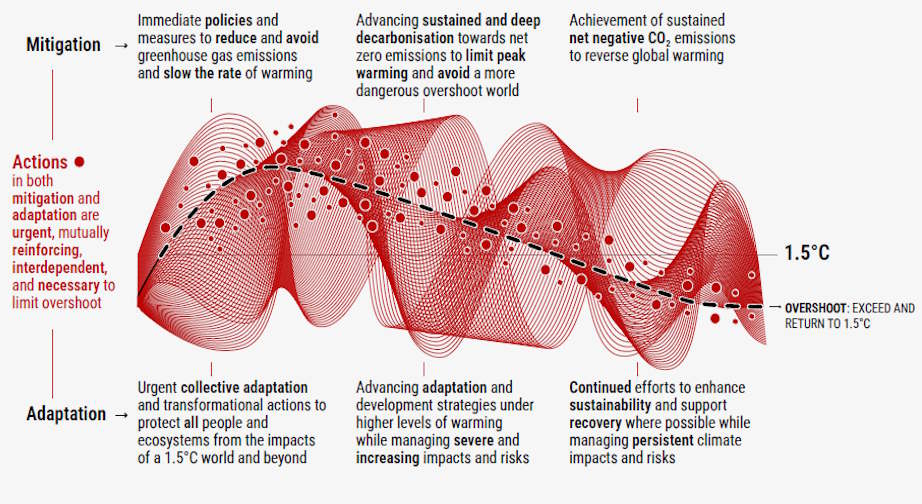
The report also makes clear that reducing emissions is not enough. Since some climate impacts are now inevitable, mitigation and adaptation must proceed together.
@UNEP
Cities and communities will need to prepare for more intense heat waves, droughts, floods, extreme events and risks that may occur suddenly and non-linearly.
UNEP therefore calls for priority to be given to interventions capable of simultaneously producing mitigation and adaptation benefits, such as nature-based solutions to reduce urban temperatures. Accelerating the transition from fossil fuels to renewable energy would also have immediate benefits: cleaner air, better health, lower energy costs and greater access to electricity.
Going back below 1.5°C will not undo all the damage
Even in the scenario in which the planet manages to bring warming back below 1.5°C, some changes will still be permanent. The report warns that entire communities may have to relocate, change their economic activities or adapt to completely different climate conditions. This is why the overshoot crisis is also a question of climate justice.
Countries that have contributed most to historic emissions, UNEP emphasizes, should act more quickly and with greater ambition, while equity, access to resources and protection of vulnerable communities should be at the center of decisions.
In any case, experts say, exceeding 1.5°C does not mean it is too late. That is, exceeding 1.5°C must not be interpreted as a yield or as proof that the climate objectives are no longer useful.
The opposite is true: every tenth of a degree avoided can reduce damage, every year spent above 1.5°C can limit the risk of irreversible changes and every ton of CO2 not emitted makes it easier to reverse the trajectory.
The new frontier of the climate crisis, therefore, is already here: limiting the overshoot, reaching the peak as soon as possible and bringing temperatures down. But, warns UNEP, this possibility only exists if decisions are made now.
HERE you can find the complete report.
