
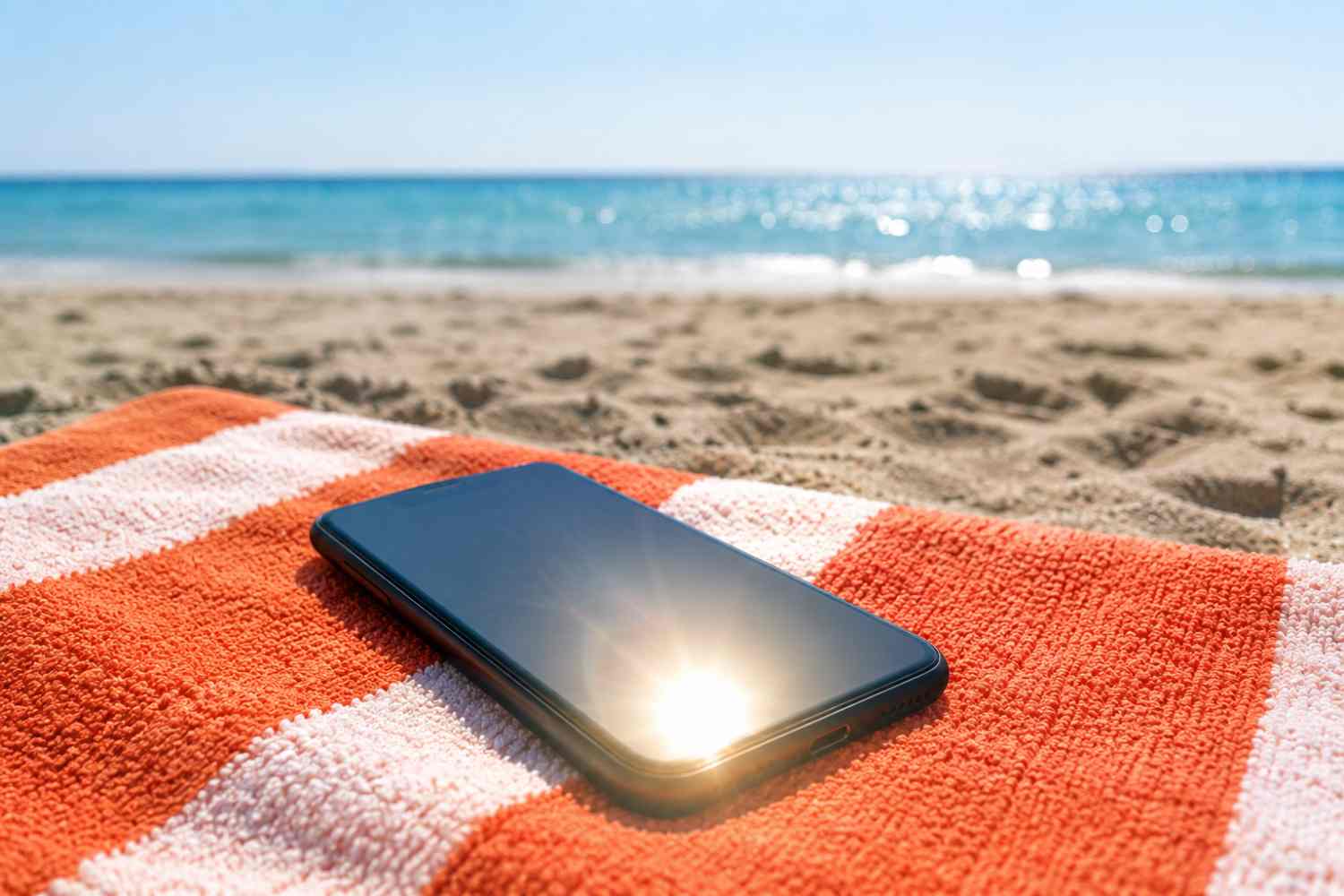
Smartphone in the sun: here’s why it should never be put in the refrigerator
All it takes is a distraction: the smartphone forgotten on the car seat, on a bar table or under the umbrella on a summer day. After just 20 minutes of direct exposure to the sun, the device can reach very high temperatures, with consequences that go far beyond simple momentary overheating. The battery is in fact one of the most vulnerable components to heat and, in the long term, can suffer irreversible degradation.
With increasingly frequent heat waves, the problem affects millions of people. Yet, many continue to make a mistake that can make the situation worse: trying to quickly cool your phone by placing it in the refrigerator or even the freezer. A seemingly logical solution, but which risks causing even greater damage.
How hot does a smartphone really get in the sun?
Modern smartphones are designed to generally operate in a range of approximately 0 to 35°C ambient temperature. When exposed to direct sunlight, especially during the hottest hours of the day, the internal temperature can rise very quickly.
In a car parked in the sun, for example, the interior can easily exceed 50-60 °C. A smartphone left on the dashboard or seat can reach even higher temperatures due to direct radiation.
Many devices have protection systems that automatically intervene when the heat becomes excessive. The screen may go dark, processor performance is reduced, and some features are temporarily disabled. In the most extreme cases, the phone shuts down to prevent damage to internal components.
The real enemy is the battery
The part that suffers most from the heat is the lithium ion battery, the technology used in practically all current smartphones.
Lithium batteries age naturally over time, but heat significantly accelerates this process. High temperatures in fact favor unwanted chemical reactions inside the cells, progressively reducing the ability to store energy.
In practice, a battery frequently subjected to high temperatures can lose autonomy much faster than one kept within the recommended limits.
Signs of early degradation can be:
A single episode of exposure to the sun for 20 minutes is unlikely to destroy a battery, but repeating this habit throughout the summer can significantly reduce its useful life.
It’s not just the battery that’s at risk
Excessive heat can also affect other components of the smartphone. OLED displays, increasingly popular in mid-range and high-end models, can suffer temporary color changes or image retention phenomena when subjected to high temperatures.
The glue used to assemble the screen and body can also deteriorate more quickly over time. In more extreme cases, heat can compromise seals and waterproofing systems, reducing the device’s water resistance.
Cameras, equipped with increasingly sophisticated sensors, can also experience increased digital noise and reduced performance when the phone is overheated.
The most common errors after overheating
When your phone gets hot, many users instinctively react by trying to cool it down as quickly as possible. It is precisely at this stage that some of the most harmful mistakes are made.
The most popular is to put your smartphone in the refrigerator or freezer. The sudden change in temperature can cause condensation to form inside the device. Microscopic water droplets can infiltrate electronic circuits and cause short circuits or corrosion.
Another common mistake is placing your phone under a direct blast of freezing air from an air conditioner or car vent. Again, too rapid cooling can generate unwanted thermal stress.
Also avoid intensive use of the device while it is already overheated. Continuing to watch videos, play games or use heavy applications further increases the processor’s work and therefore heat production.
The emergency trick to cool it down without risk
If your phone has been out in the sun and appears very hot, the best strategy is simple and doesn’t require any special accessories.
First you need to turn off the screen and stop all ongoing activities. If possible, it is advisable to activate airplane mode or turn off the device completely.
Next you need to remove the protective cover. Many cases, especially thicker silicone or rubber cases, retain some of the built-up heat.
At this point the phone should be placed in a cool, dry and well-ventilated place, but away from direct sunlight. An air-conditioned room or a shaded area are ideal solutions.
The real trick is to encourage gradual and natural cooling. Placing the smartphone on a surface that disperses heat well, such as a marble, metal or ceramic table, can speed up the process without subjecting it to thermal shock.
After a few minutes the temperature will begin to drop safely. Only when the device has returned to near room temperature will it be appropriate to resume using it.
How to prevent the problem
Prevention remains the most effective solution.
During the summer it is advisable:
Seemingly trivial attention can make a big difference. Lithium-ion batteries are designed to last for years, but heat is one of the factors that most quickly reduces their efficiency.
Leaving your smartphone in the sun for 20 minutes doesn’t necessarily mean condemning it to immediate failure. However, repeated overheating accelerates the aging of the battery and can compromise other components in the long run. When this happens, there is only one golden rule: no extreme cooling. Better to let the device disperse the heat gradually, avoiding improvised remedies that risk doing more damage than the sun itself.
