
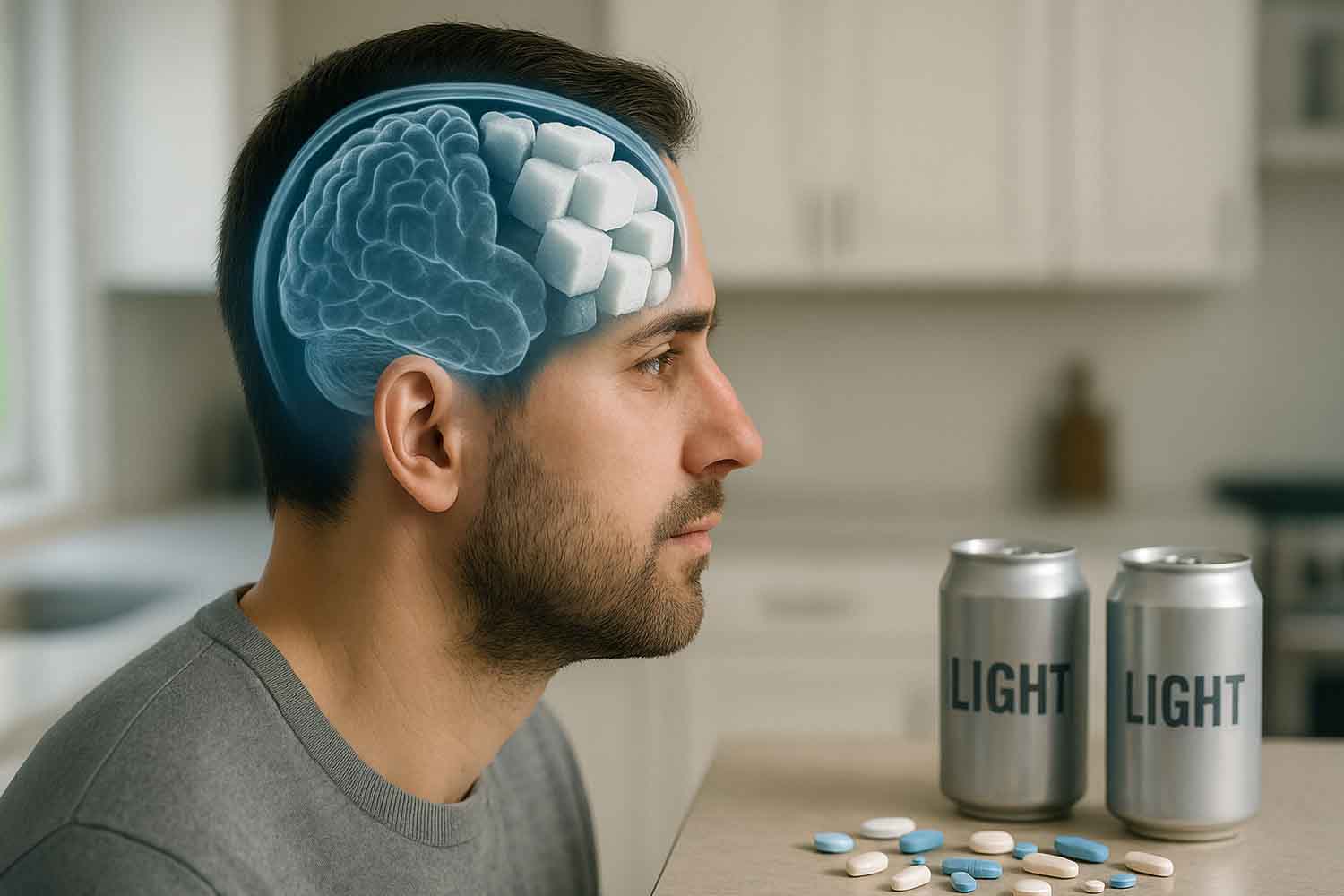
We use them thinking of making a healthier choice. They sweeten the coffee, they are everywhere in light drinks, and those who have diabetes feel them for years. But artificial sweeteners-such as aspartame, saccharin, acesulfame-k and erythritolo-may not be so harmless.
A large study conducted in Brazil on almost 13,000 adults observed a connection between the usual use of artificial sweeteners and a faster cognitive decline.
The participants, all public officials followed for eight years, were divided into three groups based on the quantity of consumed sweeteners. In the group that made the greatest use – a quantity similar to one can per day of light drink – the decline of mental functions was faster than 62% compared to those who consumed very few.
This decline, the researchers explain, is equivalent to 1.6 years of more brain aging over eight years. And the effect was observed in almost all the sweeteners analyzed, except one: the tagatose, a not widespread natural sweetener.
Weaker memory and difficulty finding words, especially among the youngest
Those who think that cognitive problems are a question linked to advanced age, may have to change. According to the study, published in the magazine Neurologythe negative effects of sweets are seen only among people under 60 years of age.
And among those who have diabetes – the category that most often uses sweeteners – the decline is even more marked. A real contradiction: those who try to protect themselves from sugar for health reasons could, unknowingly, damage their brain.
The functions affected above all concern verbal memory (remember words or information just heard) and the verbal fluency (quickly find the right words). In concrete terms: more “empty of memory”, more moments in which “we have the word on the tip of the language”, more difficulty in expressing oneself clearly.
These are signs that we can all recognize, but that – if they become frequent – can compromise our daily life.
Let’s clarify immediately: there is no definitive evidence that sweeteners cause cognitive decline. The study shows a correlation, not a direct cause. In addition, it is based on food questionnaires compiled by the participants, and we know how difficult it can be to remember everything we eat.
Not all sweeteners on the market were analyzed: Stevia and Sucralose, for example, remained out. And the sector associations – such as the British Soft Drinks Association and the International Sweeteners Association – have been quick to remember that the health authorities (such as FDA and EFSA) consider the use of sweeteners to be sure within the established daily limits.
But in the meantime, the WHO has also taken a position, not recommending the use of sweeteners to control the long -term weight. A sign that the question is far from closed.
But what happens in our body when we take these sweeteners?
The researchers hypothesize two main mechanisms. The first concerns the intestinal microbioma: sweeteners could alter the balance of good bacteria, creating inflammations that also affect the brain.
The second has to do with the confusion between taste and caloric content. The brain expects energy when it perceives the sweet taste, but with sweeteners this energy does not arrive. Over time, this could alter the way the body regulates hunger, metabolism and even cognitive functions.
And now?
For now we are not talking about banning sweeteners. But those who use them every day, even if only in coffee or tea, may want to review their habits.
The his own doctor, the main author of the study, suggests preferring natural alternatives such as honey, maple syrup, coconut sugar or apple puree – always in moderation.
His team is already working on new research, with neuroimaging techniques to observe whether the usual consumption of sweeteners leaves visible signs in the brain.
In the meantime, it could be worth reflecting: if the goal is to take care of health, perhaps even our brain deserves the same attention that we reserve for the scale.
You may also be interested in:
