
When a song changes, we often change too. Reinterpretations never arise by chance: they are the result of a personal journey, of an emotional stance, of a growing awareness.
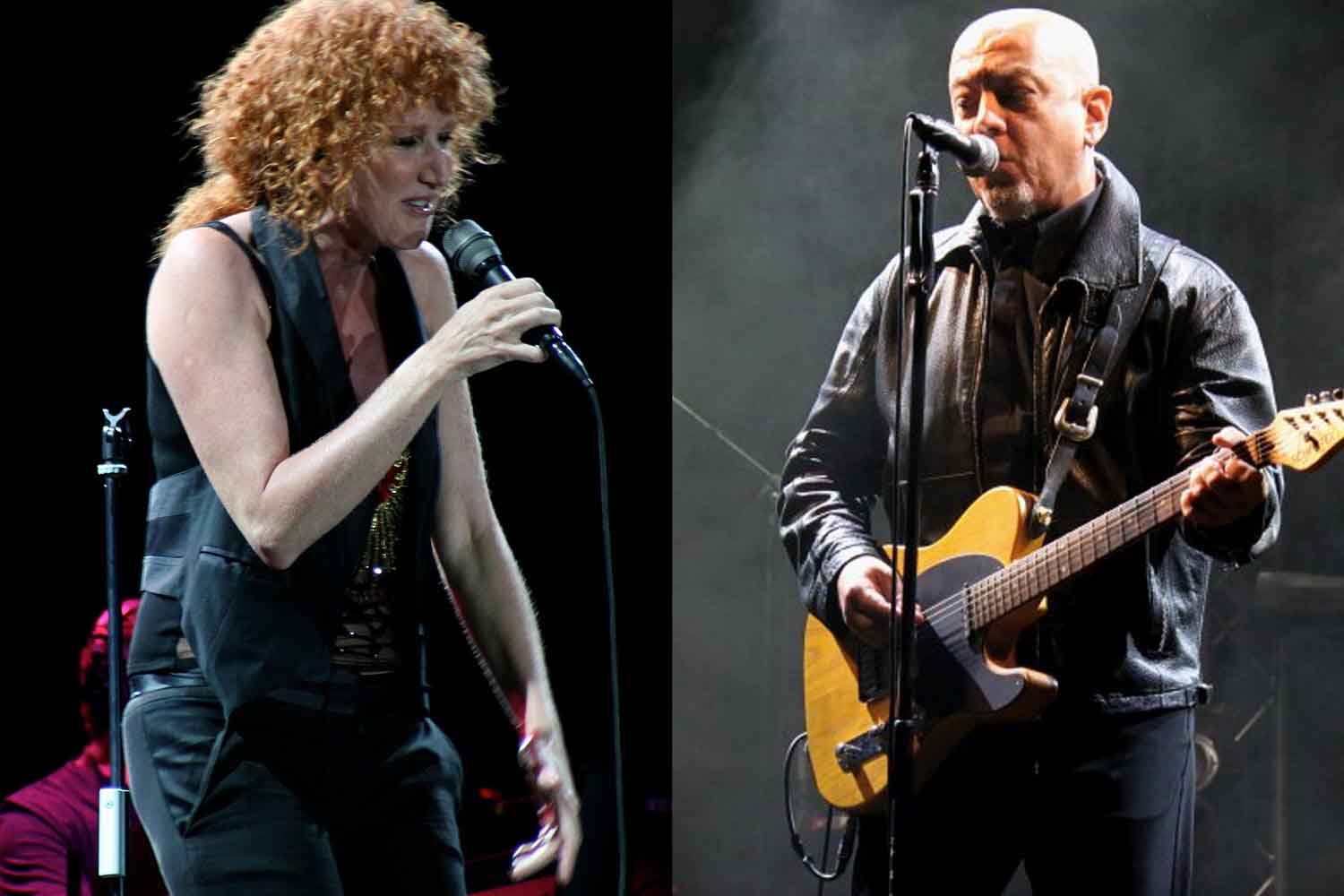
The Mannoia–Ruggeri case demonstrates this. Fiorella Mannoia, after years of performing What women don’t sayhe modified some verses, transforming the last one “Yes” in a “maybe” or a “no”.
It’s a tiny detail, but it has the weight of a universe: that “yes”, in the 1980s, spoke of a female model accustomed to keeping everything together, even at the cost of sacrificing herself. Today, the same phrase sounds different in the ears of those who pronounce it and those who listen to it. Mannoia explained it with the naturalness of someone who experiences the stage like a room at home: today that verse no longer reflects her. It does not represent his way of being in the world, nor that of the women he meets and sings about.
It’s a song that I’m very attached to, but I decided to change the ending because it was right: I always said ‘We’ll tell you one more yes’, but that’s not true… I sang it and thought ‘that’s not a given, why do they take it for granted that we have to say a yes?’. It could be a maybe, or a no. And when a woman says no, in any dress, in any circumstance and condition, it is no.
During a recent interview with The Corriere della SeraEnrico Ruggeri criticized the choice by speaking of “woke culture”:
This is a song about unfulfilled hopes. Women talk to their men: you are no longer like you were at the beginning of our love, go back to how you were and we will say one more yes to you. The uncertainty is already in the text. It seems like a stretch dictated by woke culture to me.
But to understand what is really happening, we need to look at the scene more closely: not through the lenses of controversy, but through those of psychology.
Because free artistic interpretation is a psychological act
When an interpreter changes a verse, the way it is told is also changing. An artist doesn’t just bring a song to the stage: he brings his story. It carries what it has become. And in fact, when Mannoia replaces a “yes” with a “no”, she is doing what many women do throughout their lives: putting a boundary where there was previously a habit. It’s not challenge, it’s not ideology: it’s personal evolution.
In psychology this is called re‑meaning: taking an element from the past and giving it a new meaning, more consistent with one’s present. And free artistic interpretation works exactly like this: it does not erase what has been, but allows you to breathe better. Music is not a monument: it is a living organism. It grows. Change your voice. Change your skin.
The “woke” knot
Ruggeri commented on the changes by speaking of “woke culture”. But in common Italian language, this word has taken on a completely different meaning compared to its origin. In the United States woke it means being vigilant, aware of social injustices. Nothing aggressive. Nothing punitive.
In Italy, however, “woke” has become a polemical label: an umbrella term used to criticize cultural changes perceived as exaggerated. It is a word that tends to simplify, to cage. And in fact, applying it to Mannoia’s choice does not allow us to grasp the heart of the matter: his is an emotional, identity-related, artistic decision. Not politics.
Other artists who have reinterpreted their own lyrics
Mannoia’s gesture is not an isolated case. In music, redefining lyrics is a natural process. For example, Beyoncé revised the lyrics of Heated when some words no longer reflected her message, Lizzo changed a term to GRRRLS because it didn’t represent the sensitivity he wanted to convey.
The Pogues also saw theirs Fairytale of New York go through multiple revisions over time and many rock artists have adapted lyrics born in adolescence to make them consistent with who they have become.
It’s not about “giving in” to something, but about growing together with your art.
A scientific foundation
Albert Bandura, in his Social Cognitive Theory, talks about agency: the human ability to actively influence one’s life. Not just react, but choose. Not just adapt, but lead change. When an artist updates a text, she makes a gesture of direct personal agency: she autonomously decides to represent what she feels, without remaining tied to what she felt years before.
And there is also a collective dimension. The reinterpretations, in fact, also speak to the listener: they open conversations, stimulate reflections, question old models. Bandura defines it collective agency: that process in which individual action dialogues with the entire community. In this sense, Mannoia’s gesture becomes a perfect example of how art and psychology can walk together: a song does not change because of fashion, but because the person who sings it changes.
After all, a song is not updated for fashion: it is updated because those who sing it live in a world that is no longer the same as yesterday. Ergo: it’s not the world that bends the songs, it’s the artists who, growing up, find new words to tell it.
You might also be interested in:
