
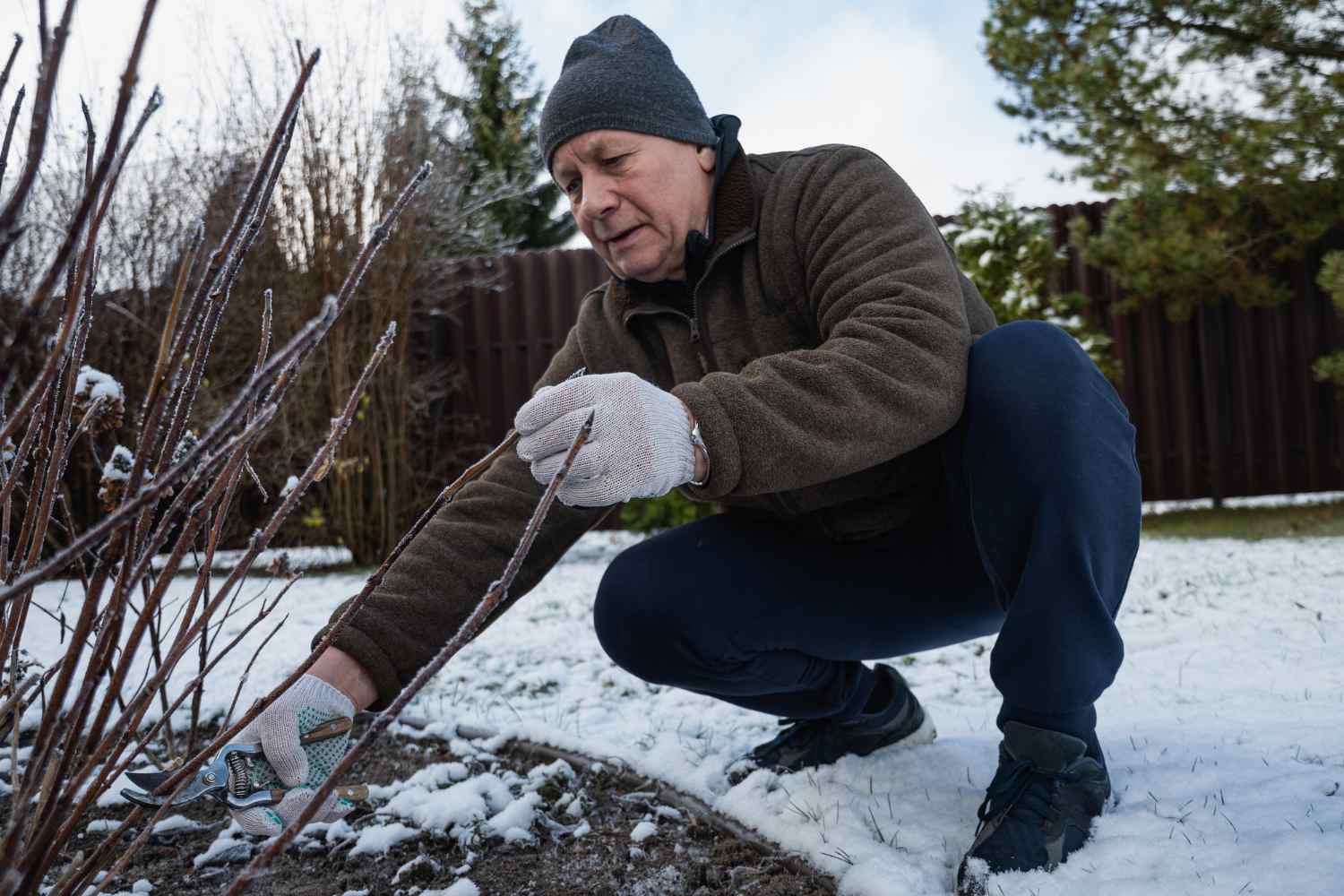
Plants resist the cold better than you think
Many wonder whether frosts and temperature changes can ruin garden plants. The good news is that plants almost always do well. They have a natural “alarm system” that allows them to sense when the cold is coming and prepare in advance. When it’s hot they flower, when it’s cold they slow down: it’s all normal.
The real danger comes in spring, when it’s hot for days and suddenly the night frosts return. The plants have already “started” and the tender shoots can be easily damaged.
How to save flowers from frosts
The plants almost always survive, but the flowers are more delicate. If you have camellias, ornamental plums or cherry trees that bloom in winter, their buds are at risk in severe frosts. The damage is seen when the flowers open: brown spots on the petals, or the buds fall off before they even bloom. The already opened flowers turn brown or fall to the ground.
What to do in practice: when the weather forecasts frost and you have plants with swollen buds or open flowers, cover them with an old sheet or an anti-frost sheet (you can find it in garden centres). Secure it well so it doesn’t fly away. Never use transparent plastic: in the sun it becomes an oven and burns everything.
The clever trick: if you see that it is about to freeze, cut the branches with the buds and put them in a vase indoors. They will still open in the warmth and you can enjoy flowering without risk.
You can plant even in winter
It is not true that nothing is planted in winter. If you can get the spade into the ground, you can still plant. The trick is to make sure the ground isn’t frozen hard like concrete.
Mulch: Cover the soil around the plants with bark, straw or dry leaves. It serves as a blanket: it keeps the roots warm when it’s cold and cool when the sun comes back. A layer of 5-7 centimeters is enough.
Add compost: place a maximum of 7-8 centimeters of compost around the plants. It feeds the soil slowly during the winter. Don’t overdo the thickness or you suffocate the roots.
Water before frost (sounds strange but it works)
This is the advice that surprises everyone: if the weather forecast says it’s about to freeze hard, water the plants well the day before. Why? When the soil is moist, it retains heat better and the roots suffer less. Furthermore, plants absorb water before the ground freezes and it becomes impossible to take any.
Rule of thumb: wet both the soil and the leaves. If the plants are in pots, even more important because they freeze faster than those in the ground.
During the winter, on days without rain or snow, water once a week. Newly planted plants need it more than anything to take root well.
Be careful with the vases
Potted plants are the most at risk because the roots are “exposed” on all sides, not protected by the earth like in the garden.
What to do immediately:
For indoor houseplants: Before bringing them inside, spray them well with soap and water (including under the leaves) to kill insects. Once in the house, place them where there is indirect light for at least 5 hours a day, away from radiators and drafts. Water little: in winter houseplants grow very little and need less water.
The 2 huge mistakes
Fertilize in winter
It is the safest way to damage plants. In winter the plants “sleep” and must rest. If you force them to grow with fertilizer, they produce tender shoots that then die with the first frost. Zero fertilizer from November to March.
Stop watering completely
Many people think that plants don’t need water in the winter. Wrong. When there is no rain or snow, water once a week. Water helps them resist the cold better.
Don’t worry about the bulbs
If you see the leaves of daffodils, tulips and other spring bulbs coming out, rest assured. They are made specifically to resist the cold. Indeed, they really need the winter cold to flower well in spring. Don’t panic and don’t protect yourself: let nature take its course.
