
Honey is a truly incredible food: a study led by University of Sassari has shown that the food is able to protect the skin from the damage of stress and UV rays, opening the doors to a new potential ally of regenerative medicine.
The skin and the properties of honey
The skin is the human body’s main barrier against the external environment, but ultraviolet (UV) radiation from the sun significantly accelerates skin aging and cellular stress, which can be a precursor to skin cancer.
But honey is already known for its antioxidant, antimicrobial, anti-inflammatory and healing properties, and sterile medical products derived from honey are already available in the form of preparations, gels and ointments for burns and wounds that are difficult to heal.
I have always been interested in the fact that some honeys, such as Manuka honey, are used in medical grade applications – explains Fikiye Fulya Kavak, first author of the research – This led me to wonder if even high-quality wildflower honey could show measurable protective effects for human skin cells
How the study was conducted and what was discovered
The scientists particularly wanted to investigate whether honey could protect human skin cells from UV damage, promote cell regeneration and prevent skin aging, as well as find out which molecular and genetic mechanisms might be involved.
The study was conducted by growing cultures of the cells that make up human skin, including skin stem cells, fibroblasts and keratinocytes, in a continuous-flow bioreactor system to simulate the physiological environment of human skin. And, before exposing the crops to UV radiation, some were treated with 1% wildflower honey for 48 hours. Then the team evaluated the response of treated and untreated cells to UV-induced stress.
The results were evaluated by analyzing selected genes associated with cellular aging, stress response, and tissue renewal using quantitative real-time PCR (Polymerase Chain Reactiona consolidated technique used in molecular biology laboratories to rapidly amplify copies of specific DNA sequences). In this way, genes linked to a cell’s ability to differentiate or replicate were also studied.
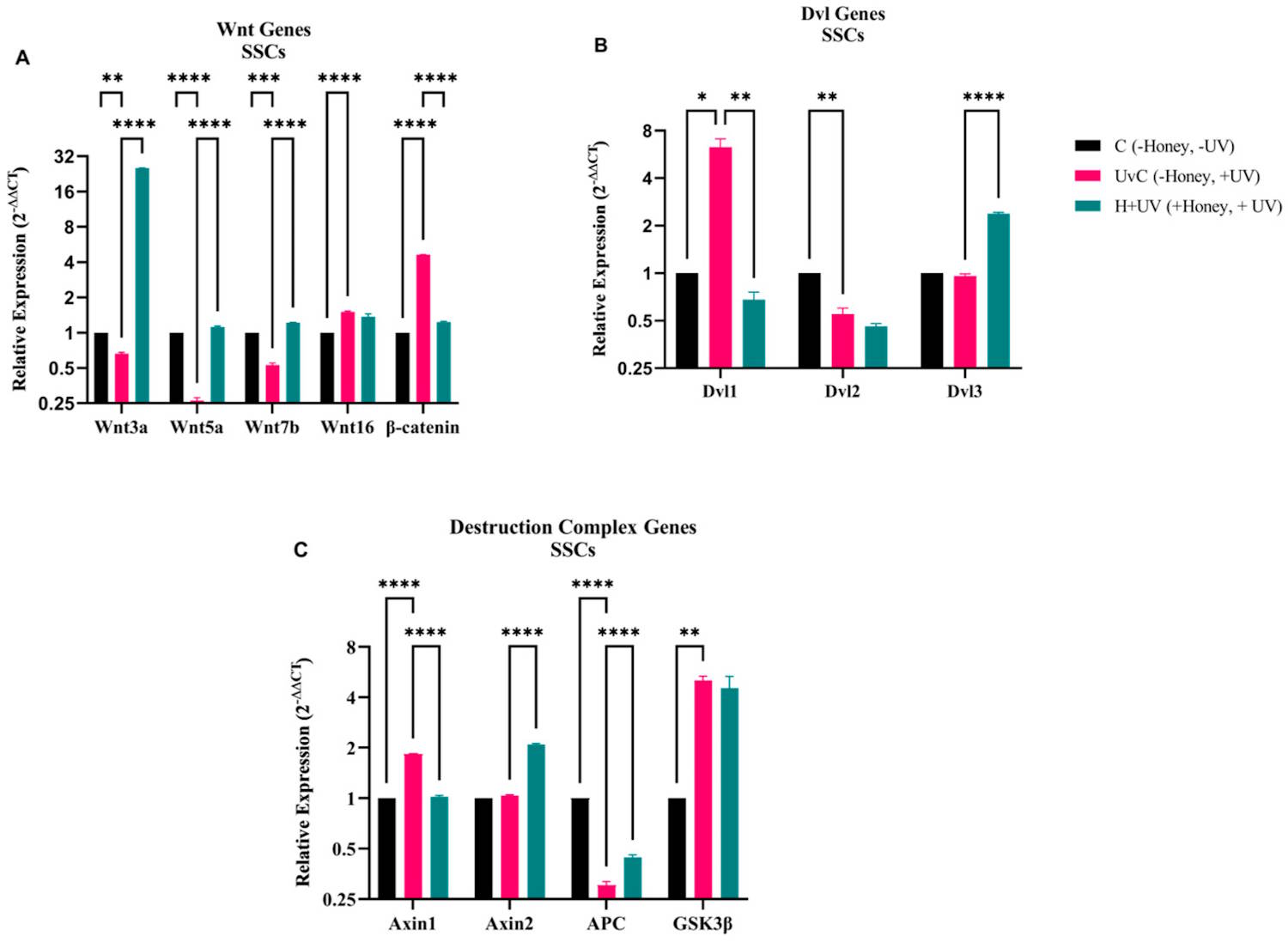
The analyzes highlighted that pretreatment with 1% wildflower honey appeared to support a protective and regulatory response against UV-induced stress in both skin stem cells and fibroblasts.
In skin stem cells, honey increased the expression of stemness-related markers – explains Kavak – while reducing the expression of genes associated with aging
©Antioxidants
In these cells, honey treatment also reduced nitric oxide release and increased antioxidant capacity, suggesting that it may help support antioxidant defenses under UV-induced stress.
From the team’s genetic analysis, it also emerged that honey treatment helped regulate cell proliferation and renewal signals, increasing the expression of genes protecting against cellular stress.
Particularly interesting was the finding that honey seemed to help cells regain a healthier balance after UV stress. Rather than pushing cells into an exaggerated repair response, it appeared to support protective mechanisms by keeping renewal-related signals in check.
©Antioxidants
Research perspectives
These findings present promising applications in the medical and cosmetic fields, but the team emphasizes that wildflower honey cannot yet be considered a clinical application or an alternative to sunscreen.
Our study was conducted in experimental cellular models, not humans, so further laboratory, preclinical, and clinical studies are needed before any practical recommendations can be made
This knowledge could, however, contribute to the development of new cosmetic or clinical formulations for the skin, especially if the active properties of honey could be conveyed in a controlled and biocompatible way, for example through a nanofibre-based system that the team is currently developing.
These nanofibers have already been characterized and their biological evaluation is currently underway – concludes the researcher – This represents an important step forward, since nanofiber-based systems could provide a more advanced platform to study the potential skin applications of natural bioactive compounds such as wildflower honey
The work was published on Antioxidants.
Sources: University of Sassari / EurekAlert / Antioxidants
