
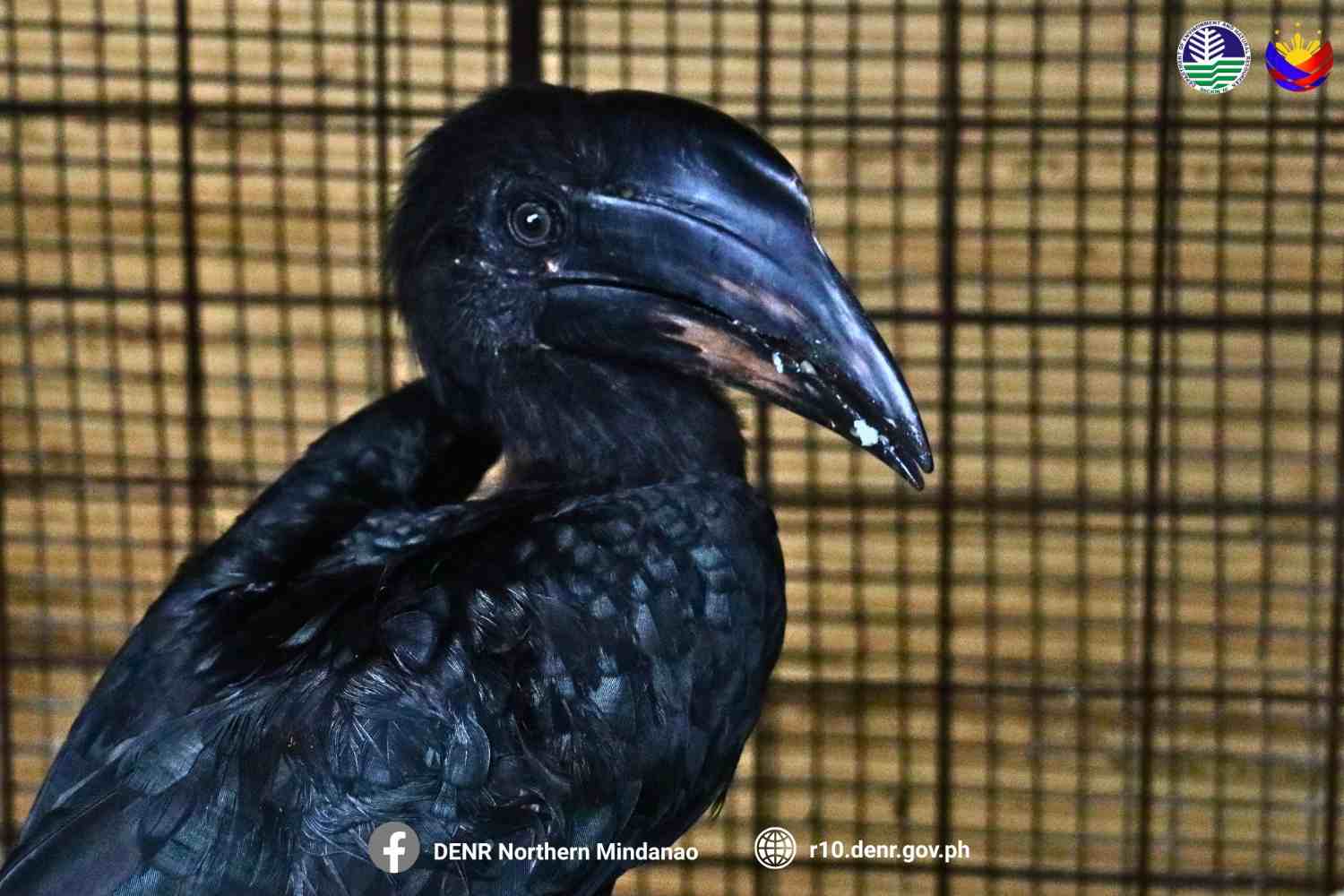
It was noticed almost by chance, while fighting the waves a few meters from the shore. In the waters of Cagayan de Oro, on the Philippine island of Mindanao, some workers working on a construction site rescued a bird in obvious difficulty. Only after the intervention of the environmental authorities was the true extent of the event understood: that animal was a Sulu hornbill, one of the rarest and most threatened species in the world, of which only about thirty individuals survive in the wild.
Treatment and return to freedom
After the report, the hornbill was recovered and entrusted to the veterinarians of the Department of Environment and Natural Resources of the Philippines. Specialized teams treated some wounds and assessed his general condition, monitoring his recovery. Once stabilized and deemed suitable, the animal was released into a protected area, deemed safe and compatible with the needs of the species. A quick intervention that probably avoided the loss of one of the last existing specimens.
A species on the brink of extinction
The Sulu hornbill (Anthracoceros montani) is a large tropical bird, recognizable by its dark plumage, light tail and characteristic massive beak topped by a helmet. It is an endemic species of the Sulu archipelago, in the southern Philippines, and today survives exclusively on the island of Tawi-Tawi. According to IUCN estimates, just 27 adults remained in 2019, a number that places it in the critically endangered category, the last step before extinction.
Why hornbills are so vulnerable
Hornbills play a key ecological role as seed dispersers, contributing to the regeneration of tropical forests. However, their particular reproductive behavior makes them fragile: the females nest in tree cavities, walled inside by the male, who feeds them for weeks. If the male is killed or captured, reproduction fails. Added to this are deforestation and poaching, fueled by the illegal trade of their beak, known as “hornbill ivory”.
A discovery that raises questions
The presence of the hornbill in Mindanao remains an enigma. The island is located about 600 kilometers from the species’ known range, a distance that is difficult to explain by natural movement. The most plausible hypothesis is that of illegal trafficking of wild animals: the bird could have been captured and transported, then managing to escape. In this case, the rescue also tells a broader story, made up of clandestine networks that threaten the survival of the rarest species.
You might also be interested in:
