
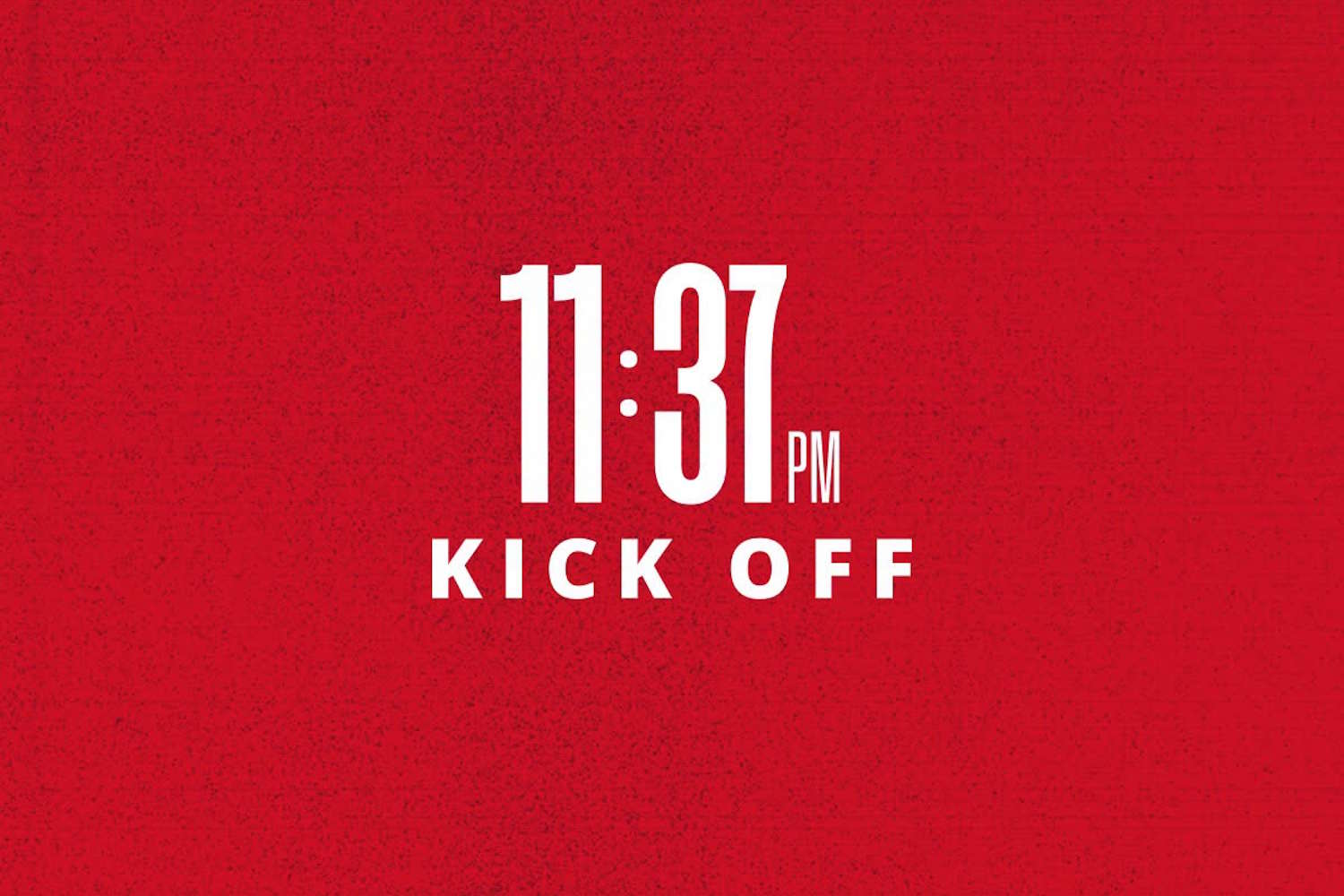
Millions of English fans, before each national team match, type the same question on search engines: “What time does the match start?“An automatic, almost ritual gesture that accompanies the wait for a sporting event capable of stopping an entire country.
This year, however, those looking for the kick-off time found themselves faced with an unexpected answer: 11.37pm. It is not the time for the kick-off of England’s match at the 2026 World Cup. It is, instead, the moment when, according to estimates, incidents of domestic violence increase after the end of a match.
It is from this simple yet powerful intuition that “The Other Kick Off“, the new campaign by Women’s Aid, a historic British organization committed to combating violence against women and children.
View this post on Instagram
The other kickoff
The title of the campaign plays on a typically English linguistic nuance. “Kick off” actually means “kick-off“, but in colloquial English the expression “to kick off” also indicates the moment in which a situation degenerates, explodes in anger or violence.
And it is precisely this double meaning that transforms a symbol of celebration and sharing into a social denunciation.
For many women and children, in fact, the real “other kick-off” does not coincide with the entry of the teams onto the pitch, but with the return home of those who vent frustration, anger or aggression within the home. A message that draws attention to an often invisible and too often underestimated phenomenon. In this way, therefore, Women’s Aid chooses to fit into an already existing behavior: the compulsive search for match times.
In stations, in fan zones, near pubs and on advertising screens, the number 23:37 appears, presented with the aesthetics and language typical of the world of football. The result is immediate disorientation. Those expecting a sporting response find themselves faced with a very different reality.
View this post on Instagram
Each installation also links, via QR code, to the support services and help resources made available by Women’s Aid for victims of domestic violence.
Furthermore, the 2026 edition of the World Cup adds a further element of concern. The matches played between the United States, Canada and Mexico take place in different North American time zones, with the consequence that many England matches end late at night in the United Kingdom.
According to the association, this could further aggravate the problem: episodes of violence risk occurring precisely at times when victims are most isolated, neighbors are less present and support services are less visible.
What’s behind that number
The time 11.37pm was not chosen randomly. The estimate takes into account the average length of a match, the time spent consuming alcohol after the match and the journey home. Longitudinal research from Lancaster University found that incidents of domestic violence increase by 38% when England lose and 26% when they win.
It goes without saying that football is not the cause of violence, but it is obvious that the roots of the phenomenon are deep and sink into the dynamics of control, abuse and inequality that characterize violent relationships. However, according to scholars, emotionally intense events, alcohol consumption and collective tensions can contribute to amplifying already present behaviors.
