
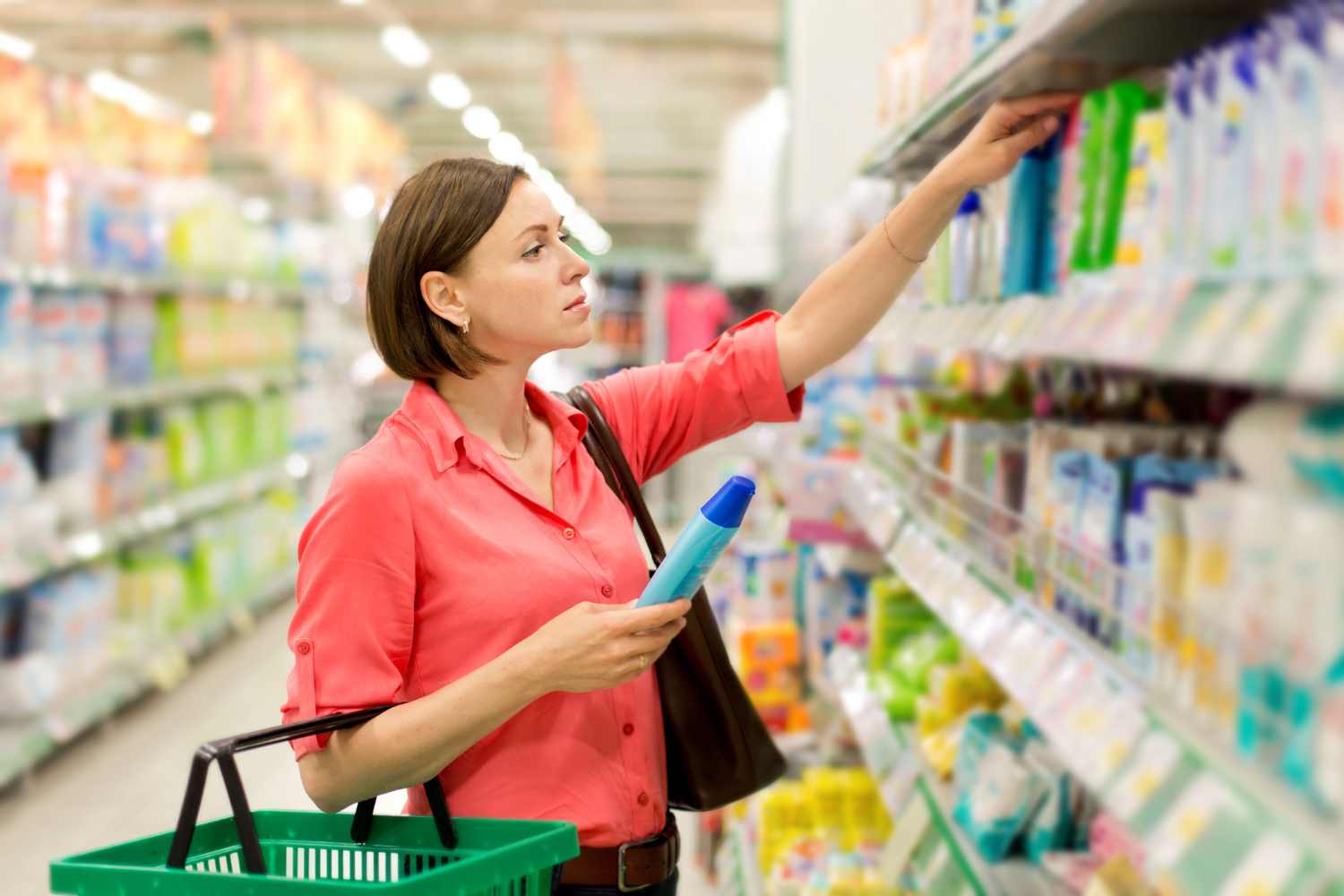
We buy them easily at the supermarket, relying on well-known brands and reassuring advertisements. Yet, some shampoos we use daily do not have a composition that is exactly harmless for everyone. In fact, they can contain allergenic fragrances, irritants and environmentally harmful ingredients that end up in our wastewater, causing damage to aquatic ecosystems.
A recent test conducted by the Swiss consumer magazine K-Tipp analyzed 14 shampoos for normal hair, revealing that some popular products contain problematic substances in high concentrations.
Allergenic fragrances
Eight of the fourteen products tested had fragrance-related issues. These fragrant substances, which have no cleansing or nourishing properties, are added simply because products with a pleasant smell sell better. However, according to the Swiss Allergy Center, repeated contact with these ingredients can cause allergic reactions ranging from watery eyes to asthmatic symptoms.
In more severe cases, the skin may experience redness, intense itching or eczema. The risk increases proportionally to the frequency of exposure, i.e. the more often we come into contact with these substances, the greater the probability of developing sensitization.
The product that disappointed the most in this sense was the “Elsève Energie” shampoo by L’Oréal Paris, which contained five allergenic fragrances in concentrations higher than 100 milligrams per kilogram. Prominent among these is linalool, a lavender-scented ingredient known to frequently trigger allergies in clinical studies. The problem of linalool is exacerbated when it comes into contact with oxygen during hair washing, further increasing its allergenic potential.
It is not the first time that L’Oréal has come under fire: two years ago, a test conducted by the magazine “Saldo” found that the “Anti-Breakage Repair Shampoo” of the same brand contained the greatest quantity of problematic substances among all the products analyzed. What makes the result even more absurd is the price: at 1.98 Swiss francs for 0.1 litre, this shampoo costs over ten times more than the best products in the test.
Pantene and Herbal Essences shampoos also received negative ratings. The laboratory detected high concentrations of DMBCA, hexamethyllindanopyran, and hexyl cinnamal, each in quantities greater than 100 milligrams per kilogram. Hexyl cinnamal poses a double threat: It not only frequently triggers allergies in humans, but according to the European Union’s chemical database it is also highly toxic to aquatic organisms and causes long-term environmental pollution.
A 2019 study by the German Federal Environment Agency showed that this substance is not fully degraded in wastewater treatment plants, thus ending up in rivers and lakes where it harms aquatic wildlife. Every time we wash our hair, we unknowingly contribute to this silent pollution.
The cheapest products are the best
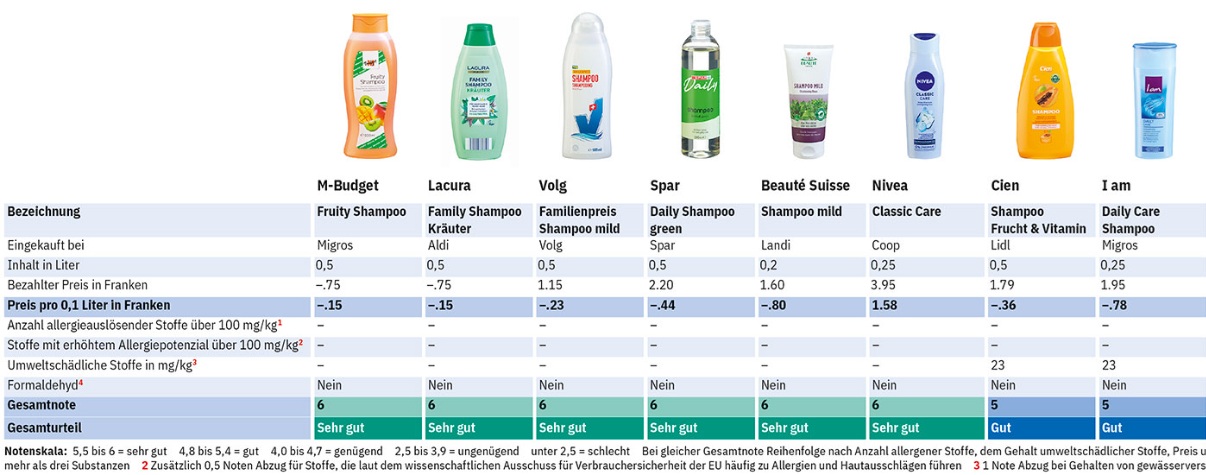
Quality and price in the case of shampoos do not seem to necessarily go hand in hand. Six products received an excellent rating, including the two cheapest overall: the “M-Budget Fruit Shampoo” by Migros and the “Herbal Family Shampoo” by Lacura (typical references from the Swiss market). Both did not contain substances of concern in concentrations above 100 milligrams per kilogram, the limit that the European Scientific Committee for Consumer Safety considers safe.
Costing just 1.50 Swiss francs per litre, these products demonstrate that it is possible to formulate effective, safe and environmentally friendly shampoos without making consumers spend a fortune. An important lesson for big brands.
Lidl’s Cien fruit and vitamin shampoo was also good.
How the test was conducted
A specialized cosmetic laboratory analyzed on behalf of K-Tipp 14 shampoos for normal hair, looking for around 60 potentially problematic ingredients identified by the European Scientific Committee for Consumer Safety. The chemicals searched included allergenic perfumes and formaldehyde.
Shampoos were downgraded if they contained allergens in concentrations above 100 milligrams per kilogram, the level the European Committee believes poses a risk to human health. As regards substances harmful to the environment, the critical limit has been set at 10 milligrams per kilogram.
