
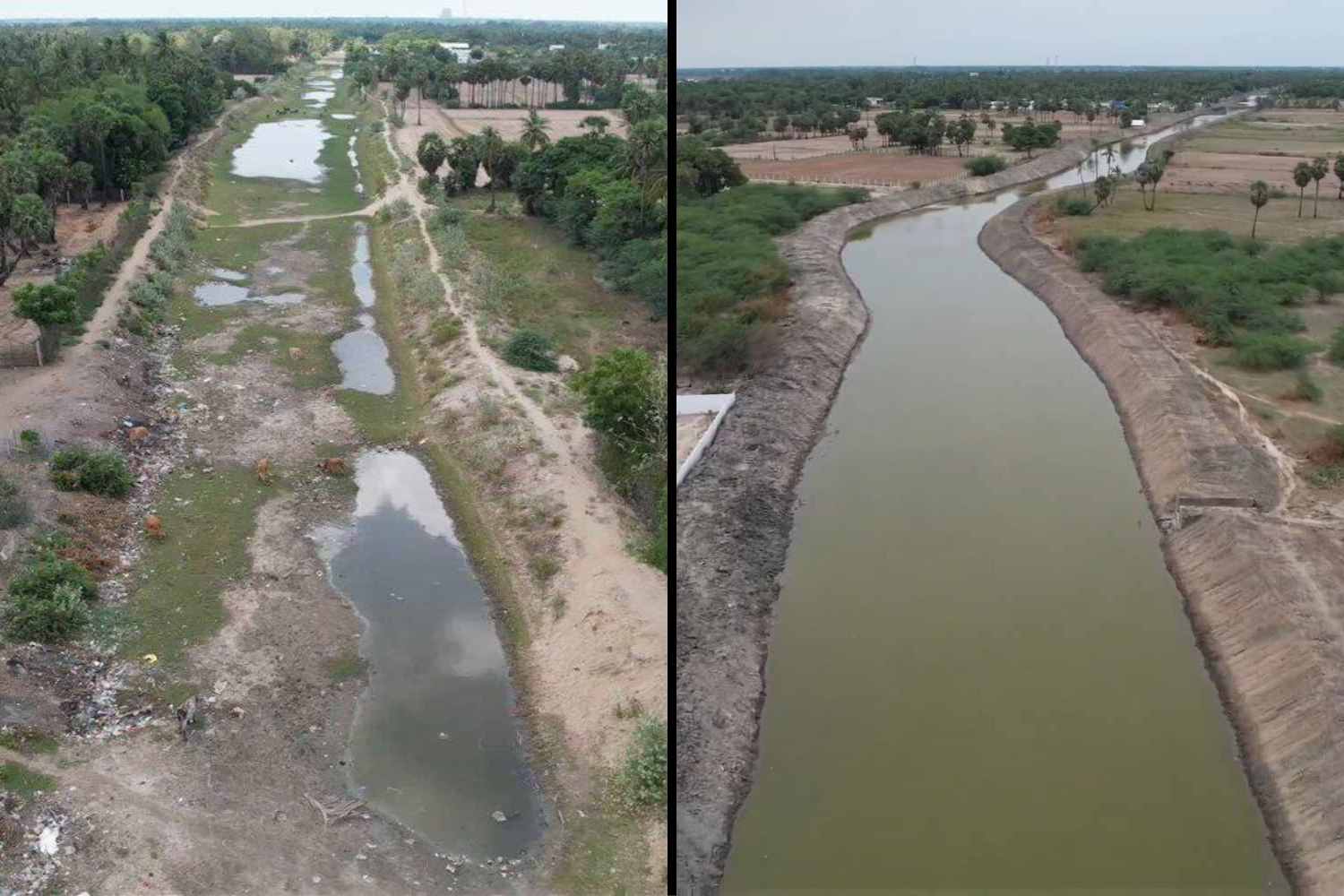
For years it had remained there, still: a stretch of canal reduced to an open-air landfill, the waters almost still under a layer of plastic and debris, the banks colonized by invasive plants. Today that channel flows again, with mangroves along the banks and the tidal flow circulating again. We are in Tamil Nadu, in the Cuddalore district, India, where the history of the Buckingham Canal has become a reference case for environmental restoration actions.
View this post on Instagram
The canal and its recovery
The Buckingham Canal is a historic work: built in the British colonial era, it extends for approximately 800 kilometers connecting the states of Andhra Pradesh and Tamil Nadu along the Coromandel coast. Like many Indian urban and peri-urban waterways, it has suffered decades of neglect and pollution, turning into a receptacle for solid waste and invasive vegetation.
The turnaround started from Pichavaram village, as part of the Tamil Nadu government’s Climate Resilient Village programme. Over a 3-kilometer stretch, approximately 600 local residents — paid for their work — removed 750 kilograms of plastic and significant quantities of prosopis, an invasive plant that was obstructing water flow. The overall costs of the intervention, coordinated by the Cuddalore district administration in collaboration with the state Forestry Department, amount to approximately 69 lakh rupees (approximately 75,000 euros). The banks have been reinforced to prevent erosion and 3,000 mangroves have been planted along the edges.
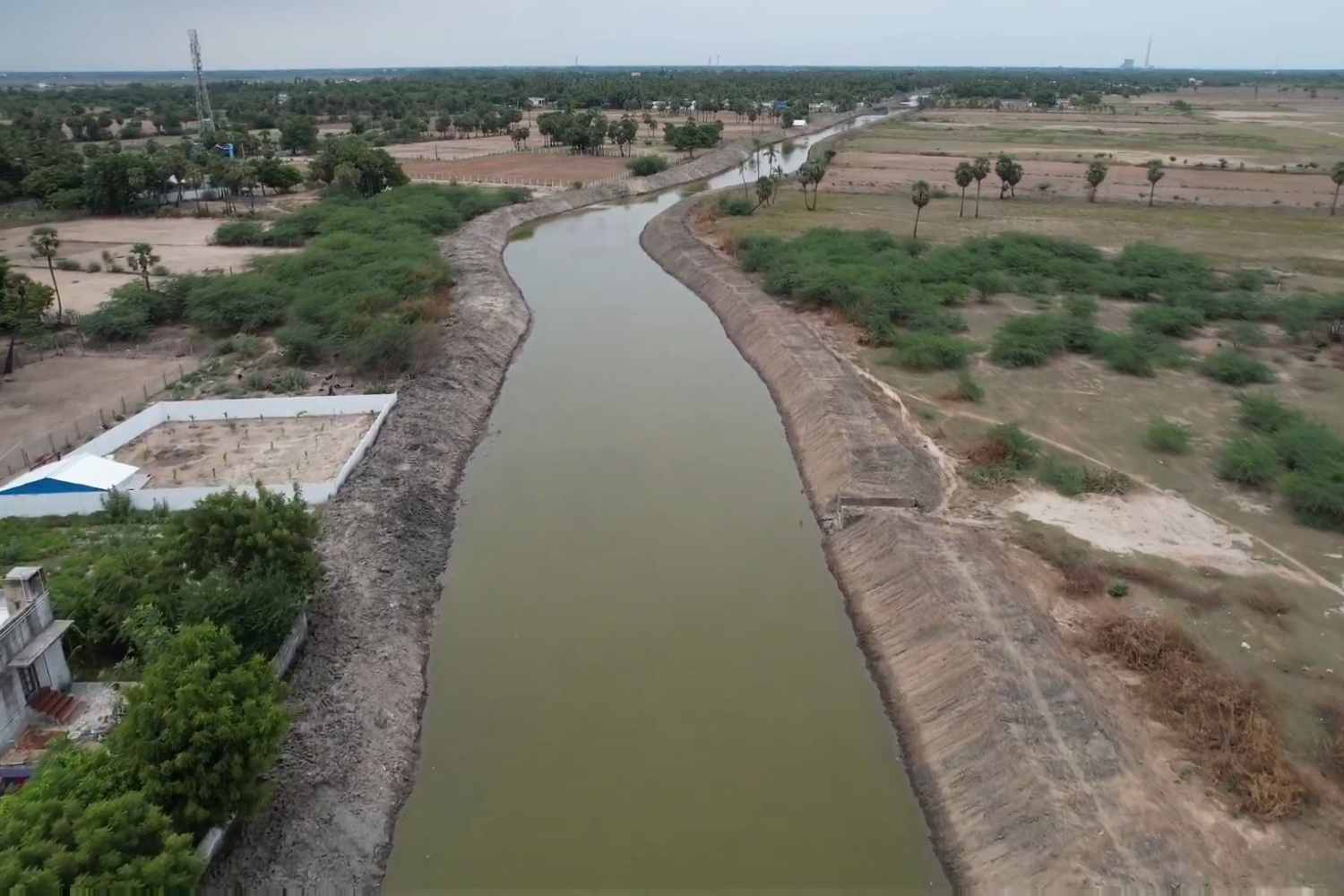
The collected waste was handed over to Killai Town Panchayat for controlled disposal. The works have returned the hydraulic function to the canal, therefore the water has returned to circulate towards the hinterland areas of Pichavaram, with many benefits for around 50 families of the Irula tribal community, which depends entirely on the surrounding ecosystem for fishing.
The mangroves of Chennai
In parallel, the Tamil Nadu Forest Department conducted a second intervention on the Buckingham Canal near Chennai, the state capital. During the year 2025-26, 20,000 mangrove trees were planted on 20 hectares, with the aim of creating what authorities call a “living coastal bioshield” for the city.
To ensure the survival of the plants – which require the regular flow of brackish water – the Forestry Department has designed a fishbone hydraulic system: 8 main channels, 8 secondary channels and 186 distribution channels, which allow the tide to reach the entire plantation area uniformly. The species planted include the Rhizophora, Avicennia and Bruguiera varieties, typical of the coastal forests of the Indian subcontinent. A second phase included another 5,000 shrubs in the Adyar River estuary.
The project was implemented with the contribution of ICICI Bank as part of sustainability initiatives. «Step by step, the Tamil Nadu Forestry Department is building Chennai’s living coastal bio-shield, restoring the mangroves that protect the city, nourish biodiversity and strengthen climate resilience», these are the words – entrusted to a post on X – of Supriya Sahu, Additional Secretary for Environment, Climate Change and Forests of Tamil Nadu.
