
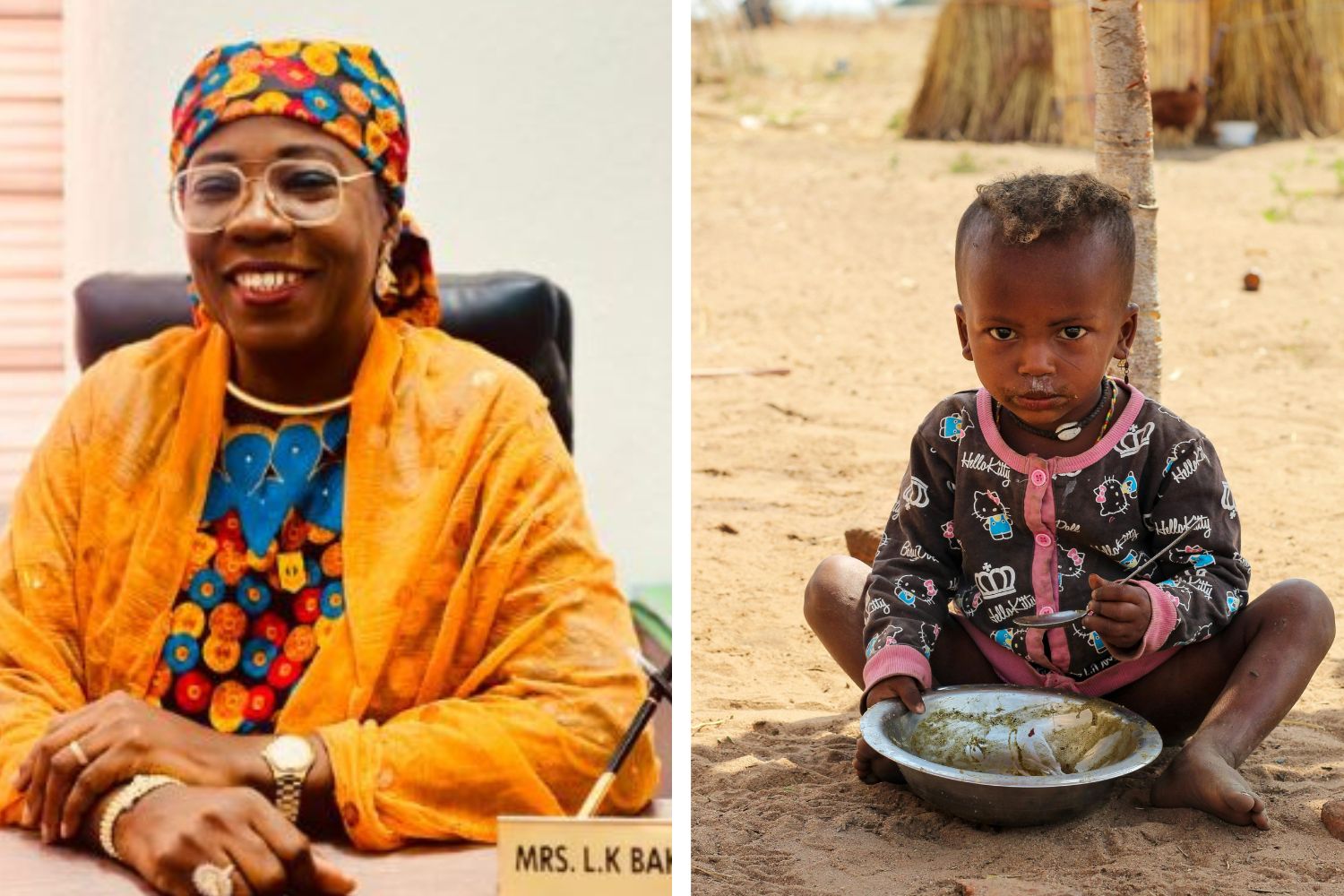
In a country where over 40% of the population lives below the poverty threshold, with about 83 million people suffering from hunger, the challenge of overcome the lack of food pushed a woman to develop and redesign broth dice and promote a real food revolution in Nigeriain Africa.
She is Ladids Kuluwa Bako-AiyegbusiDirector-Capo of the Department of Nutrition of the Ministry of Health and the Nigerian and Nutritionist Social Wellness and Nutritionist, and collaborating with the Nigerian Agency for the administration and control of food and drugs, as well as with companies in the private sector, is now driving an innovative program that takes a common basic food of many Nigerian kitchens, i broth diceand strengthens them with micronutrients to nourish children even if they don’t always manage to have enough to eat.
Banana GMO: Will Super Banana save Africa from hunger?
The cubes are enhanced with iron, vitamin B12, folic acid and even zinc. With them inserted in the diet, the children are “supplied” of proteins and vegetables. So much was worth in Ladidi to return to the most influential voices of Time100 Health 2025.
Thanks to his project, in fact, the broth cubes have reached almost 100% of the houses not only in Nigeria, but also in Senegal and Cameroon.
When almost half of children under five who die in your country do so due to malnutrition, standard food programs are not enough – says Ladidi. Although families cannot afford proteins and fresh vegetables, they can afford the much less expensive broth.
The conditions in Nigeria
According to Save the Children, in Nigeria 15.6 million children, or one out of six, risk hunger due to the growing insecurity, the continuation of the conflict, banditry and the increase in food prices.
And according to UNICEF data, 78 million Nigerian children are the most exposed to the risk of a convergence of three threats related to water: water, inadequate toilets, related diseases and climatic risks.
In Nigeria, a third of children does not even have access to basic water at home and two thirds do not have basic toilets. Hand hygiene is also limited: three quarters of children cannot wash their hands due to lack of water and soap at home. Consequently, Nigeria is one of the 10 countries with the greatest load of deaths of children due to diseases due to the inadequacy of water and hygienic services, such as diarrheal diseases.
