
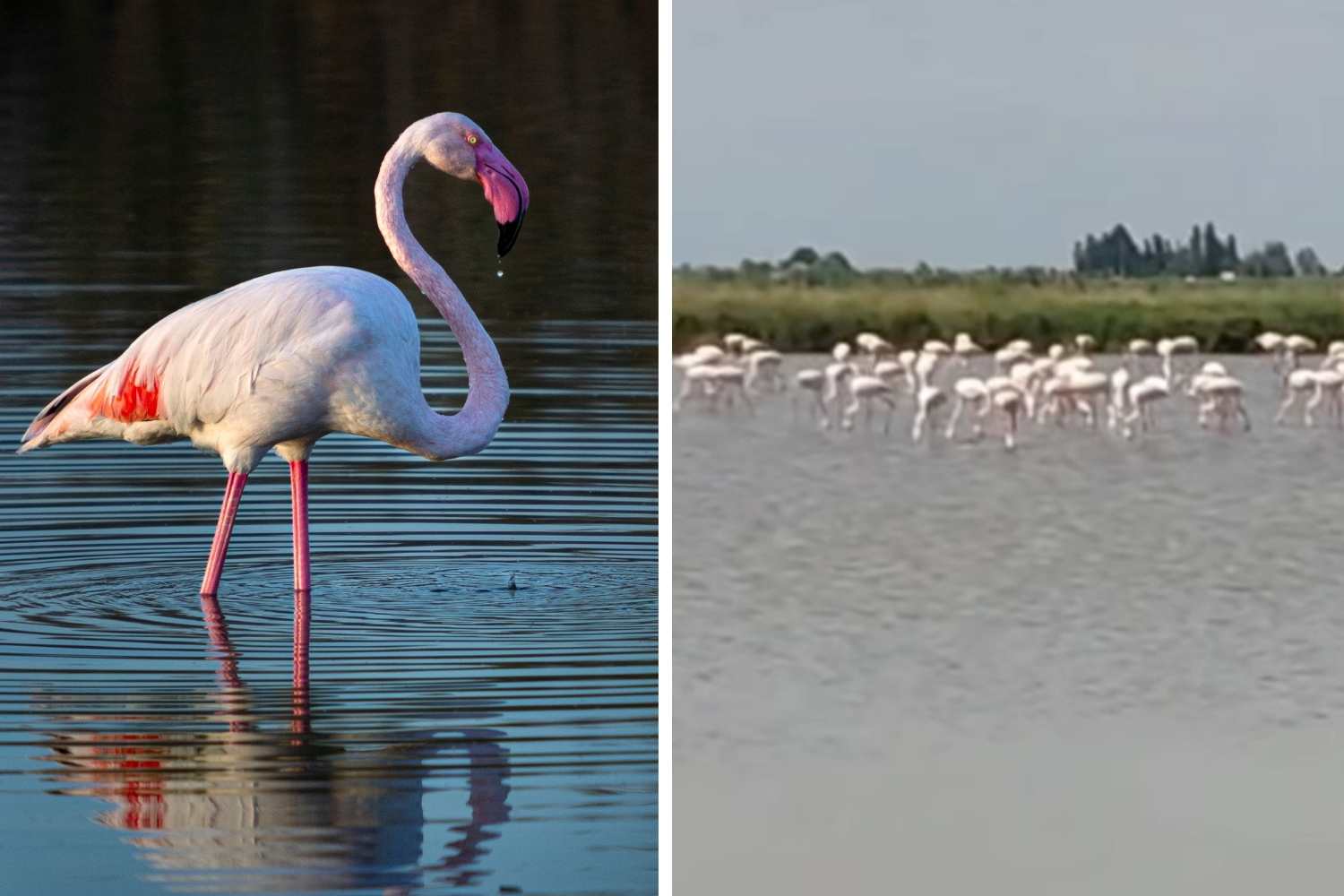
The elegant pink flamingos They have become an increasingly numerous presence in the Po Delta, living testimony of the changes that our ecosystems are going through. However, this demographic growth is creating many problems for local agriculture, in particular to cultivation of rice in the province of Ferrara.
But how did this difficult coexistence come between a protected species and one of the country’s most delicate agricultural productions? The answer is not simple, but one thing is certain: The fault is not of the flamingos, who are looking for only a suitable habitat and food to survive.
A problem that grows every year
It should be immediately clarified that The presence of these birds in the Po Delta is not a sudden invasion or a recent phenomenon. The flamingos are nomadic species, accustomed to moving in search of temporary habitats such as salty lakes or seasonal swamps. Their presence in this area dates back to decades ago, with a progressive colonization favored by the environmental protection and the availability of suitable wetlands.
The presence of these splendid birds in the rice fields of Delta is the result of profound environmental changes that began decades ago. Roberto Tinarelli, president of the Ornithologists of Emilia-Romagna (Aser) association interviewed by The Dolomites explains how everything started in the 90s:
A strong drought in the nesting sites of Spain in the 90s caused a movement of the population to the east and the first nesting in Italy, in Sardinia in 1993, in Tuscany in 1994 and in Puglia in 1996. In the Delta del Po the first sightings of the species date back to 1992 and, after an increase in the following years in the coastal damp areas of the North Adriatic, the species began to successfully nest in the Salina di Comagacchio 2000 and 2008 in Veneto.
Today the colony of the Comacchio valleys represents the largest in continental Italy.
The impact on agriculture
Until a few years ago, the presence of flamingos caused limited damage. Today, second Giampaolo Cenacchi, resourmer and regional president of Confagricoltura RiceGori, There is talk of “hundreds of thousands of flamingos” that move from the Valleys of Comacchio and the oasis of the lower Ferrarese to the cultivated fields. The problem is felt in particular during sowing: attracted by the water, the flamingos go in search of molluscs and crustaceans but, in doing so, they trample and interfere the just planted rice seeds, preventing their growth.
Until last year there was some damage – explains Cenacchi – but it was quite contained damage. Today we have hundreds of thousands of flamingos that really create problems
According to the Po Delta Riso Consortium, the damage of 2025 are truly consistent, In fact, a loss of about 80% of the harvest is estimated.
We love pink flamingos and we are pleased that our Ferrara rice contributes to their survival, 𝗽𝗿𝗲𝘀𝗲𝗿𝘃𝗮𝗻𝗱𝗼 𝗾𝘂𝗲𝘀𝘁𝗼 𝗱𝗶 𝗯𝗶𝗼𝗱𝗶𝘃𝗲𝗿𝘀𝗶𝘁𝗮 𝗯𝗶𝗼𝗱𝗶𝘃𝗲𝗿𝘀𝗶𝘁𝗮 𝗯𝗶𝗼𝗱𝗶𝘃𝗲𝗿𝘀𝗶𝘁𝗮 𝗯𝗶𝗼𝗱𝗶𝘃𝗲𝗿𝘀𝗶𝘁𝗮 𝗯𝗶𝗼𝗱𝗶𝘃𝗲𝗿𝘀𝗶𝘁𝗮 𝗯𝗶𝗼𝗱𝗶𝘃𝗲𝗿𝘀𝗶𝘁𝗮 𝗯𝗶𝗼𝗱𝗶𝘃𝗲𝗿𝘀𝗶𝘁𝗮 𝗯𝗶𝗼𝗱𝗶𝘃𝗲𝗿𝘀𝗶𝘁𝗮 𝗯𝗶𝗼𝗱𝗶𝘃𝗲𝗿𝘀𝗶𝘁𝗮 𝗯𝗶𝗼𝗱𝗶𝘃𝗲𝗿𝘀𝗶𝘁𝗮 𝗯𝗶𝗼𝗱𝗶𝘃𝗲𝗿𝘀𝗶𝘁𝗮 𝗯𝗶𝗼𝗱𝗶𝘃𝗲𝗿𝘀𝗶𝘁𝗮 𝗯𝗶𝗼𝗱𝗶𝘃𝗲𝗿𝘀𝗶𝘁𝗮 𝗯𝗶𝗼𝗱𝗶𝘃𝗲𝗿𝘀𝗶𝘁𝗮 𝗯𝗶𝗼𝗱𝗶𝘃𝗲𝗿𝘀𝗶𝘁𝗮 𝗯𝗶𝗼𝗱𝗶𝘃𝗲𝗿𝘀𝗶𝘁𝗮 𝗯𝗶𝗼𝗱𝗶𝘃𝗲𝗿𝘀𝗶𝘁𝗮 𝗯𝗶𝗼𝗱𝗶𝘃𝗲𝗿𝘀𝗶𝘁𝗮 𝗯𝗶𝗼𝗱𝗶𝘃𝗲𝗿𝘀𝗶𝘁𝗮 𝗯𝗶𝗼𝗱𝗶𝘃𝗲𝗿𝘀𝗶𝘁𝗮 𝗯𝗶𝗼𝗱𝗶𝘃𝗲𝗿𝘀𝗶𝘁𝗮 𝗯𝗶𝗼𝗱𝗶𝘃𝗲𝗿𝘀𝗶𝘁𝗮 𝗯𝗶𝗼𝗱𝗶𝘃𝗲𝗿𝘀𝗶𝘁𝗮 𝗯𝗶𝗼𝗱𝗶𝘃𝗲𝗿𝘀𝗶𝘁𝗮 𝗯𝗶𝗼𝗱𝗶𝘃𝗲𝗿𝘀𝗶𝘁𝗮 𝗯𝗶𝗼𝗱𝗶𝘃𝗲𝗿𝘀𝗶𝘁𝗮 𝗯𝗶𝗼𝗱𝗶𝘃𝗲𝗿𝘀𝗶𝘁𝗮 𝗯𝗶𝗼𝗱𝗶𝘃𝗲𝗿𝘀𝗶𝘁𝗮 𝗯𝗶𝗼𝗱𝗶𝘃𝗲𝗿𝘀𝗶𝘁𝗮 𝗯𝗶𝗼𝗱𝗶𝘃𝗲𝗿𝘀𝗶𝘁𝗮 𝗯𝗶𝗼𝗱𝗶𝘃𝗲𝗿𝘀𝗶𝘁𝗮 𝗯𝗶𝗼𝗱𝗶𝘃𝗲𝗿𝘀𝗶𝘁𝗮 𝗯𝗶𝗼𝗱𝗶𝘃𝗲𝗿𝘀𝗶𝘁𝗮 𝗯𝗶𝗼𝗱𝗶𝘃𝗲𝗿𝘀𝗶𝘁𝗮 𝗯𝗶𝗼𝗱𝗶𝘃𝗲𝗿𝘀𝗶𝘁𝗮 𝗯𝗶𝗼𝗱𝗶𝘃𝗲𝗿𝘀𝗶𝘁𝗮 𝗯𝗶𝗼𝗱𝗶𝘃𝗲𝗿𝘀𝗶𝘁𝗮 𝗯𝗶𝗼𝗱𝗶𝘃𝗲𝗿𝘀𝗶𝘁𝗮 𝗯𝗶𝗼𝗱𝗶𝘃𝗲𝗿𝘀𝗶𝘁𝗮 𝗯𝗶𝗼𝗱𝗶𝘃𝗲𝗿𝘀𝗶𝘁𝗮 Of course, then we will have to do something 𝗽𝗲𝗿 𝗹’𝗲𝘀𝘁𝗶𝗻𝘇𝗶𝗼𝗻𝗲 𝗱𝗲𝗶 𝗱𝗲𝗶 𝗿𝗶𝘀𝗶𝗰𝗼𝗹𝘁𝗼𝗿𝗶..but for the moment we enjoy the spectacle of the flamingos in the rice field
Posted by Cia Ferrara on Friday, June 6, 2025

Does the climatic crisis have to do with it?
The current situation in the Po delta highlights how Environmental changes – both natural and man -induced by man – deeply influence ecosystems and human activities In often complex and interconnected ways. The flamingos, far from being “guilty”, are living indicators of these transformations, which concern the loss or modification of traditional habitats and the adaptation of species under new conditions.
These changes testify to how environmental dynamics, including global warming, have long influenced migratory routes, the distribution of species and agricultural productivity, creating new and often difficult situations to manage.
It should be emphasized, however, that the growth of the population of flamingos is also the result of environmental protection measures that have allowed the recovery of a protected species. The situation therefore does not depend only on the climate, but also on conservation choices that have favored the increase in birds in wetlands.
Returning to the climatic crisis, the traditional Delta rice varieties suffer a lot for new conditions, showing increasing sensitivity to events such as drought or extreme temperatures. For years, the Consortium for Protection of Rice of the Delta del Po IGP has been asking for authorization for the introduction of more resistant cultivars, but so far without results.
Sustainable solutions are needed for everyone
The search for a balance between conservation of biodiversity and agricultural sustainability is not easy and requires innovative approaches. Among the possible solutions are evaluating:
In the meantime, the rice growers arrange with traditional methods: cannons, tractors with horn and night rondes to temporarily discourage the presence of birds. But these solutions have many “side effects”. As Tinarelli said:
The use of cannons to frighten the birds we have witnessed can have a negative effect, as well as on public quiet, also at an environmental level, since it can also remove other species that would normally frequent the rice fields to nest and in many European areas more effective targeted interventions have been implemented through the use, for example, of bright and sound bollards, all planned with a careful study. It should then be given that the flamingos avoid rice fields surrounded by trees and shrubs, and also think of ‘passive’ dissuasion methods is not absolutely secondary: this is because we are talking about a now known phenomenon, and which must be dealt with taking into account the needs of both ‘parties’ at stake, agricultural production and the natural ecosystem.
Sources: Italian rice / Dolomites
