

Puglia is a region full of natural and historical attractions. Among these, the caves represent one of the least known wonders, but certainly not to be missed. Here are some of the most interesting caves in the region, each with its own history and natural characteristics.
Caves of Castellana
The caves of Castellana, located about 40 km from Bari, are one of the best known speleological complexes in Europe. Discovered in 1938, these caves extend for 3 kilometers and have a variety of geological formations, including stalagmites and stalactites. Among the most fascinating caves we find the white cave, which owes its name to the intense white of plaster formations, and the altar cave, characterized by a large stalagmite. The visit allows you to explore an underground environment that tells the millennial story of the earth.
The Lamalunga Grotto and the Altamura man
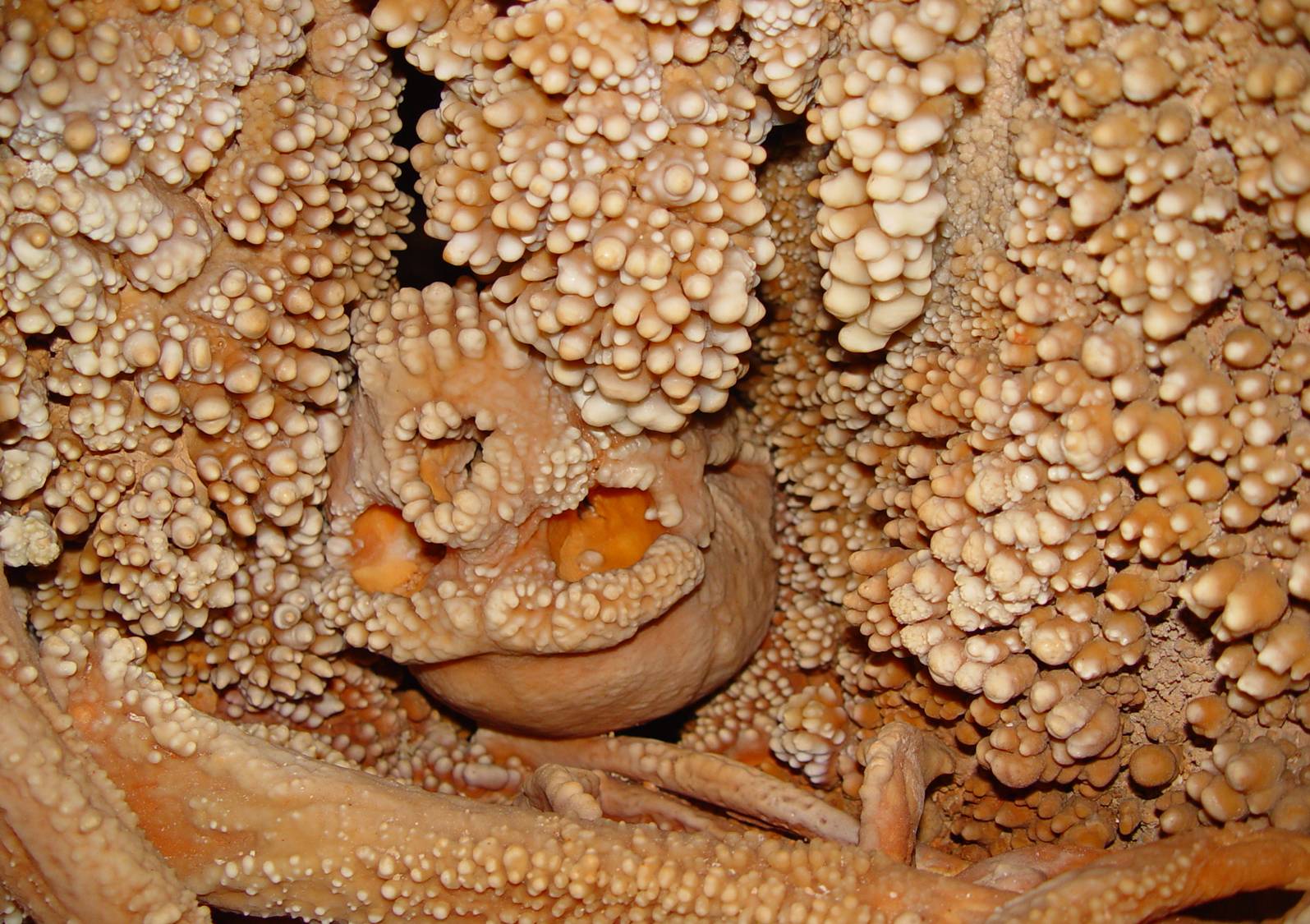
Located in Altamura, the Lamalunga cave is known above all for the discovery of the man from Altamura, a fossil of about 250,000 years ago. This find, found in 1993, is one of the most complete prehistoric skeletons ever found. The cave itself is an example of karst cavity, with walls modeled by water over the millennia. It is accessed through a swallowing in about ten meters deep exceeded which, after a path of about sixty meters, we come across the extraordinary archaeological find. The visit is an opportunity to discover both the history of geology and that of prehistory.
Zinzulusa cave
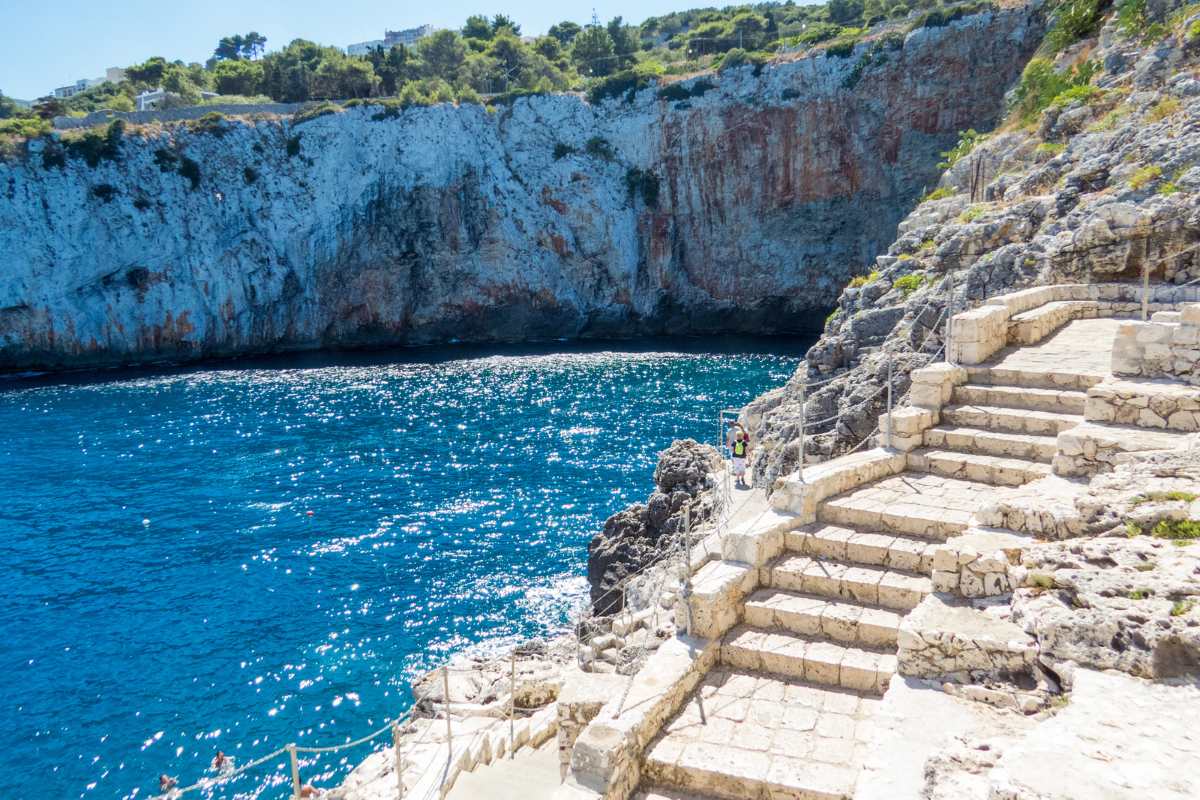
In Salento, the Zinzulusa cave is located in Castro and is famous for its formations of stalactites and stalagmites. The name of the cave derives from the Salento dialect, where “Zinzuli” indicates the clusters of stalactites hanging from the walls. The cave is divided into two parts: one emerged and a submerged one. The submerged area is also interesting from a biological point of view, thanks to the presence of some rare species of marine fauna.
Cave of tomatoes
View this post on Instagram
The cave of tomatoes, located on the coast of Vieste, takes its name from some molluscs hanging from the walls and remember the tomatoes. The cave is located in the field bay and is easily accessible both swimming and boat. Although less known than other caves in the region, it is a fascinating place to explore, especially for those interested in geology and marine fauna.
Great Cave del Ciolo
View this post on Instagram
The Grande del Ciolo cave is a marine cavity located in the municipality of Gagliano del Capo. The entrance of the cave is characterized by a natural arch that opens on the sea, creating a suggestive scenario. Inside, the route continues in a tunnel that leads to a small salty lake. The cave is also famous for its position, which offers a good observation point on the Adriatic Sea.
Cave of Mysteries
View this post on Instagram
On the Tremiti islands, the Cave of Mysteries, also known as Cave Smeralda, is a sea cavity famous for its turquoise reflections. The name “Mysteries” refers to the sounds created by the water that breaks on the rocks, giving an echo effect that amplifies the sound of the sea. The cave is an interesting place also for those who want to deepen the geological characteristics of the area.
Broken cave
View this post on Instagram

 (@salentoLife)
The broken cave, located in Vieste, is a natural cavity that stands out for the collapsed ceiling and double entrance. The cave can only be reached by sea, and is characterized by a quiet atmosphere, with light reflections that create games of shadows on the crystal clear waters. Inside, there is a small hidden beach that adds a further element of interest for visitors.
Cave of poetry
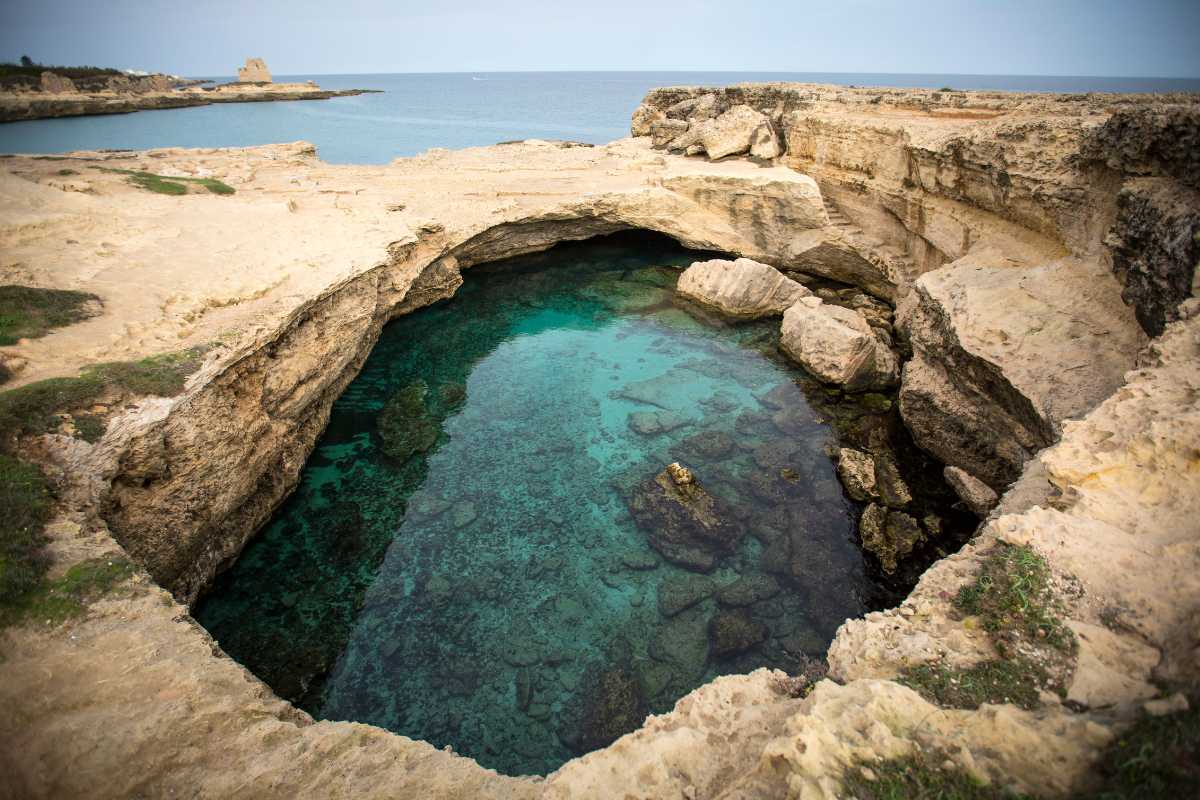
The cave of poetry, located about thirty meters from the sea in the Roca area, in the municipality of Melendugno, is one of the most fascinating natural jewels in Salento, looking out on the Adriatic side. Its extraordinary shape integrates perfectly with the intensity of the blue of the waters, which appears particularly vibrant here. A natural channel connects the main cave to a smaller cavity, easily passable to swimming or on the edge of small boats.
The name of the cave seems to refer to fresh water sources that are nearby and has fueled a series of myths and legends over the centuries. Ancient inscriptions on the walls of the cave testify to his attendance since remote times, with references to pagan cults. In addition to the cave, the surrounding area is enriched by remains of ancient walls and a sighting tower dating back to the seventeenth century.
Cervi Grotto in Otranto
The Grotta dei Cervi, located near Otranto, the most eastern city in Puglia, is an archaeological site of extraordinary importance, so much so that it is defined by the researchers “the Sistine Chapel of the Neolithic”. This place, famous for its rock paintings, houses fascinating and mysterious images, which range from stylized figures of deer to abstract motifs, attributable to ancient rituals. The name of the cave derives precisely from the presence of these deer, symbols of a culture and a spirituality that date back to remote times.
Next to the deer, there are numerous other symbols that suggest the existence of a rich social and cultural heritage, which unfortunately remains largely unknown. The entrance of the cave is located near Porto Badisco, but for reasons of conservation, the Cervi Grotto is not accessible to the public.
The caves of Santa Maria di Leuca

The caves of Santa Maria di Leuca, located in the extreme south of Puglia, represent a fascinating system of natural cavities carved by the incessant force of the sea over the centuries. These caves, formed through constant erosion of the waves, have a history that dates back to ancient times, acting as shelters for man and sacred places in prehistoric eras, with references to pagan cults.
The complex extends along the coast that separates the Adriatic Sea from the Ionian Sea, with caves located both on the eastern side (Levante) and on the western one (west). The cavities can be explored by boat excursions, starting from the ports of Leuca or Torre Vado, with the advantage of admiring their majesty and contrast with the crystal clear waters closely. The most famous caves of Santa Maria di Leuca are the three doors, the Devil Grotto, the Cave del Voffio, the Cave del Ciolo and the Child cave.
Don’t you want to lose our news?
