
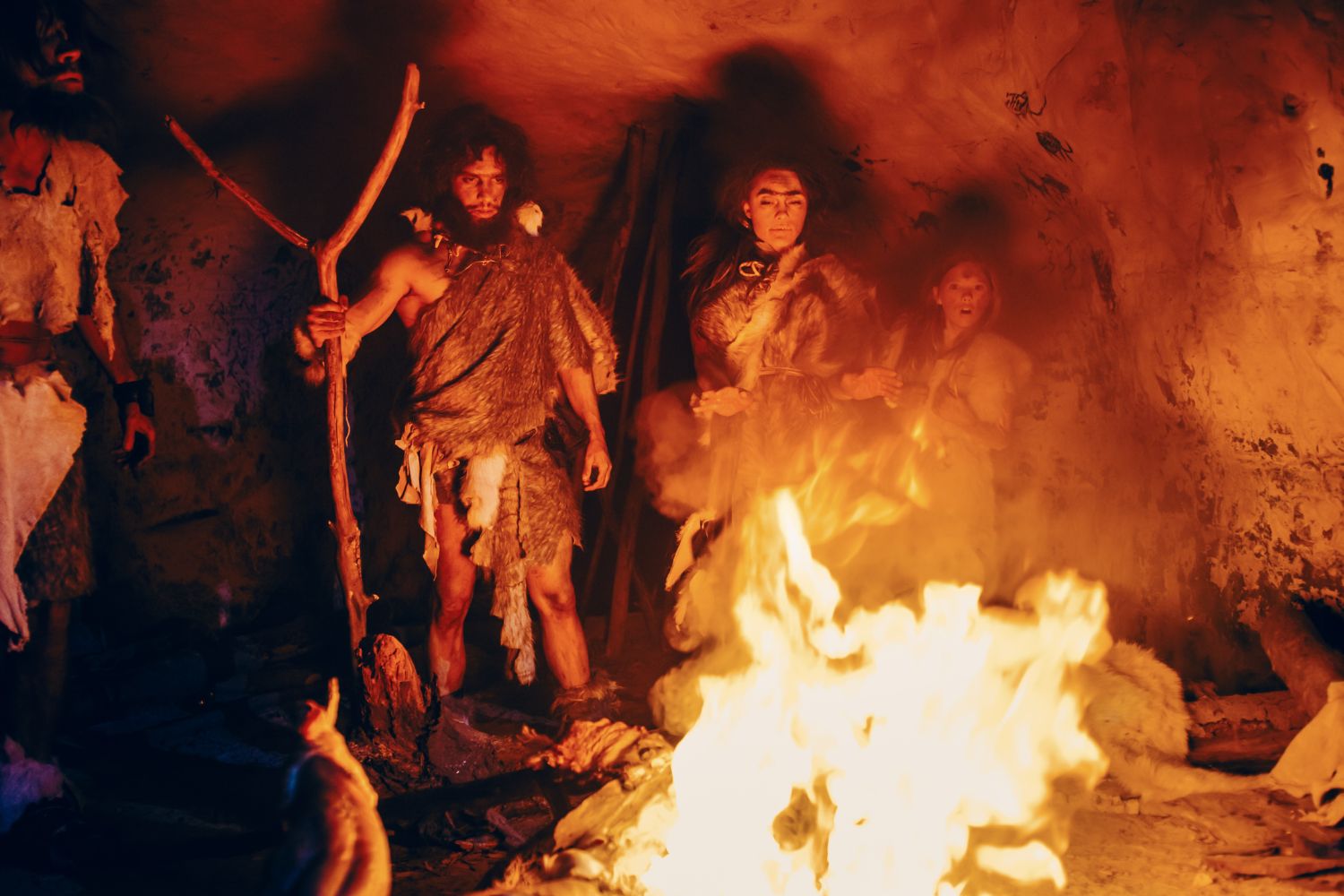
THE Neanderthal they lived with another human species even more primitive than them (and of course of the Sapiens): This is demonstrated by a study led byInstitut de Paléontologie Humaine (France) carried out on the Cranio di Petralona (which in turn had been found in a Greek cave in 1960) and which demonstrated the belonging of the finding to a different and older human species.
Petralona’s skull is a complete human skull remaining at the center of an important anthropological debate for over six decades. It therefore seems now that such a long time is now resolved. And the solution opens another important door on prehistory and our evolutionnext to the one opened by the possibility advanced recently by two researchers of theUniversity of Hawaii (still not confirmed) that the human species has also existed Homo juluensiswhich would include ancient human groups such as i Denisovaour ancestors with a story still partially mysterious.
Assigning an age to the almost complete skull found in the Petralona cave in Greece is of fundamental importance since this fossil plays a key role in European human evolution – the researchers write – this topic has been debated since its discovery, which took place over 60 years ago, highlighting the difficulties in the application of physical dating methods to prehistoric champions
In the past, the analyzes carried out on various types of samples have produced a large interval aged between about 170 and 700 thousand years, a range too large to be able to talk about consent on the dating of the human fossil. And, as scientists also point out, also the original stratigraphic position of the skull remains enigmatic.
The researchers have now focused on the only sample capable of providing crucial information on the age of the fossil, namely the calcite that developed directly on the skull.
The results suggest that Petralona’s skull has a minimum age of 286 thousand, with an uncertainty of “only” 9 thousand
A definitely more precise dating, which allows you to affirm how Petralona’s hominide is part of a distinct and more primitive group than Homo Sapiens and Neanderthal. The new estimate also provides further support to coexistence of this population next to the lineage of Neanderthal in evolving in the late medium European pleistocene.
But the surprises don’t end there.

Other speleotemi (secondary mineral deposits formed in the cave, editor’s note) and Calcite coatings have been championships in three main points of the cave; Among these, samples from the mausoleum where the skull would have been found cemented to a wall – the scientists write – the data show that the calcite that covers the skull is not contemporary to that of the wall of the mausoleum, contrary to what was previously thought
There History of our evolution It could be really much more complex than we think.
The work was published on Journal of Human Evolution.
Source: Journal of Human Evolution
