
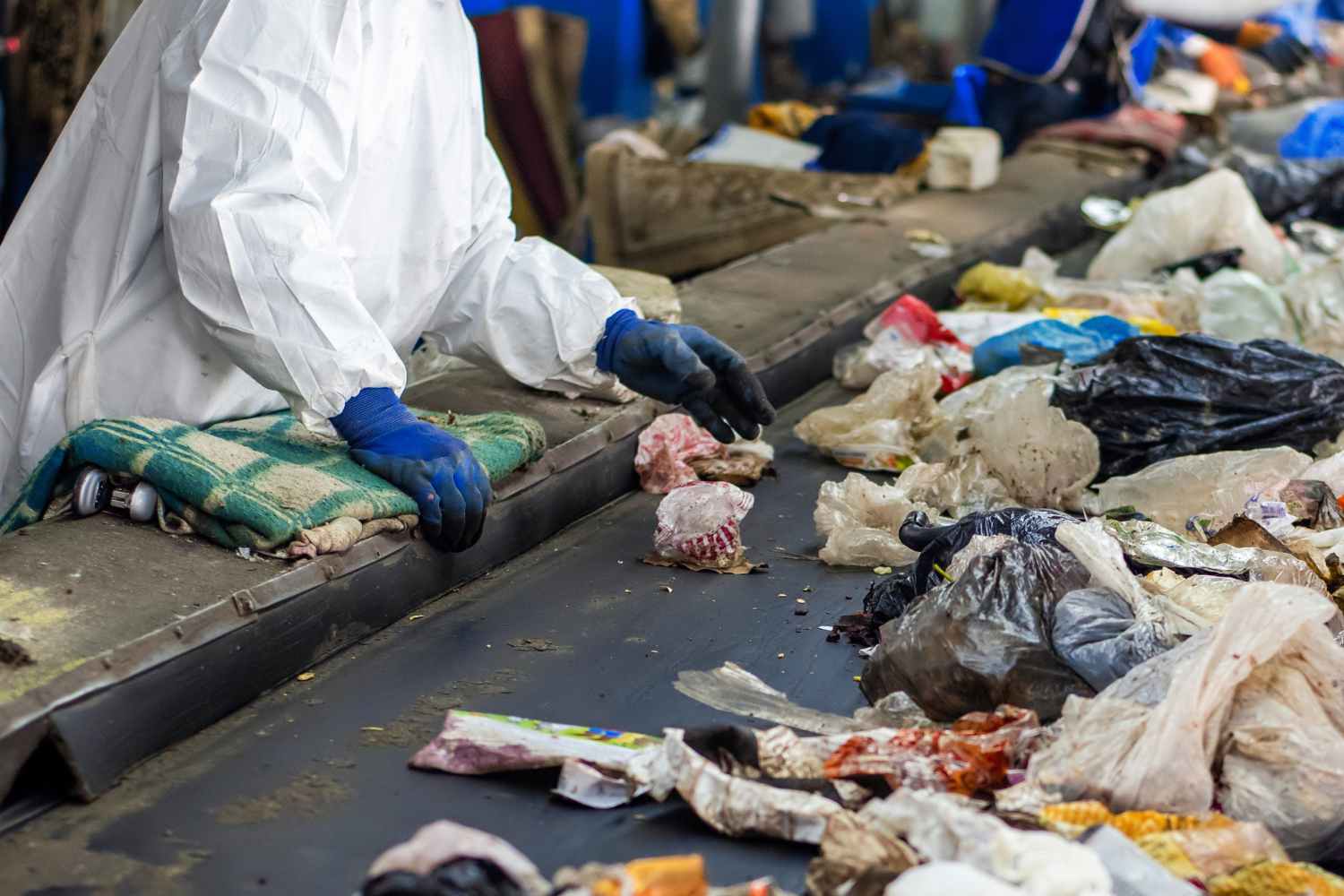
There are those who pay to have them and those who even go back to dig in old landfills to disintegrate them. No, we are not talking about hidden treasures, but of common waste. In China, the country that for an entire generation has fought against the “siege of garbage” in its metropolises, today the garbage has become such a scarce resource that she sent a colossal industry into tilt. An unthinkable short circuit until a few years ago, revealed by an investigation by the Financial Times.
The root of the problem is a bet, perhaps too ambitious. To stem the mountain wave of waste, Beijing reacted by building the largest network of thermovalizing worlds in the world. Over a thousand plants, a “fire power” capable of absorbing more than half of the global incineration capacity. As he explained to the British newspaper Zhang Jinging of the Wuhu Ecology Center, an NGO that monitors the sector, “incineration was a relatively rapid solution” to the problem of wild urbanization.
Such a quick solution to overcome the problem itself. Already in 2022, the treatment capacity of the plants (333 million tons) exceeded the waste actually produced (311 million). Today, that scissor has expanded, leaving the giants of the incineration hungry for fuel.
The result is an alarm cry that comes directly from the operators. “We have three incinerators, but one is closed all year round due to an insufficient supply of waste,” confessed a manager of a system in Shijiazhuang, pointing the finger at the demographic drop and economic slowdown. His conclusion is bitter: “We have already earned very little, but now we are at loss year after year”.
This “hunger for garbage” is triggering a desperate hunt. Some plants go to pay to obtain loads of garbage, others turn to the construction sites, others still perform the last taboo: return to dig in the landfills of the past. “The reduction of waste has an impact on profitability,” a Anhui operator has candidly admitted.
But behind the economic crisis there is an environmental legacy that does not turn off together with incinerators. Also at a reduced regime, these plants produce leachate and flying ashes. According to data from the Chinese Ministry of the Environment, 13 million tons of ashes were produced in 2024, but only 15% was reused, thanks to the real estate crisis that has reset the demand for building materials.
Yet, in this paradox there is an undeniable reverse of the medal. If the waste is scarce, it is also because recycling policies finally work. Becoming rules on separate collection, introduced since 2017, are making their fruits. Shenzhen, a megalopolis of 18 million people, is already a virtuous example: zero domestic waste end up in the landfill. It is proof that a more sustainable model is possible.
As a Zhejiang manager at the Financial Times summarized, “having less waste is actually a positive thing. It means that the environment is improving”. A reflection that sounds almost mocking for an industry born to destroy waste and which now risks being destroyed by their absence.
Don’t you want to lose our news?
