
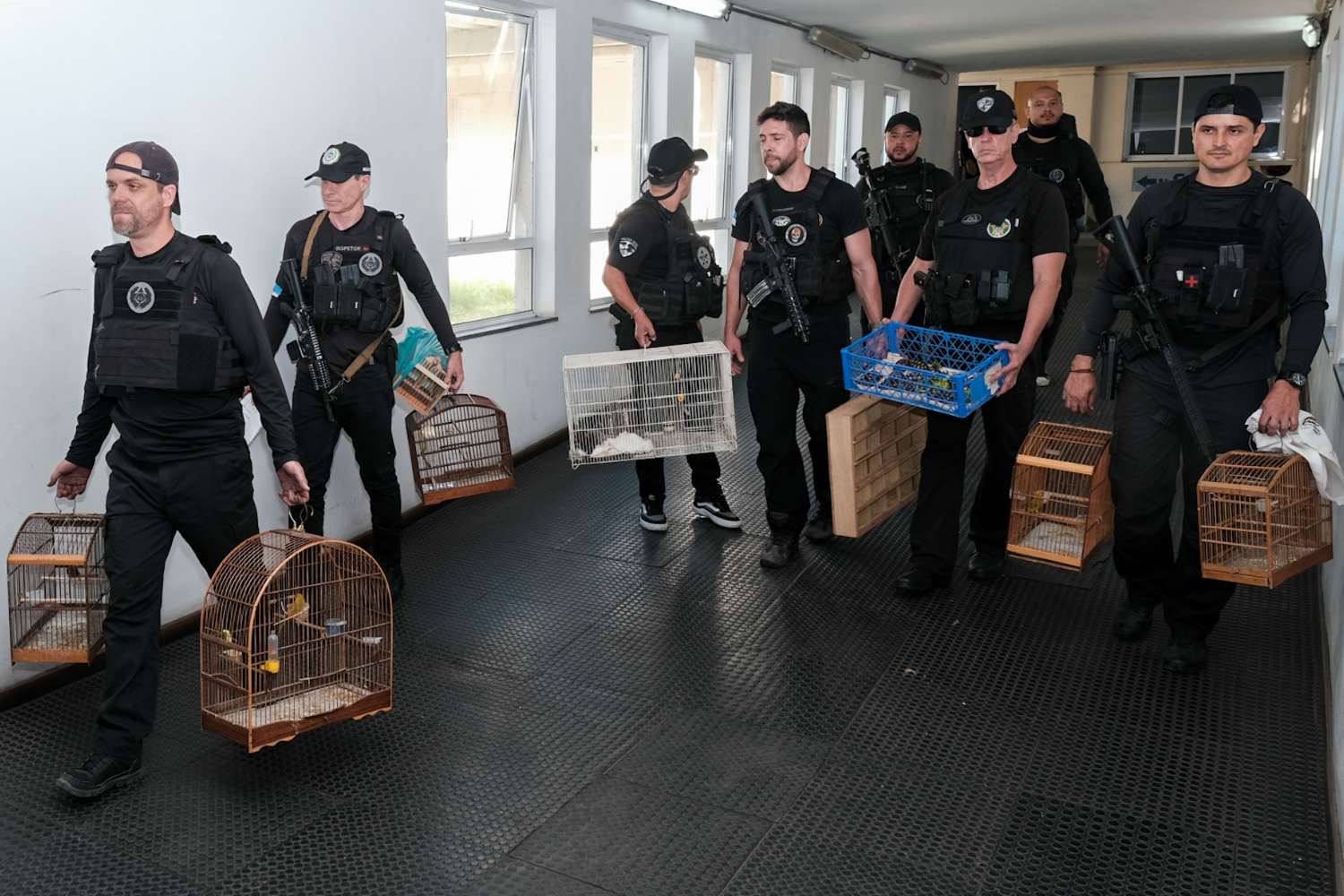
The government of the State of Rio de Janeiro has guided one of the most impressive operations ever carried out in Brazil. Baptized São Francisco operation, has involved over a thousand civil agents and is the result of a year of investigations aimed at affecting an organization that for decades has exploited the trafficking of wild animals.
During the operation, 17 people were already conducted in the control unit. More than 40 arrest mandates were performed and over 270 searches and kidnappings in different regions, from the capital to the Baixada Fluminense, from the lakes area to San Paolo and Minas Gerais, reaching over 800 wild animals of different species.
The investigation has shown that the criminal network was not limited to animals: it also managed weapons and ammunition, fueling urban violence and ties with other national factions. According to the authorities, at least 145 criminals were involved, divided into nuclei with specific roles, from hunters to traffickers, up to the lines that produced counterfeit documents to mask the origin of the animals. Governor Cláudio Castro reiterated that this operation represents a clear response to the overwhelmingness of the gangs, stating that Rio will not arrest in front of organized crime.
Cruel traffic for fauna
Investigators described the phenomenon as a real “death corridor”: many animals did not even survive transport. Among the most serious cases there was a group specialized in primates, which drugs and traded them illegally, even taking them from protected areas such as the Tijuca National Park. The secretary to the environment Bernardo Rossi has defined this traffic a silent extermination of the fauna, a practice that directly undermines biodiversity and destroys the ecosystems of Brazil.
The public ministry, the Federal Police, the Ibama and the State Institute of the Environment (Inea) also took part in the operation, in an unprecedented coordinated action. To ensure the well -being of the recovered species, a support base has been set up in the police city: here animals receive veterinary care and are evaluated by experts, before being transferred to the sorting centers for reintegration in nature.
The São Francisco operation is therefore not only a maxi-report, but a strong signal: defending Brazilian fauna also means counteracting criminal networks that live on violence, falsification and illegal trade.
You may also be interested in:
