
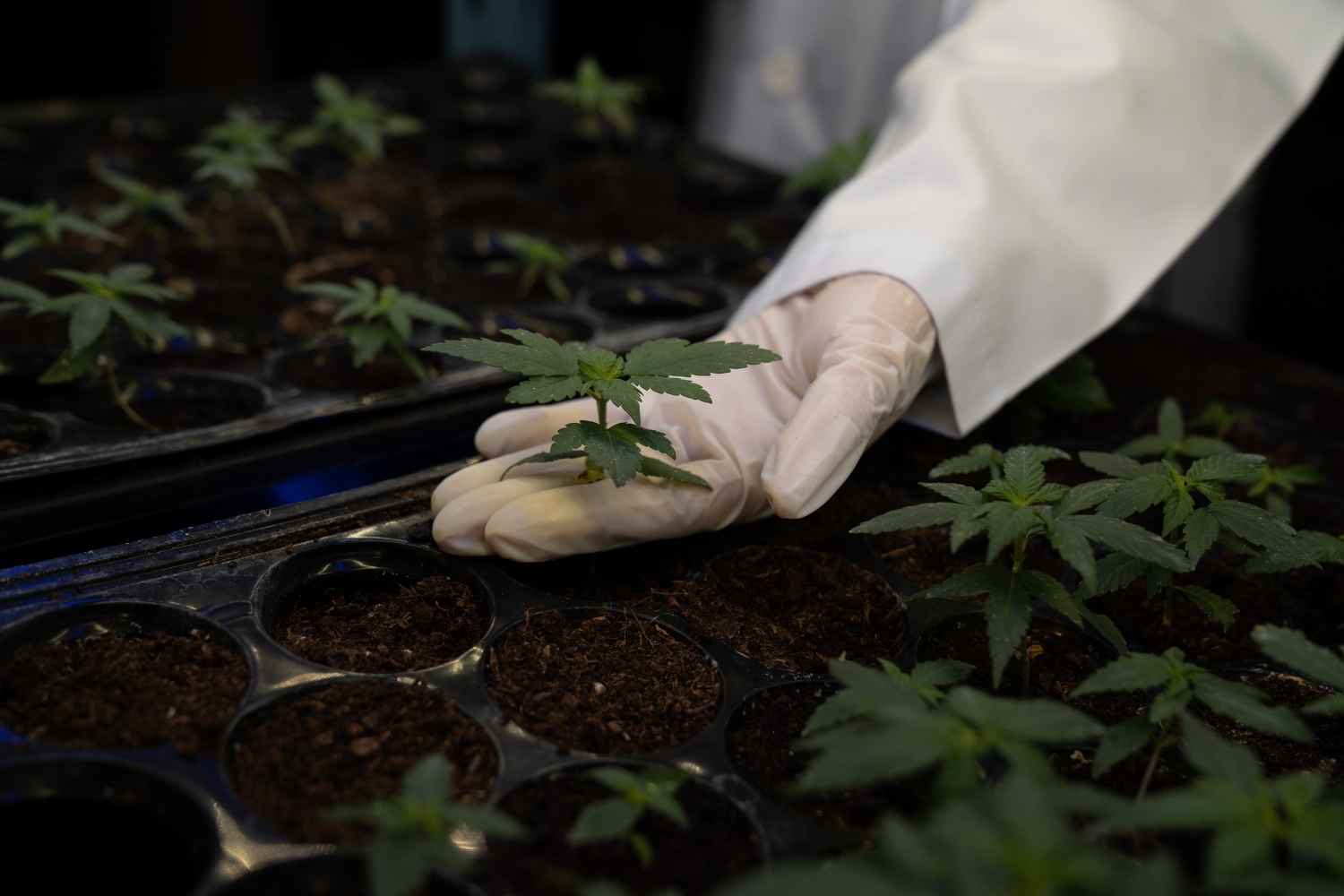
The Cannabis Light in Italy represents an economic sector of considerable size: a market of 2 billion euros with 6 million consumers and over 3,000 companies involved, which generates at least twenty thousand jobs. However, this sector is going through what can be called an unprecedented crisis, caused by the security decree 2025.
The Security Decree 2025 (Law 80/2025) has in fact introduced Article 18, which prohibits the cultivation, processing and sale of the inflorescences of Cannabis Light, effectively complying with traditional marijuana with a high THC content. Entering in force on April 12, 2025, the decree theoretically made a market illegal that had been legally operating for years under Law 242/2016.
However, the data show a much more complex reality: only 30% of the stores closed, while the kidnappings have decreased. This paradox suggests that the decree, while creating a climate of fear and uncertainty, is not achieving the objectives desired by the government.
Growers and shopkeepers are reacting to novelty in different ways, there are those who close, those who resist and those who await clarity and precise indications from the jurisprudence.
Kidnappings and controls in the area
In recent days in the Turin area, the mobile team has carried out a series of operations on dozens of stores, seizing packaged inflorescences and derivative products, especially in the traders’ warehouses. With the entry into force of the Security Decree, the cannabis light, legal until shortly before, has in fact been equated with drugs and detention and trade involve now up to six years in prison.
Many operators found themselves in difficulty, not knowing how to dispose of the goods left in the warehouses. The lawyer Beatrice Rinaudo, who assisting some Torinese dealt with the investigated Torinese, said:
This rule has numerous dark points and risks criminalizing operators who worked until yesterday in full compliance with the law.
Luca Fiorentino, a Piedmontese contact person of Hemp Sativa Italia, highlights the impact on the sector: Piedmonte had about 300 companies, 900 employed and an induced of 50 million euros. Many producers and retailers are now in difficulty, some have already closed, others evaluate to do so.
Among the operations of the last few days there was also that of the Fondi police station which led to the seizure of over 110 grams of products in points of sale in Fondi, Formia and Terracina.
The legal framework and favorable sentences
Although the Security Decree has equated the cannabis light to the one in high THC content, the legal framework remains ambiguous. The case of Turin is an emblematic example: a survey that lasted over two years involved 49 producers and traders, accused of production and drug trafficking. In 2023, the Nas carabinieri had seized almost two tons of hemp inflorescences, for an estimated value of 18 million euros, believed to contain “drug” THC levels.
The subsequent analyzes, however, denied this hypothesis: almost all of the goods respected the limits of the law, while the few non -compliant samples had not been placed on the market. The public prosecutor, early September, therefore recognized the legitimacy of the operations, and the Court ordered the filing of the procedure and the return of the material.
This case shows how legal cannabis light cannabis respected the rules, but also how much the new decree suddenly upset an agricultural and commercial sector in strong growth, generating uncertainty and economic difficulties for thousands of companies.
Also at national level there was recently a very important sentence, the Trento court confirmed that cultivating and selling cannabis light remains legal, provided that the THC does not exceed 0.6% and there are no psychotropic effects. Judge Enrica Poli recalled precedents of the Cassation (2019), according to which the sale of inflorescences without drug efficiency does not constitute a crime. This legal framework clearly shows how, in Italy, the cultivation and sale of certified cannabis light remains protected by law, despite the security decree.
Farmers and shopkeepers, between fears and resilience
But how are farmers and shopkeepers react? The Sativa Italia and Federcanapa Hemp associations report that only 20-30% of the approximately a thousand stores dedicated to Cannabis Light closed, while the others resist in fear of penalties. The lawyer Carlo Alberto Zaina defines article 18 of the decree “a deterrent of mere appearance”, rarely and sporadicly applied, without changing the pre -existing legal framework. The expert reports, among other things, that the seizures of CBD -based products are falling in recent months.
The position of the government then appears contradictory. On the one hand, the minister of agriculture Francesco Lollobrigida has attempted to reassure stating that “What was lawful remains lawful and what was prohibited continues to beO ”. On the other hand, the Security Decree has actually criminalized a sector that operated in full compliance with the law.
There is also no shortage of frictions with agricultural associations close to the government. Coldiretti criticized article 18 as penalizing for thousands of farms.
The unknowns for the future
Despite the controls and kidnappings, the jurisprudence and the trade associations see a positive signal in the ruling of Trento: nothing has changed compared to the pre -existing legislation, and most of the producers continue to cultivate and sell light cannabis respecting the limits of THC.
All this shows how the ban introduced by the government is not working as expected, generating a framework of legal uncertainty and tensions between the application of the law, jurisprudence and market reality.
Sources: Federcanapa / Hemp space
