
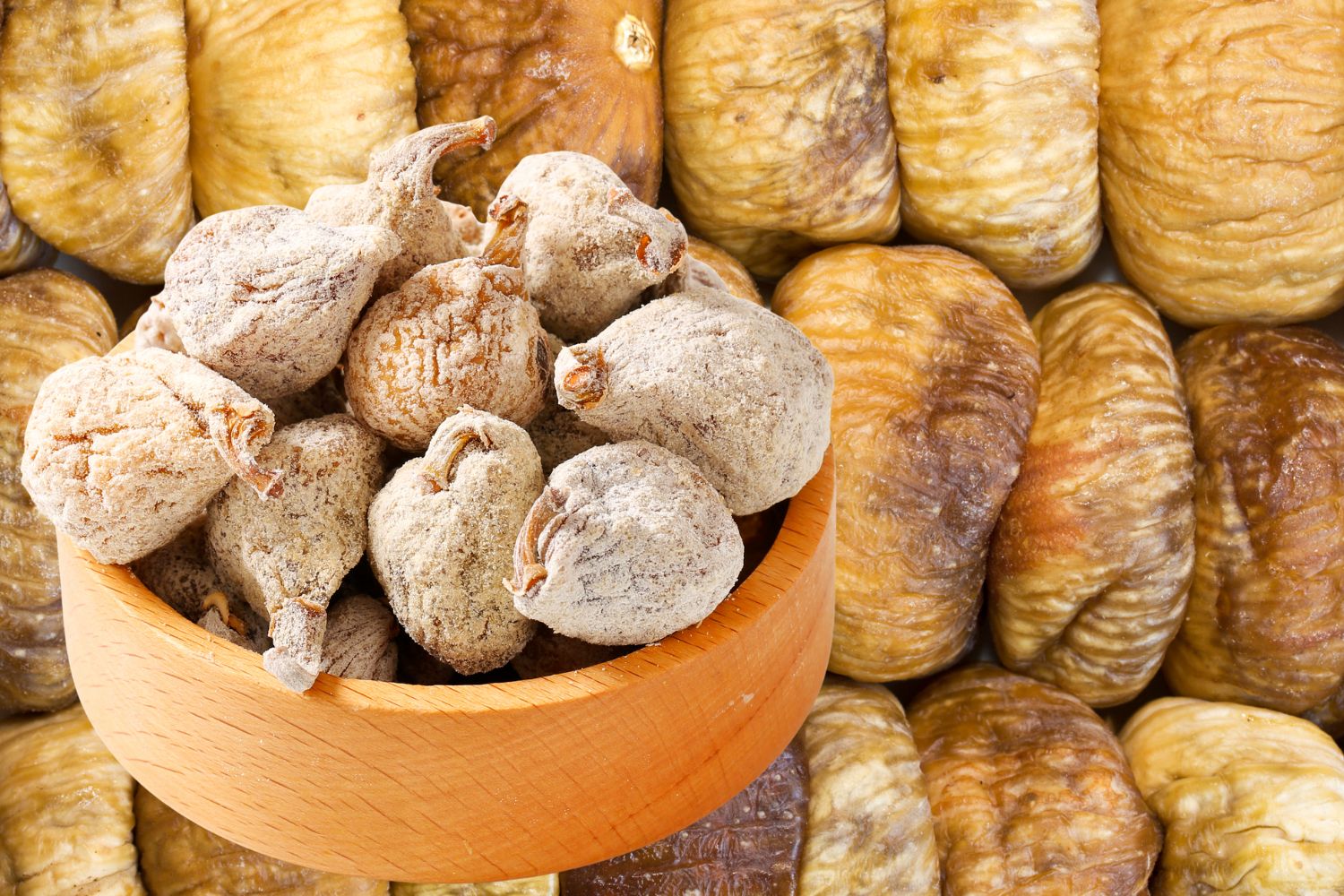
If you buy dried figs, at least once, you will surely have asked you: is that white powder that covers the surface is mold? Is it sugar added? The answer is surprising: it is natural sugar, belonging to the fruit itself, which crystallizes on the surface. A completely normal phenomenon which, indeed, indicates the high quality of the product.
The process of natural crystallization
When fresh figs lose water – during the drying process – the concentration of sugars increases drastically. The dried figs contain up to three times more sugar than the fresh fruit, reaching concentrations that can exceed 60% of the total weight. During conservation, these sugars migrate towards the surface of the fruit and form visible crystals.
The phenomenon has a precise name: “sunging” of figs. Crystalization occurs because the dried fig becomes an overlying sugar solution. In simple words, there is more sugar than residual humidity can keep dissolved. The result? Outside the figs the crystals are formed, creating; with a patina characteristic.
Science behind the phenomenon
Fresh figs mainly contain fructose and glucose, two simple sugars with different behaviors – glucose tends to crystallize more easily than fructose – and during drying, the water evaporates progressively and the sugar concentration rises until it reaches the saturation point.
A 2009 study published in Food Research International analyzed the phenomenon of crystallization in dried figs using X -ray diffraction: researchers discovered that the addition of glycerol can reduce the crystallization of sugar to a third party compared to control, demonstrating how much the process is influenced but completely natural when it takes place spontaneously.
The temperature and humidity play a fundamental role: dried figs should be kept with a humidity of less than 26%, when environmental humidity changes, sugars can be partially melted and recryptallize, forming new white deposits on the surface.
How to distinguish sugar from mold
The main concern of those who buy dried figs concerns the possibility of confusing sugar crystals with mold. However, there are substantial differences between the two phenomena: sugar crystals appear as crystal clear formations on the outside of figs, while mold has a more dusty appearance and is almost always black (not white) and is located inside the figs. Sugar crystals are also shiny and melt easily in hot water, while mold has a different consistency, often with greenish or gray shades.
Another distinctive element is the smell: the figs with natural crystallization maintain the typical sweet aroma, while the moldy ones emit an unpleasant and stale smell. If you have doubts, you can take a simple test: clean the sugar exposed on the skin of dried figs with hot water – the crystals will melt immediately.
A quality indicator
Paradoxically, the presence of the white patina is a good sign, because it shows that the fig is natural. Manufacturers who use chemical preservatives and aggressive industrial processes often prevent the formation of these natural crystals.
Perfectly clean and uniform -looking figs may have been treated with chemicals: almost perfect figs with a bleached layer are the result of hydrogen peroxide used to preserve a better appearance longer. The dried figs of the best quality instead have natural variations in the color and quantity of crystallization.
The nutritional value remains intact
The surface crystallization does not alter the nutritional properties of the fig and the dried fruits remain an excellent source of food fibers, potassium, calcium and iron. A 2011 study published in the Journal of Agricultural and Food Chemistry has shown that dried figs maintain a high content of phenolic compounds and antioxidant activities.
The dried figs provide immediate energy thanks to the high concentration of natural sugars: one hundred grams cover about 20% of the daily calcium requirement and 30% of the iron one, while the fibers present, about 10 grams per pound, help moderate the absorption of sugars in the blood.
How to best keep dry figs
To maintain the quality of dried figs and manage crystallization, conservation plays a key role. The ideal place is fresh and dry, far from sources of heat and humidity. Refrigeration can slow down the crystallization process, but does not completely eliminate it.
If you prefer figs with fewer surface crystals, you can briefly rinse them in warm water before consumption. This will not compromise the flavor but will remove the excess of crystals. Some producers apply a thin layer of vegetable oil to reduce visible crystallization, a practice that does not alter the quality of the product.
In conclusion, the famous white patina on dried figs is the tangible proof of a natural process that takes place when nature concentrates its sugars. It is not a defect to be feared, as much as a distinctive sign of authenticity that reminds us how traditional methods of conservation of food continue to offer genuine and nutritious products.
