
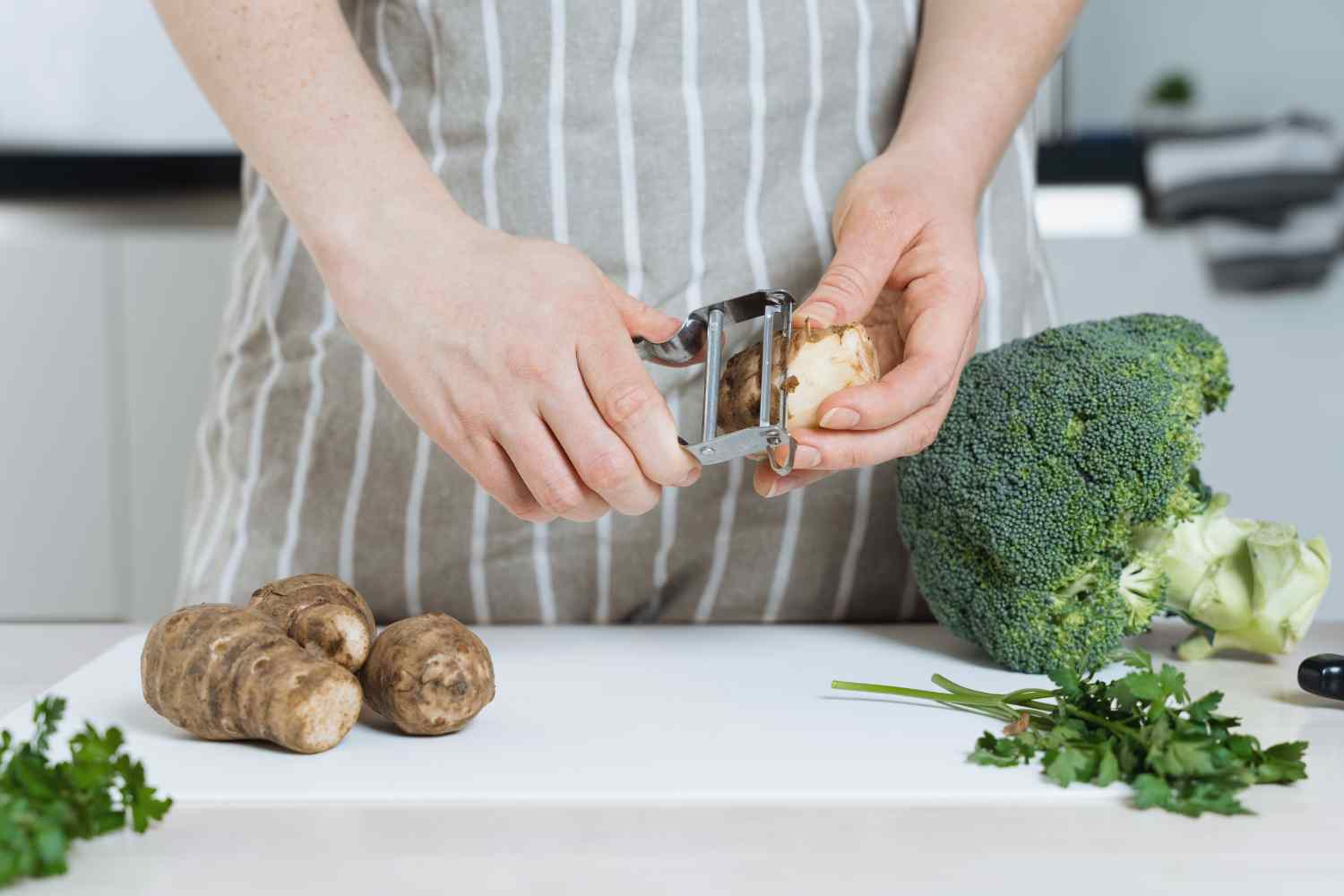
The Jerusalem artichoke, which you may also know as the Jerusalem artichoke or German turnip, is a tuber of the plant Helianthus tuberosus belonging to the same family as sunflowers, it has a delicate taste, similar to that of the artichoke with a hint of hazelnut, and can be used both raw and cooked. It is ideal for soups, chips, purees or even as an ingredient in salads. Thanks to its low glycemic index, it is also highly appreciated by those who follow diets to control blood sugar.
It is rich in beneficial properties and has a very irregular shape and often the potato peeler is unable to clean it correctly, which is why many wonder what the best way to peel it is. Let’s look at some simple tricks together.
First of all, it must be remembered that it is best to start by introducing Jerusalem artichoke into your diet in small quantities, this is because the intestinal flora must adapt to the introduction of inulin.
Inulin is a prebiotic fiber that promotes intestinal well-being and helps keep blood sugar levels stable, but if taken in large quantities it can cause bloating or meteorism. For this reason it is advisable to gradually increase the doses.
You can then increase the portion once your body gets used to consuming the tuber. Avoid combining it with legumes or vegetables that can have the same disadvantage, for example broccoli and cabbage.
The best tricks for peeling Jerusalem artichoke
Due to its knotty and lumpy appearance, Jerusalem artichoke is quite complicated to peel. Precisely for this reason there are various ways to clean or eat the tuber, here are some:
You can NOT peel it
Jerusalem artichoke can be eaten without peeling it, as the peel is not only edible but also rich in nutrients. Wash it well under cold water using a vegetable brush or a sponge, so as to eliminate the soil present between the folds of the peel. If you choose to consume it raw, you can cut it into thin slices and season it with oil, lemon and salt: in this way you will keep the nutritional properties intact and obtain a fresh and light side dish.
You can boil it
If you want to prepare Jerusalem artichoke with a recipe that requires peeling it, one of the most effective tricks is to rinse and brush the tubers and then boil them in water, just like you would with potatoes. Once cooled, use a knife to easily remove the outer part. However, it cannot always be boiled, as some recipes use Jerusalem artichoke raw or cooked in different ways than boiling. Alternatively, you can also steam it for 10–15 minutes: this way the skin softens and is easily removed, preserving more vitamins than boiling.
Use a sharp knife
As we mentioned, the potato peeler is not very useful when it comes to peeling the Jerusalem artichoke, but you can use a sharp knife or a paring knife to scrape away the peel from the central parts and then, cutting the knotty parts, peel them too to avoid wasting the smaller parts of the tuber. Keep in mind that once peeled, Jerusalem artichokes blacken quickly, so it is a good idea to immerse them in a basin with water and lemon or soak them in the solution with the lemon already cut into rounds or other shapes, depending on what is most convenient for you. One last tip is to spread your hands with a little lemon or wear gloves before you start cleaning.
You can store the tubers in the refrigerator for up to 4 weeks, better if you put them in a container. You can also use the freezer, as Jerusalem artichokes can withstand temperatures down to -30°C. If you want to keep it longer, you can cut it into pieces and blanch it for a few minutes before freezing it. This way it will retain its texture and flavor better once defrosted. Avoid storing it in closed bags: it needs some ventilation so it doesn’t get mouldy.
About Jerusalem artichokes you might also be interested in:
