
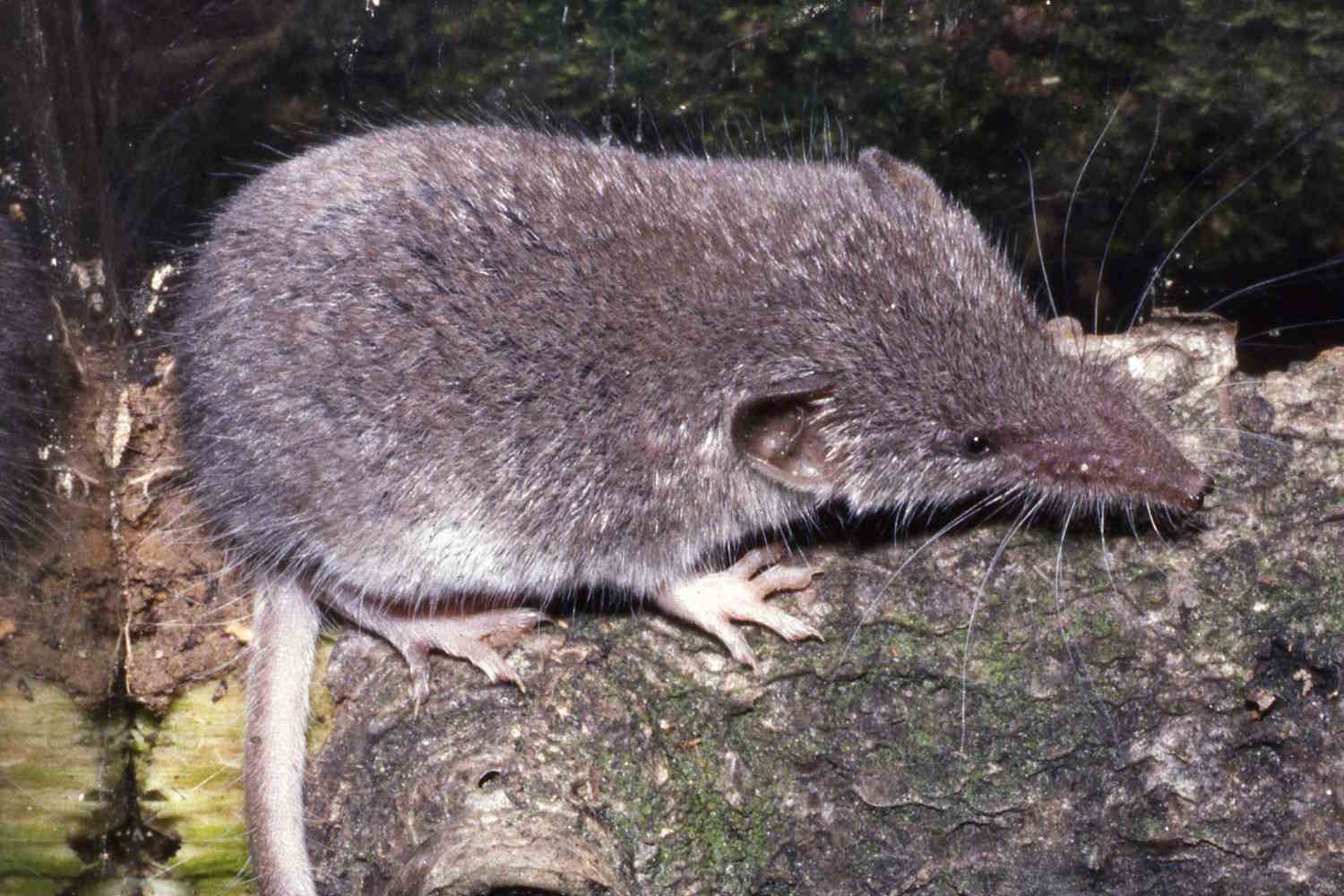
It was the size of a walnut, with short legs and a pointed face that looked like it had been drawn by a child. It moved quickly through the undergrowth of Christmas Island, a small Australian territory in the middle of the Indian Ocean. Once it was easy to hear it squeaking in the night. Today, however, no one will hear it anymore: the Christmas Island shrew is officially extinct.
An invasion that occurred because of man
It wasn’t a natural disaster, but a slow invasion. In the 17th century, when the first settlers set foot on the island, they brought with them non-native rats, cats and snakes. It seemed like nothing serious, but instead it was the end. The rats spread parasites and diseases that wiped out local animals. The new species, stronger and more aggressive, took over.
The little Crocidura trichura, the scientific name of the shrew, didn’t stand a chance. Its population began to collapse, until it disappeared completely. Someone spotted one in 1985, and for a moment it was thought to be a miracle. But hope was short-lived: no other specimen has been found since.
In 2023, a group of Australian researchers estimated a 96.3% probability that the species was now gone forever. The camera traps showed nothing, the acoustic sensors not even a rustle. The IUCN, the international body that monitors endangered species, then confirmed the news: the Christmas Island shrew is officially extinct. Biologist John Woinarski of Charles Darwin University explained:
It is one of the most mysterious extinctions ever documented. This animal survived in very small numbers for over a century, but introduced species and diseases destroyed it.
Christmas Island, from natural paradise to species cemetery
Today much of Christmas Island is a natural park, but he paid a very high price to get here. The territory, once uncontaminated, was exploited for the extraction of phosphates, crossed by conflicts and then abandoned. Meanwhile, local animals were wiped out one after another.
It’s not just the shrew that has disappeared: two species of endemic rats and the Christmas Island bat are also now considered extinct. A silent ecological disaster, which made no noise simply because no one was there to listen.
Yet the story of the shrew is more striking than others. Imagine a creature that has traveled for thousands of years on a drifting log, until it finds an island all to itself. For generations it has lived in balance with the environment, needing nothing. Then we arrive — and in a few centuries we erase it from the planet.
Now, in the forest that once teemed with life, an eerie silence reigns. Perhaps, hidden among the roots or under the red earth of the island, some specimens still survive. But the truth is that no one knows. And he will probably never know.
Every time a species disappears, we don’t just lose one animal. We lose a piece of natural history. The Christmas Island shrew was tiny, of course, but its absence weighs more than we imagine: it is a sign of how fragile life is when man decides to “play” with the balance of an ecosystem.
There is no need for big speeches: just understand that protecting biodiversity also means protecting ourselves. Because, in the end, every time a habitat empties, a bit of our future goes with it.
You might also be interested in:
