

A product that continues to generate value even at the end of its life
A tire is made of different materials: natural and synthetic rubber, steel, high-performance textile materials, stabilizing chemical compounds. Each component has a precise function in ensuring adhesion, resistance to stress and durability over time. A construction complexity that makes the tire a high-performance product. As the tread wears out and the product reaches the end of its life cycle, new opportunities for uses may arise. Around 40 million vehicles circulate in Italy. Every year, on average, these vehicles generate between 350,000 and 400,000 tonnes of end-of-life tyres. They are not end-of-life materials in the traditional sense of the term: they are technologically sophisticated objects that retain material value even when they can no longer perform their original function. The point is to find a way to intercept this value, extract it and redirect it to new applications.
The trace that remains: a new campaign to tell the value of recycling
It is precisely from this awareness that -“The only trace we want to leave in the future” was born, the communication campaign presented by Ecopneus at Ecomondo in November 2025. How many people, when they change the tires of their car, wonder where the old ones end up? How many people, walking on an athletics track or on urban pavement made of recycled rubber, know that under their feet there are tires that have traveled thousands of kilometres?
The key concept is the “trace”: the one that marks the path during use and the one that tells a vision and remains, already today, as a positive legacy through the applications of recycled rubber. The campaign, a sound and visual project communicated through multi-channel planning, shows images of the industrial recycling process and those of the final applications: sports fields, roads, play areas, street furniture. The two narrative flows intertwine visually, creating correspondences between the technical gestures of the supply chain operators and the daily gestures of those who use those spaces.
An original element is the evolution of sound: the mechanical noises of the recycling process are sampled and recomposed until they become the soundtrack of the video and the images that follow one another, acoustically materializing the concept of transformation. The register is contemporary, visually dynamic, far from traditional institutional communication. It is not a campaign that celebrates or promises, but tells what already exists and works.
The supply chain that manages on average thousands of tons of ELTs every year
Behind this narrative there is an efficient and concrete supply chain. From January to November 2025, Ecopneus – a non-profit consortium company and main operator in the sector in Italy – collected and recycled 180,000 tonnes of end-of-life tires across the entire national territory, thus avoiding the emission of approximately 95,000 tonnes of CO2.
The collection is widespread: over 18,500 generation points served, more than 48,000 withdrawal requests satisfied as of November 30, 2025. The generation points are mainly tire shops, mechanical workshops, assistance centers, all those places where the tire at the end of its life is replaced with a new one. A widespread and constantly monitored logistics organization is essential to guarantee continuity of service and full traceability of flows.
To give a concrete idea of the volumes: 170,000 tons of tires, if arranged in a row, would cover the extent of approximately 890,000 3×3 basketball courts or fill 267,000 Olympic swimming pools. They are imposing physical masses that require structured and constant industrial management.
From shredding to applications: what is the path of the material
Once collected, end-of-life tires enter treatment plants. The process begins with mechanical shredding, which reduces the tire into increasingly smaller fragments. At the same time, the separation of the steel, textile fiber and rubber components takes place, the latter progressively refined until granules of different sizes or fine powder are obtained.
Sports floors
This recycled rubber is used in a wide range of applications. Sports flooring is one of the most widespread uses: basketball courts, athletics tracks, multi-purpose areas use recycled rubber to guarantee elasticity, shock absorption capacity, reducing the risk of injuries and increasing athletic performance. In 2024, sports surfaces using thousands of tons of this material have been created in Italy.
Asphalts
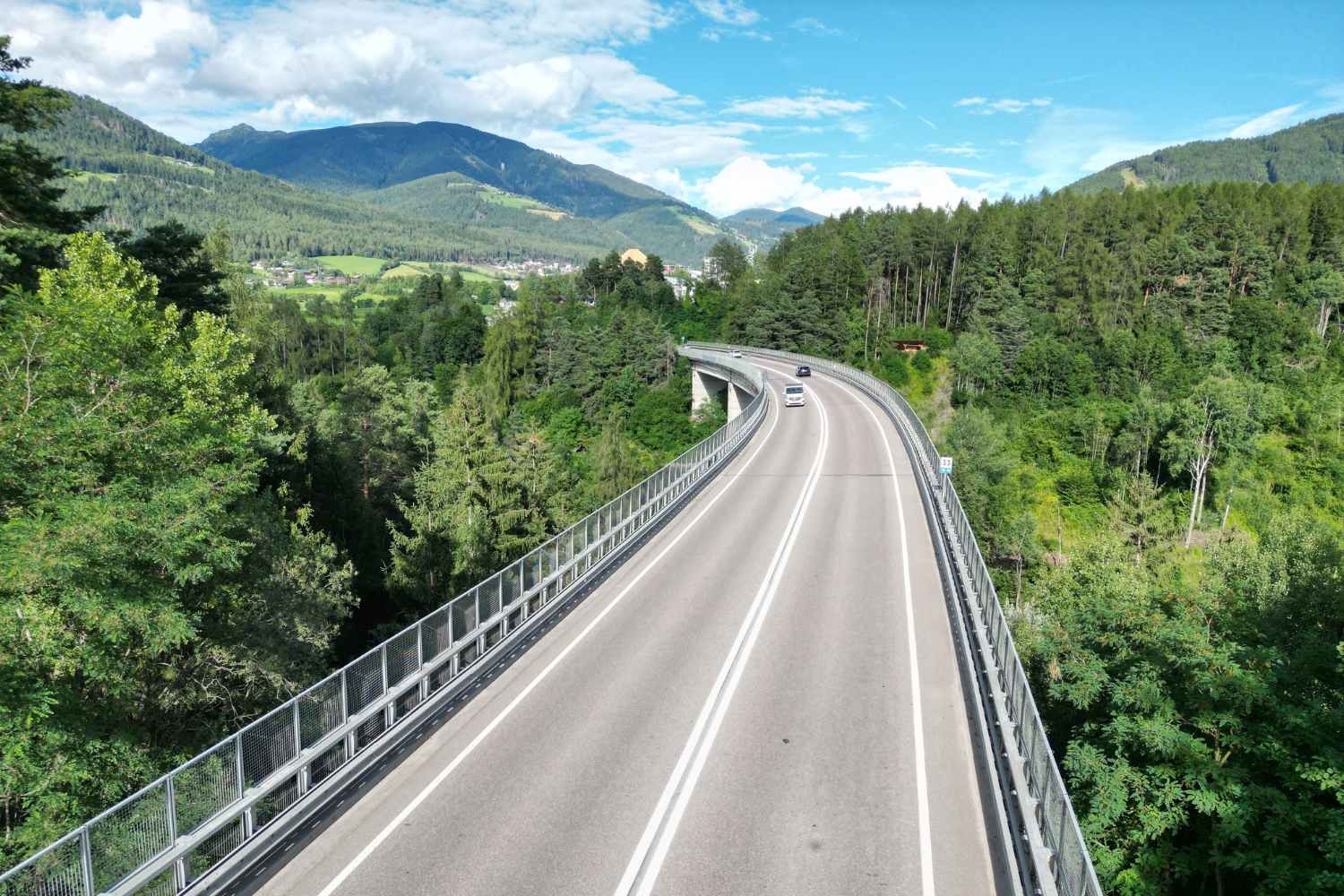
Asphalts containing recycled rubber constitute another important segment. The addition of recycled rubber powder from ELTs to the bituminous conglomerate improves various properties: it reduces the noise of the tires rolling on the pavement, increases the resistance to the formation of cracks and deformations, extending its life and significantly reducing the need for maintenance interventions. Over the years, over 900 kilometers of roads have been built in Italy with asphalts modified with rubber from recycled tyres.
Construction applications
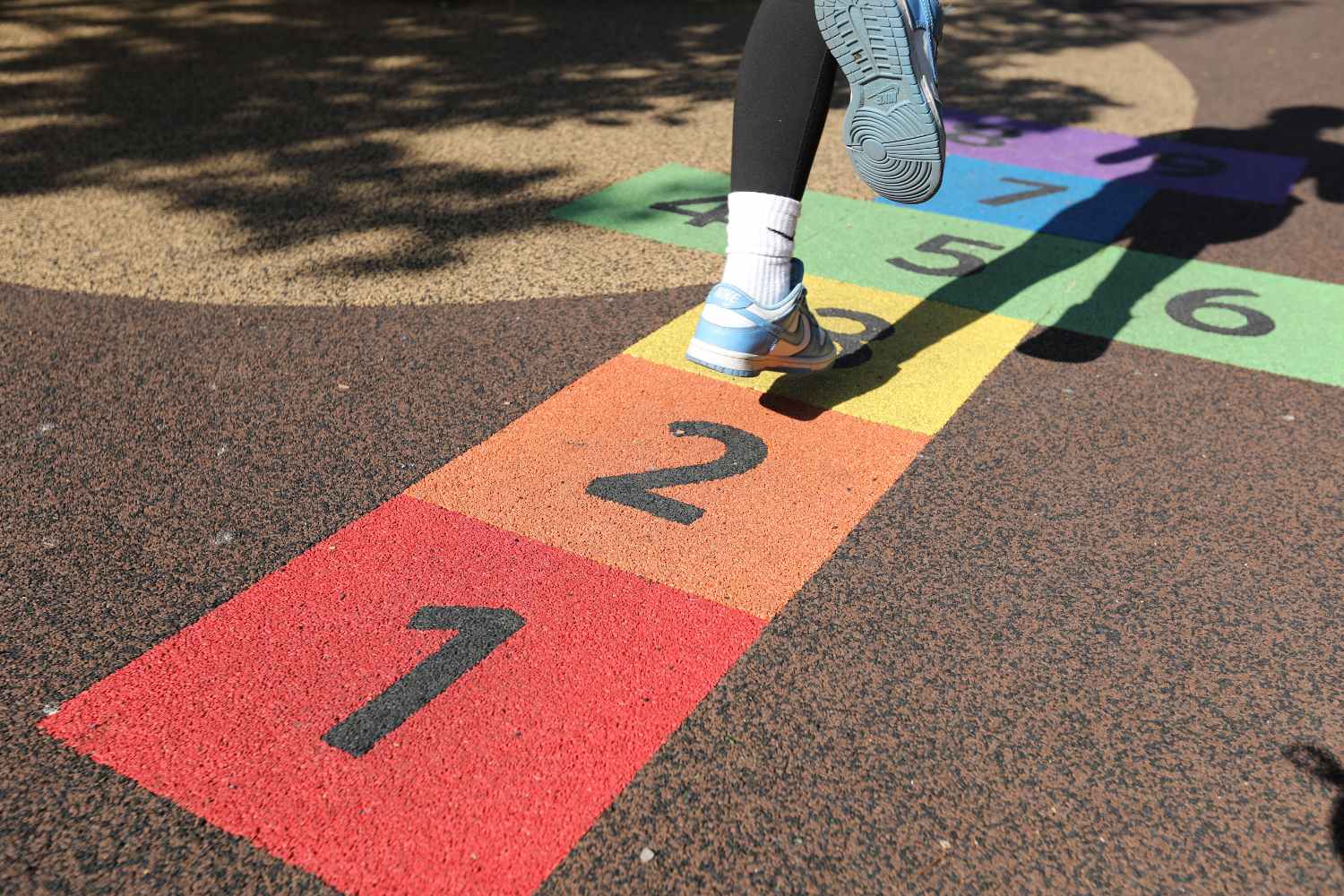
Then there are applications in construction – acoustic and anti-vibration insulation – in street furniture, in children’s play areas where anti-trauma surfaces made with recycled rubber reduce the risk of injury in the event of a fall. And there is energy recovery: the tire fraction is used as a fuel with high calorific value in cement factories and thermoelectric power plants, replacing traditional fossil fuels.
The numbers of the environmental and economic impact
Recycling activity generates measurable benefits. In 2024, the system avoided the emission of approximately 93,000 tonnes of CO₂ equivalent, an environmental impact equal to the absorption of approximately 12.4 million trees or the emissions of over 574 million km traveled by car, and allowed a saving of 957,109 MWh of fossil resources, equivalent to the energy to light a stadium for over 95,000 matches. The benefit also extends to the community: according to estimates, the use of recycled materials to replace virgin raw materials has produced economic savings for the country amounting to 74.7 million euros.
Furthermore, in 2024 the Ecopneus model generated 45.2 million euros of total economic value, of which 40.7 million distributed directly to companies in the supply chain: collection, transport and treatment operators. These are data that demonstrate how the circular economy is not just an abstract principle but a productive reality that generates economic value distributed across the territory, employment and specialized technical skills.
Since 2011, the year Ecopneus began operations, a total of almost 3 million tonnes of End-of-Life Tires have been managed, always exceeding the legal objectives and without there being any burden for citizens in addition to the environmental contribution already foreseen.
The critical issues of the system and extraordinary interventions
Extra-target collection is required by the Ministry of the Environment and Energy Security to address critical issues that have emerged in the national waste tire collection system. Ecopneus was able to exceed the target thanks to rigorous logistical planning and transparent management of economic resources. But the overall system remains complex and with challenges to face, which occur at multiple levels and which mainly concern the complexity of the supply chain, the fragmentation of the panorama of the actors involved, the uneven territorial coverage and the illegal entry onto the market of a share of tires that evade the payment of the environmental contribution. For this reason Ecopneus believes it is important to: reduce the number of operators to encourage healthy competition, while ensuring a sufficient critical mass to manage ELTs effectively, with uniform standards throughout the national territory; combat the black phenomenon and increase organizational efficiency; encourage rationalization of the system.
Another great challenge is to open new markets for recycled rubber – making it increasingly competitive compared to virgin materials not due to regulatory imposition but for real technical and economic convenience – and that of a profound cultural awareness, to make people understand that an ELT is a strategic resource to be valorised.
Finally, there is the issue of illegally abandoned tires, a phenomenon that still exists. In some areas of the country, particularly in the territories of the so-called Land of Fires, there are accumulations of tires and the remediation of these sites requires specific interventions, dedicated resources, coordination with local authorities. Ecopneus has contributed to several operations of this type over the years, but the problem is not yet completely resolved. The historical stocks, however, have all been emptied.
The search for new applications as a key to sustainability
A collection and recycling system only works if there is a downstream market for the recovered materials. It is not enough to collect and treat: recycled rubber needs to find competitive application outlets, and producers require it not out of regulatory obligation but for performance and economic convenience.
This is also why Ecopneus constantly invests in Research & Development, working with universities, research centers and manufacturing companies to explore new possibilities of use. Experiments are being carried out to open up new scenarios for the use and recovery of materials, including chemical recycling, eco-design projects and advanced materials such as Tyreplast, which combines recycled rubber and thermoplastics; experiments with universities and research centers on acoustic barriers, safety devices for motorcyclists and FIBA certified surfaces for sports facilities.
Rubber from recycled tires is versatile, and thanks to its exceptional technical properties it is suitable for an increasing number of applications. But we need to continue to consolidate this range of uses and standardize the technical specifications to facilitate their adoption by new industrial sectors.
Future goals
Giuseppina Carnimeo, General Director of Ecopneus, outlines the priorities for the future: further improving efficiency in the collection system. The commitment will focus on strengthening collaboration with institutions and companies, on raising public awareness of the value of responsible management of ELTs and on investments in supporting applications for recycled rubber. The dialogue with the institutions will certainly continue, in particular with the MASE.
Every tire that reaches the end of its life cycle still contains significant energy and material potential. The recycling supply chain has learned to extract this value, to redirect it, to make it circulate in new forms. The numbers prove that the system works. Now it’s a matter of perfecting it and making it even more efficient. The trace that remains – as the Ecopneus campaign effectively explains – is not only the physical trace of the tire that wears out on the asphalt during its use, but it is also the trace that Ecopneus chooses to leave: a positive and lasting sign of an economy that does not limit itself to managing ELTs, but transforms them into value.
