
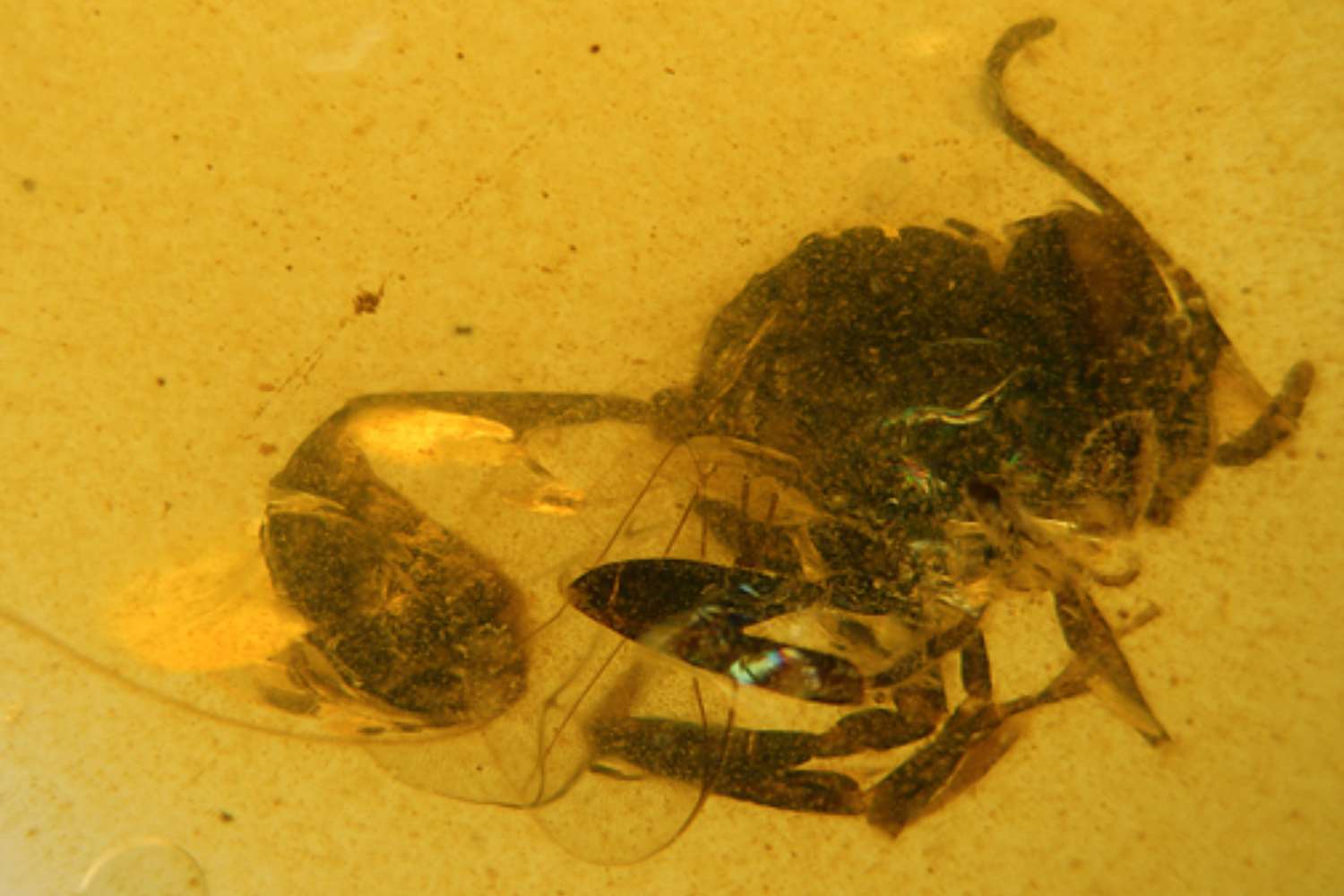
An international team of paleontologists he discovered a exceptional fossil on the site El Soplaoin Cantabriain Spain. Inside a fragment of amber dating back to about 105 million years ago, one was found new species of prehistoric waspnamed Cretevania orgonomecorum.
The conservation of the fossil is so detailed that it allows the internal structure of the insect to be observed in three dimensions, offering a unique window on the Middle Cretaceousa time when dinosaurs dominated the Earth. The find is not only significant for the discovery of a new species, but also allows for revisit the classification of the Cretevania genusthanks to distinctive anatomical features such as the shape of the antennas and the venation of the wings.
El Soplao: a Cretaceous “Noah’s Ark”.
The site of El Soplao it is famous for its incredible fossil inclusions: more than 1,500 documented finds and at least 30 species described so far. THE’amber from the area he trapped insects, spiders and plant remainsoffering a cross-section of ecosystems that oscillated between terrestrial and marine environments.
This allowed us to preserve delicate structures and internal anatomy of creatures that would otherwise have been lost. As the researchers explain, the exceptional quality of the fossil turns El Soplao into a real one natural laboratorywhere each new discovery contributes to understanding the biodiversity and ecological interactions of the Cretaceous.
A one of a kind wasp
Cretevania orgonomecorum is distinguished by larger dimensions compared to other species of the genus and for unique characteristics that facilitate their recognition. The discovery also allows these species to be compared with similar ones found in Asiasuggesting biogeographical connections and dispersal paths between distant continents millions of years ago.
In addition to expanding knowledge of past biodiversity, the discovery of C. orgonomecorum provides new diagnostic features to identify other species of the genus. The study, published on Palaeoentomologyconfirms the importance of Spanish fossiliferous sites and their ability to link paleontological data with the evolutionary history of Cretaceous ecosystems around the world. Cretevania orgonomecorum thus becomes one messenger from the pastwhich allows you to observe a prehistoric world in unprecedented detail and appreciate the complexity of life 100 million years ago.
