
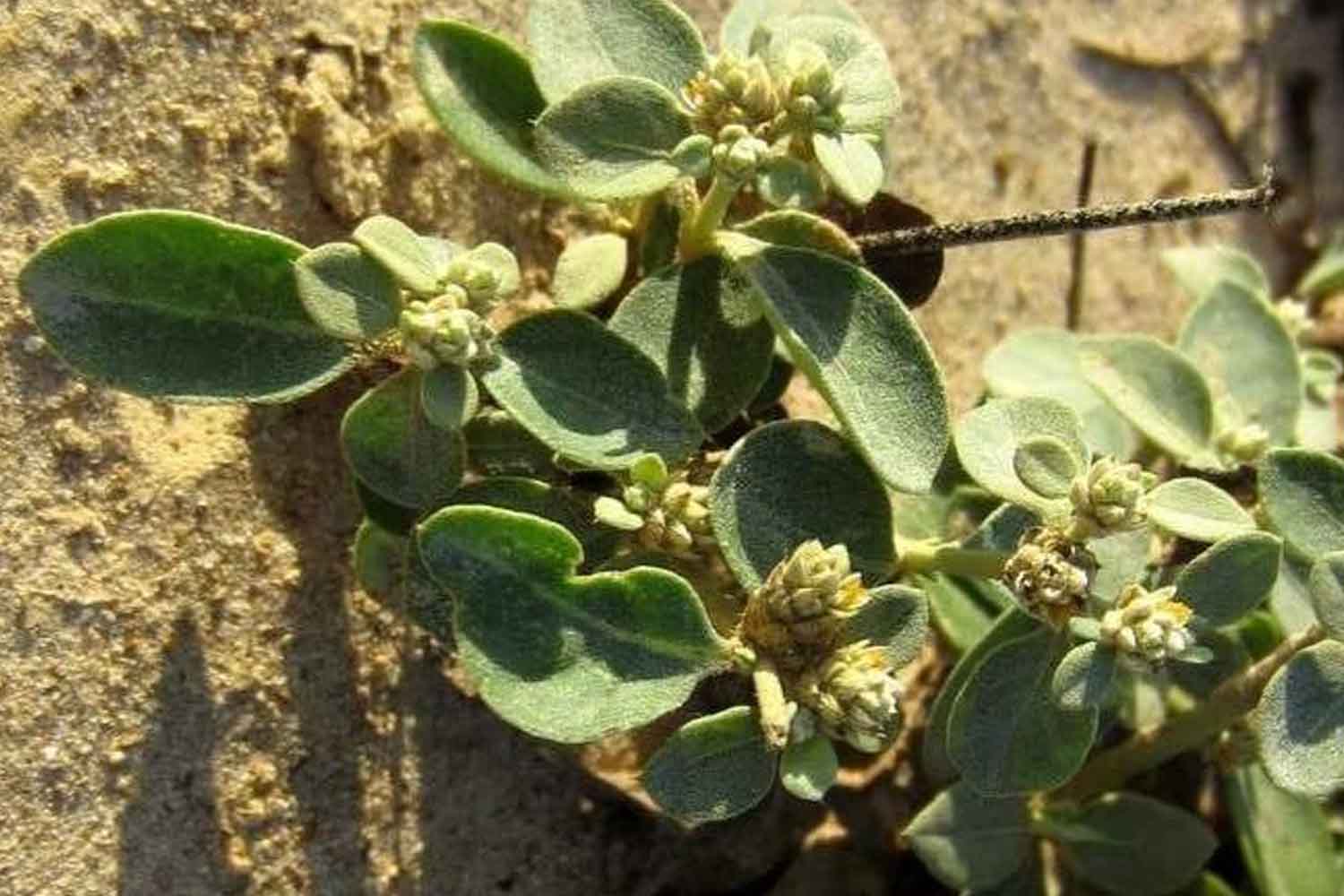
A plant grows on the coasts of Brazil which, for generations, has been collected and used as a natural remedy against inflammation and joint pain. It doesn’t have a high-sounding name or eye-catching packaging: it’s called Alternanthera littoralis and for many local communities it has always been a familiar presence, part of a daily knowledge passed down more with gestures than words. Today, however, that same plant has come under the scrutiny of university laboratories, and the results are attracting attention even outside South America.
A group of Brazilian researchers decided to verify, with modern scientific instruments, whether this popular remedy really had a foundation. The study, published in Journal of Ethnopharmacologytells an interesting story, made up of confirmations, but also of limits that are important to know.
The scholars did not limit themselves to recording the traditional use of this plant or to collecting local testimonies. They decided to take a step further, bringing Alternanthera littoralis into the laboratory and analyzing it with controlled methods, to understand if there was a concrete basis behind that knowledge handed down over time. An extract was obtained from the parts of the plant that grow out of the ground, studied to evaluate their behavior in the presence of inflammatory processes.
The results showed interesting signals: the extract seems to contribute to reducing swelling and hypersensitivity, intervening on some typical mechanisms of inflammation. In practice, the plant has demonstrated an ability to “cool down” the inflammatory response, helping the body to regain balance when pain and stiffness take over.
It is precisely this passage that makes the research worthy of attention even outside the academic environment. Not because it talks about miraculous solutions, but because it demonstrates how a plant that has always been used in an empirical way can be observed with modern tools and tell something measurable, without betraying its natural origin.
Because these results are not a miracle cure
Osteoarthritis and other joint pathologies affect millions of people and often the available therapies are unable to resolve the root problem. This is also why science continues to look with interest at traditional remedies, many of which were the starting point for drugs commonly used today.
Having said that, the study on Alternanthera littoralis should be read for what it is: an initial step. The tests were conducted on animals and focused on artificially induced inflammation, not on the slow and complex degenerative process that characterizes human osteoarthritis. Furthermore, the extract used is a mixture of substances, not an isolated and dosed active ingredient as happens with drugs.
The authors of the study themselves underline that, although in some parameters the effectiveness was comparable to that of known anti-inflammatory drugs, talking about clinical applications on humans is still premature.
Safety first: what the data says
An often overlooked aspect when talking about natural remedies is safety. On this front too, researchers have worked carefully. In short-term tests, very high doses of the extract caused no obvious toxic effects. This allowed it to be classified as low toxicity according to international standards.
However, when the extract was administered for almost a consecutive month, a signal emerged that should not be ignored: a constant increase in a liver enzyme, ALT, which may indicate stress on the liver. No other altered parameters were observed, but the data is sufficient to urge caution and to justify longer and more in-depth studies.
This research does not encourage self-prescription or do-it-yourself use of plants collected in nature. Rather, it shows how traditional medicine can become the object of serious studies, capable of distinguishing what really works from what only belongs to the story.
Alternanthera littoralis is not a miracle cure, but neither is it a baseless legend. It is a concrete example of how the dialogue between local knowledge and modern science can open new paths, as long as it proceeds with rigor and responsibility. And, in times when the need for more sustainable solutions is increasingly strong, even a plant that grows on sand can teach us something.
You might also be interested in:
