

There are others in the Universe 118 exoplanets whose existence we did not know (and another 2000 are new candidates): the discovery is the work of a group of astronomers fromUniversity of Warwick (UK) which applied a recently developed artificial intelligence tool, Ravento the mission data Transiting Exoplanet Survey Satellite (TESS) from NASA.
The challenge of the TESS mission and the role of Artificial Intelligence
TESS was designed to monitor the sky for the slight dimming of starlight caused by planets passing in front of their parent stars. In its first 4 years of operation, the mission has raised observations of over 2.2 million starsfocusing attention on planets with shorter orbitsless than 16 days, with the aim of providing a more accurate assessment of the frequency of these short-period worlds.
RAVEN has been a very valid tool in this regard, because it allows you to analyze huge data sets consistently and objectively.
The challenge is to identify whether the dimming in brightness is actually caused by a planet orbiting the star or by something else, such as eclipsing binary stars, and this is precisely what RAVEN seeks to uncover – explains in particular Andreas Hadjigeorghiou, who led the development of the AI tool – Its strength comes from our carefully created dataset, consisting of hundreds of thousands of realistically simulated planets and other astrophysical events that can be mistaken for planets. We trained machine learning models to identify patterns in the data that can tell us what type of event was detected, a task at which AI models excel
The study of close-orbiting planets
The challenge for now is won.
Using our newly developed RAVEN pipeline, we were able to validate 118 new planets and over 2,000 high-quality planet candidates, nearly 1,000 of them completely new – explains Marina Lafarga Magro, first author of the work – This represents one of the best characterized samples of close-orbiting planets and will help us identify the most promising systems for future studies
Among the recently confirmed planets, there are several populations of particular value, including:
RAVEN allows us to analyze huge data sets in a consistent and objective way – adds David Armstrong, co-author of the RAVEN studies – Because the pipeline is well tested and thoroughly validated, it is not only a list of potential planets, but also a sample reliable enough to be used to map the prevalence of different types of planets around Sun-like stars
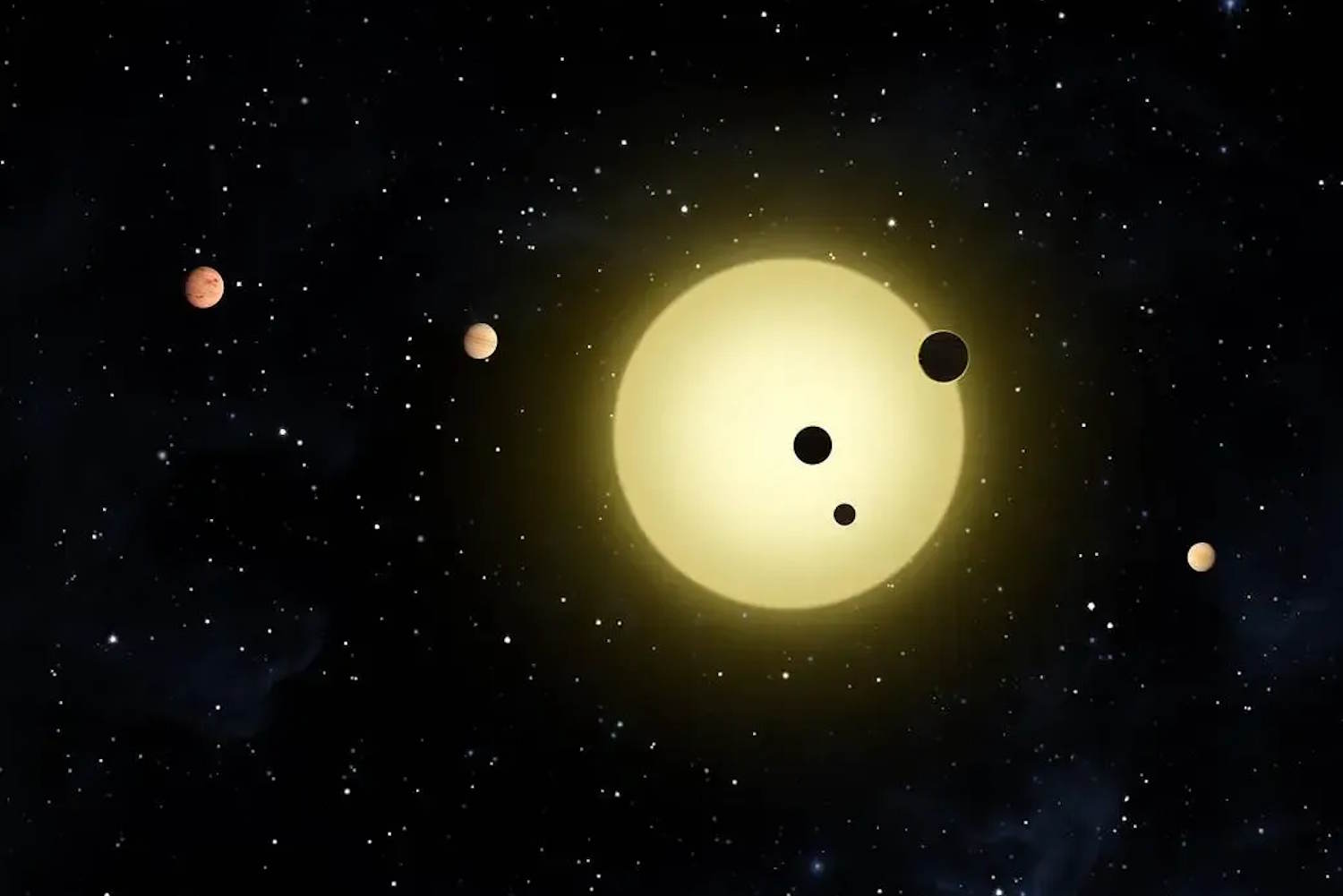
With this well-characterized and validated set of planets, the team was able to go beyond individual discoveries and study the population of close-orbiting exoplanets in detail. In a parallel study conducted with the MNRAS telescope, astronomers instead measured the frequency with which the planets in close orbit around Sun-like starsmapping the results as a function of the orbital period and size of the planet with an unprecedented level of detail.
The results of this subsequent investigation found that approx 9-10% of Sun-like stars host a closely orbiting planeta result consistent with NASA’s Kepler mission, a space telescope that had previously measured the frequency of planets around other stars, but with uncertainties up to ten times higher.
Discoveries in the Neptunian desert
This study also provides the first direct measurement of Neptunian desert planetsshowing that, consistent with theory, close-orbiting planets orbit around just 0.08% of Sun-like stars in this region.
For the first time, we can precisely quantify how empty this desert is – comments Kaiming Cui, lead author of the planetary population study – These measurements demonstrate that TESS can now match, and in some cases surpass, Kepler in studying planetary populations
The future of AI in astronomical studies
Together, these studies demonstrate how large astronomical datasets and new developments in artificial intelligence go hand in hand, generating new discoveries, testing AI on complex research problems, and transforming both planet discovery and planetary population science.
The team released interactive tools and catalogueswhich allow other researchers to explore the results and identify promising targets for future observations with ground-based telescopes and upcoming missions.
The work has been published Monthly Notices of the Royal Astronomical Society.
Sources: University of Warwick / Monthly Notices of the Royal Astronomical Society
