
Looking at it closely, polystyrene seems harmless. It is light, breaks easily, accompanies packaging and takeaway containers without attracting attention. Yet it remains there, in the land and in the water, for very long times, slowly transforming into invisible fragments that slip into everywhere. In that silent passage, it accumulates toxic substances and moves along the food chain like an unwanted guest.
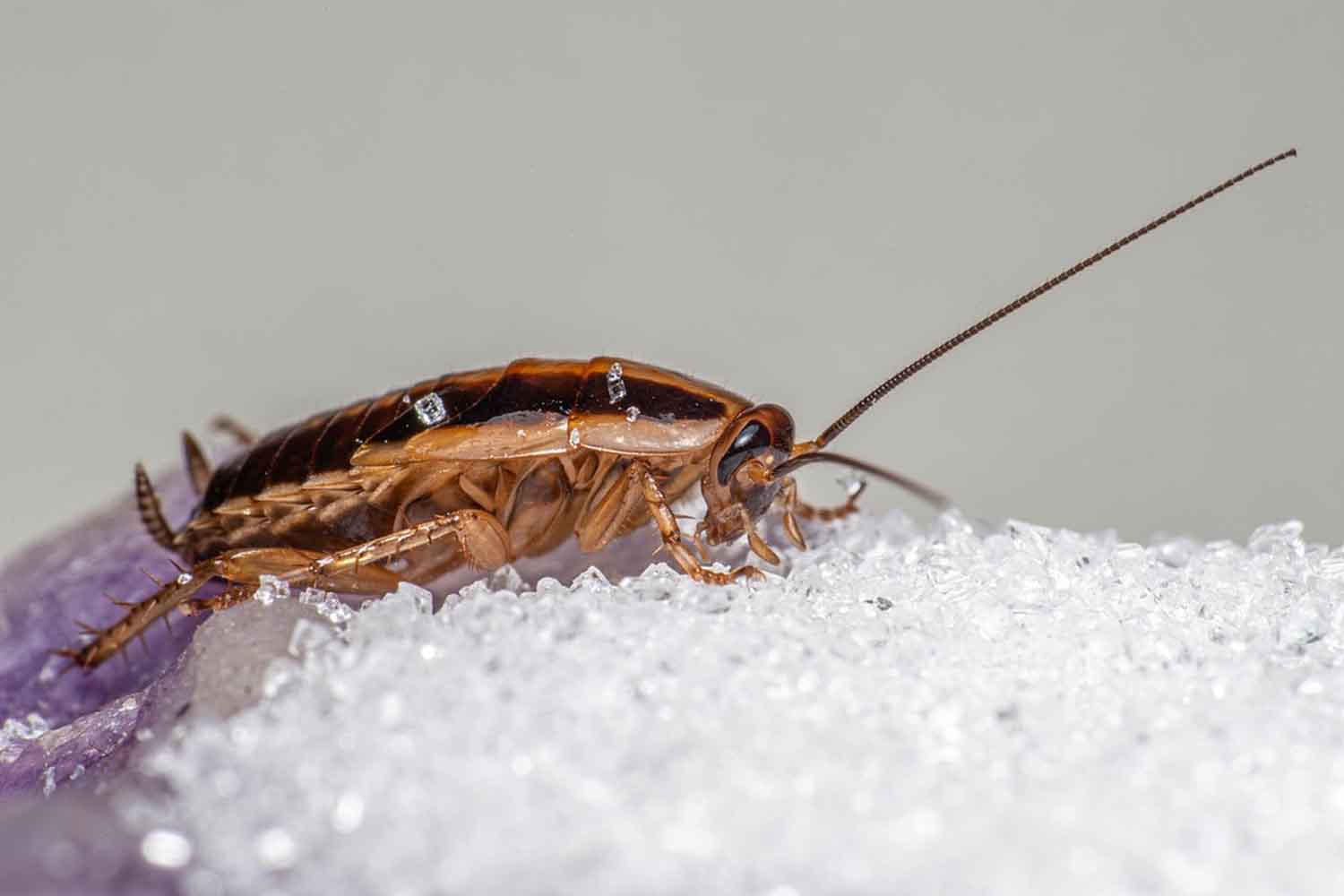
In the laboratory, however, something began to move in a different direction. Blaptica dubiaa tropical cockroach found throughout much of the world as a protein source for pets and terrariums, ingests that material and within six weeks eliminates more than half of it in processed form. This is not mechanical fragmentation. What happens inside that insect is more complex, more interesting, and in some ways more disturbing than the raw data suggests.
The starting number is concrete: each example of Blaptica dubia Consume about six milligrams of polystyrene per day. After forty-two days, 54.9% of that plastic no longer exists in its original form. In technical terms we are talking about a degradation of around 3.3 milligrams per day per individual: a rate higher than that recorded in other insects studied so far, including beetle larvae which had also attracted attention for similar capacities.
The doubt that immediately arises is the same that accompanies every announcement of this type: does plastic really disappear, or is it just reduced to smaller pieces and therefore even more difficult to intercept? The researchers followed the entire path of the material, analyzing what goes in and what goes out, and observing the chemical transformations along the entire journey.
What emerges is a clear structural change. The molecular chains of polystyrene shorten significantly: the average molecular weight drops by 46.4%, an unequivocal sign of depolymerization. Spectroscopic analyzes identify new groups containing oxygen, typical traces of oxidation and chain breakage. The aromatic ring of polystyrene — the strongest part of the structure — also undergoes changes, a detail that distinguishes this process from simple surface erosion.
Another clue comes from carbon isotopes. The residual material shows an enrichment of δ¹³C, interpreted as the effect of selective consumption by biological processes active in the intestine. In practice, a portion of the carbon from the plastic actually enters the animal’s metabolic circuits. It doesn’t disappear into the void: it is used.
From chemical degradation to energy production
The scene moves inside the intestine. Polystyrene alters the balance of the resident microbial community: bacteria already known for their ability to deal with complex compounds, including Pseudomonas, Citrobacter, Klebsiella And Stenotrophomonas. In parallel, the presence of enzymes involved in oxidative reactions increases, tools suitable for attacking resistant polymeric structures.
Microbes start the work: they break, oxidize, transform. At that point the insect intervenes. The analysis of the genetic activity of Blaptica dubia shows an intensification of metabolic pathways linked to energy production: β-oxidation, electron transport chain, Krebs cycle. These are the same pathways through which organisms exploit fats and other organic molecules as a source of fuel.
The logic of the system is precise: the bacteria reduce the polystyrene into smaller and more manageable compounds, the cockroach absorbs them and channels them into its cellular energy plants. A continuous sequence, in which each step prepares the next without visible interruptions. Shan-Shan Yang, one of the authors of the study, describes this mechanism as an integrated collaboration: the degradation of plastic belongs to the system as a whole, not to the microbes alone nor to the animal alone. Microbial oxidation and host metabolism are linked in a chain that works precisely because neither player works in isolation.
This type of organization suggests a different perspective compared to traditional research, which tends to look for the single resolving enzyme, the perfect molecule to isolate and replicate. Here it is convenient to observe the entire process as a biological assembly line, where effectiveness arises from the sequence, not from the single component.
The idea of releasing colonies of tropical cockroaches into the environment to solve plastic pollution remains out of the question for obvious ecological reasons. The value of the study lies elsewhere. This natural system works like a living laboratory capable of indicating which microorganisms and which chemical reactions are truly effective in treating polystyrene. From that biological map, controlled, designed and scalable systems can be born, designed to operate in industrial contexts without introducing new unpredictable variables into the ecosystem.
At the bottom there remains a consideration that cannot be easily dismissed. Some organisms seem to develop, in very short evolutionary times, some ability to interact with materials that have existed for a very short time in the history of the planet. With an efficiency far from solving the global problem, but sufficient to indicate a direction. For now, they are showing that direction.
You might also be interested in:
