
There are those who scroll through Instagram feeds and think that certain gardens have been Photoshopped. Purple spheres that stand out on very tall stems, orange lanterns that swing in the wind, scented lilies that seem to have come out of a Flemish painting. Yet it’s all true, and the secret lies underground: in the bulbs. Not the usual tulips and daffodils, of course, but a selection of still little-explored varieties that are experiencing a real moment of glory among new generation garden lovers.
The trend of the “rewilding garden” and the naturalistic garden, increasingly popular also in Italy thanks to the influence of great landscape designers such as Piet Oudolf, has brought some bulbous species of extraordinary visual impact back into the spotlight. Fritillaria imperialis, Lilium giganteum and Allium giganteum are the undisputed stars of this season. Here’s everything you need to know.
Fritillaria imperialis
Fritillaria imperialis, also known as imperial crown, is one of those plants that divide the garden into a before and an after. Its pendant flowers, which oscillate between golden yellow and fiery orange, are reminiscent of small lanterns suspended in the air, topped by a tuft of shiny leaves which gives it an almost theatrical appearance. Native to Türkiye, Iran and the western Himalayas, this plant has a very long history in European art: Van Gogh was fascinated by it, and it’s not difficult to understand why.
The magic happens in spring, when a tall and robust stem emerges from the bulb planted in autumn, capable of dominating the entire flowerbed. Growing it is simpler than it seems: it requires well-drained soil, a sunny position and, above all, it should be planted immediately after purchase, because the bulbs tend to dry out quickly. A detail that most experienced gardeners know well: Fritillaria emits a pungent, fox-like odor that keeps rodents away. A natural repellent integrated into garden design.
Leave at least 30-50 cm between one specimen and another to allow the plant to express itself at its best. It also works very well in pots, as long as the container is at least 40 cm deep and guarantees good drainage. After flowering, resist the temptation to immediately cut the stem: the bulb needs time to reabsorb nutrients and prepare for the following season.
Oriental Lilium
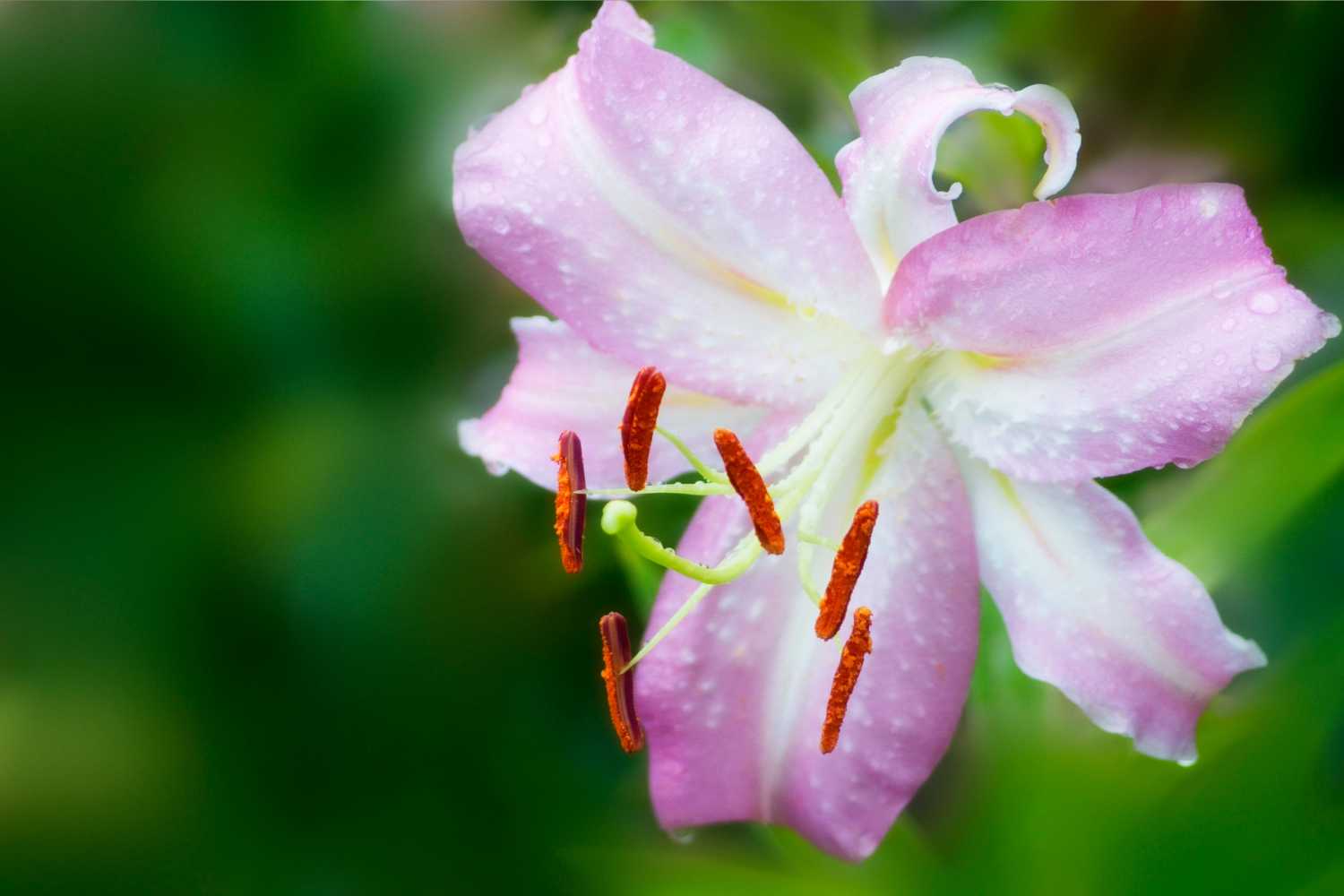
If you are looking for a flower that combines visual impact and enveloping scent, the Lilium orientalis has no rivals. Known since ancient times as a symbol of purity and rebirth, the oriental lily has large, velvety petals that range from pure white to intense pink, up to red and purple, often decorated with streaks and specks that make them unique.
The most recent research in the field of ornamental horticulture confirms that oriental Liliums are among the bulbous plants most resistant to climate change, thanks to their ability to adapt to significant temperature variations. Good news for those growing in areas with increasingly hotter summers. The ideal soil is rich, well-drained and slightly acidic, while the best exposure is in partial shade: too much direct sun in the central hours can stress the leaves and fade the petals.
Pay attention to the pistils: their pollen is particularly tenacious and stains almost indelibly. Handle the flowers with care, especially if you have cats at home, because all parts of the Lilium are toxic to felines. Among the parasites to keep an eye on is Lilioceris lilii, the small red beetle that loves to feast on the leaves: it is better to monitor the plant regularly and intervene with natural methods as soon as the first signs are noticed.
Allium giganteum
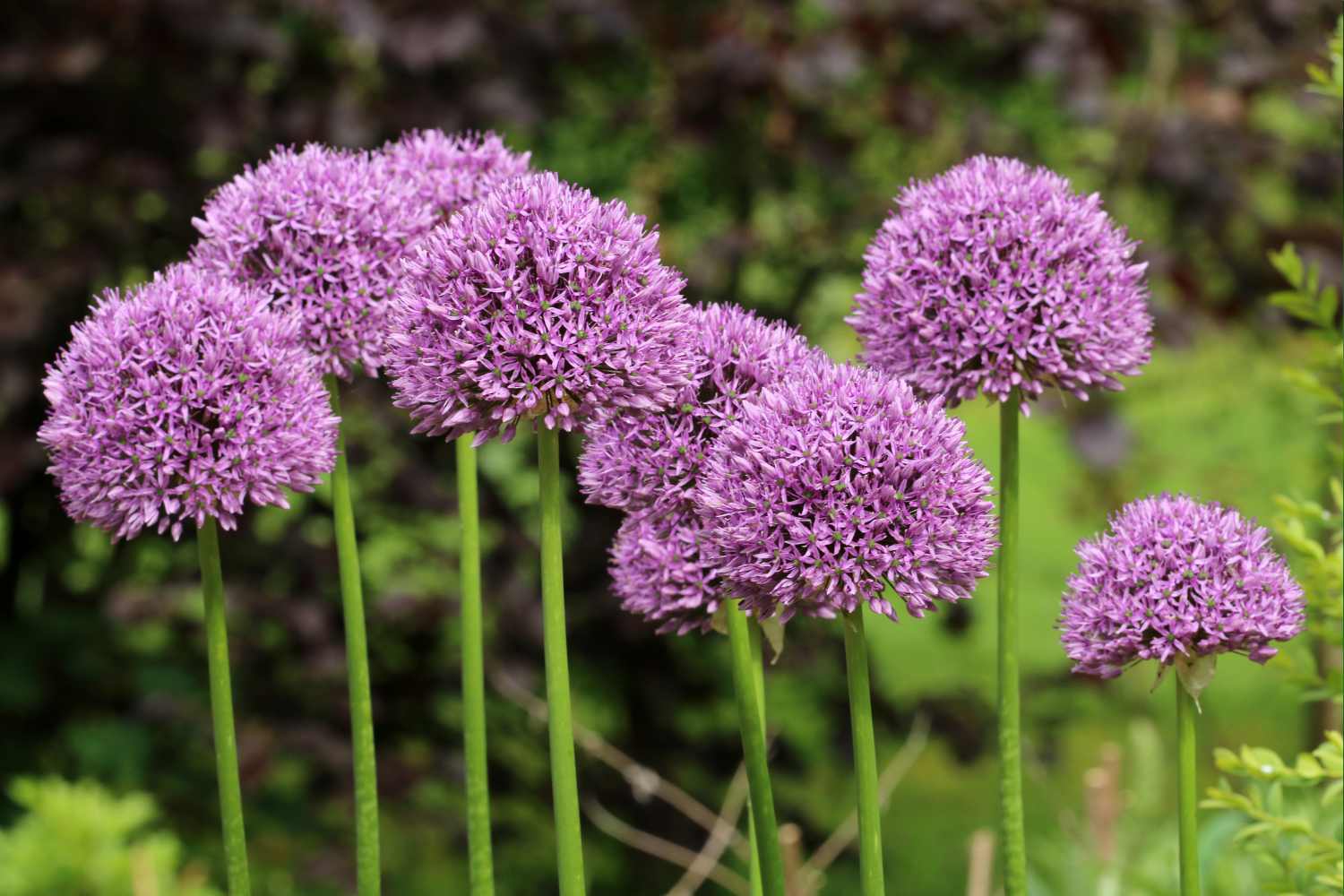
Allium giganteum is the plant that contemporary garden designers adore and which is literally exploding on social media dedicated to gardening. An ornamental onion which, in late spring, transforms into a living sculpture: a purple sphere made up of hundreds of tiny buds that stands out on a stem that can reach up to 1.5 meters in height. The effect is so surreal that it resembles a contemporary art installation.
Native to Central Asia, this plant is a favorite among naturalistic garden designers precisely because it attracts bees, bumblebees and butterflies in an extraordinary way. Each umbel can contain thousands of small flowers, turning into an irresistible resting point for pollinators. For those who practice gardening attentive to biodiversity, Allium giganteum is almost an obligatory choice.
It prefers sunny positions and well-drained soil, is not afraid of the cold and resists down to -10°C without difficulty. To obtain the maximum scenic effect, plant them in groups of at least 5-7 bulbs: the purple cloud that will be created will give movement and depth to the entire composition. One final note: all parts of the plant contain sulfides that can cause gastrointestinal distress if ingested, so it’s best to admire it and leave it to its winged hosts.
Where to buy these bulbs?
Has the idea of transforming the garden into a small floral oasis won you over? Well, let’s move on to the practical question: where to find these bulbs? Today you can easily buy them online (on Amazon you can find them here: fritillaria imperialis, lilium giganteum and allium giganteum), at specialized nurseries or in gardening shops. Always choose reliable suppliers and check that the bulbs are firm, free of mold and well preserved: the quality of the bulb is the first guarantee of spectacular flowering.
Timing is everything: autumn is the ideal time to plant Fritillaria and Allium, while Lilium can also be planted in late winter. With a little attention and a pinch of patience, spring will repay you with a show that will make your guests doubt the reality of what they are seeing.
