
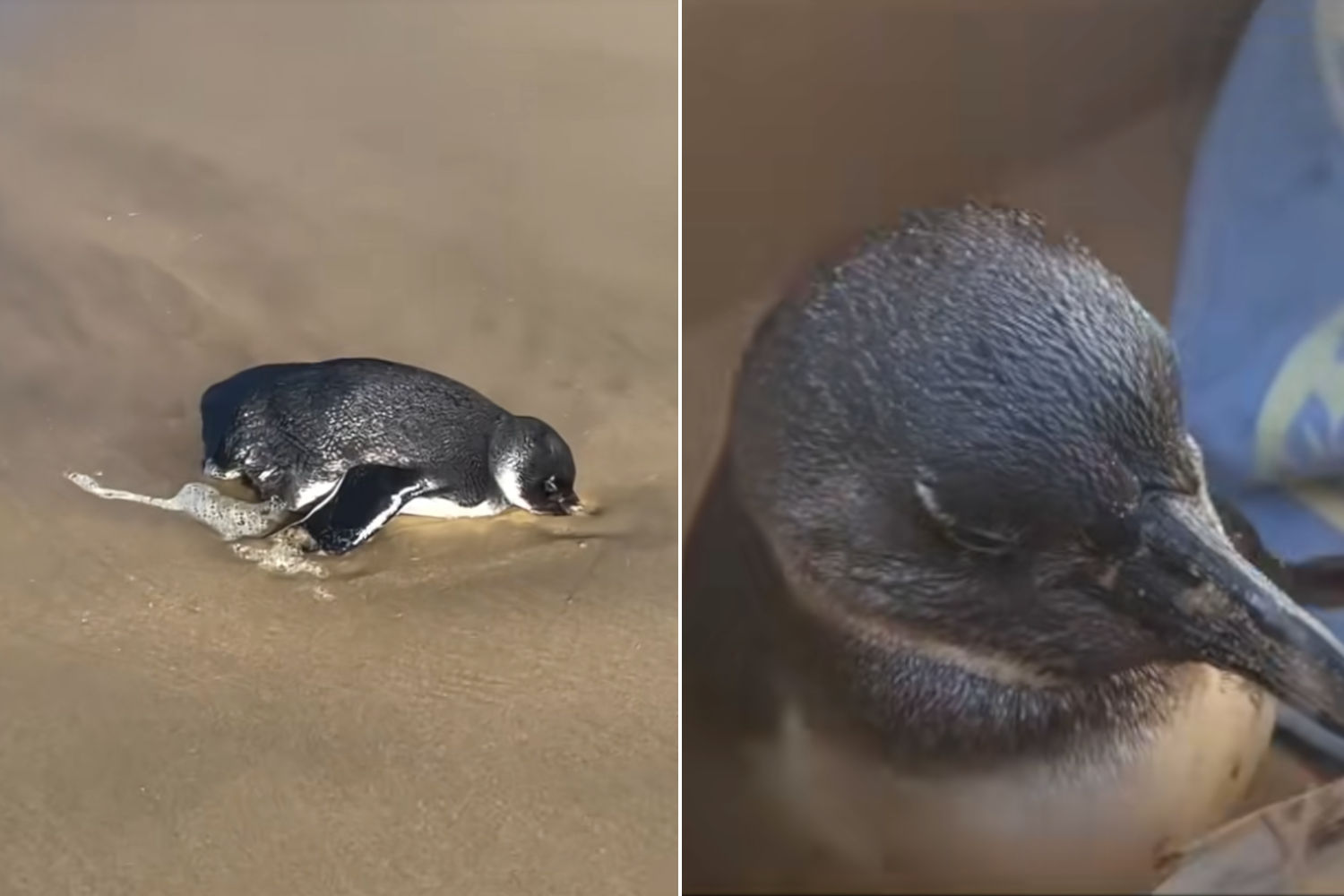
Lying on the sand, motionless, with its beak sunk to the ground and no apparent sign of reaction. This is how a jogger found an African penguin on a beach in Brenton-on-Sea, South Africa, immediately alerting wildlife rescuers.
The scene was dramatic. The animal, belonging to a species classified as seriously threatened with extinction, now seemed to have no strength. The person who intervened was the specialized veterinarian Catherine Hauw, who arrived on site together with a medical assistant after the report received on 28 April.
The race against time to save the penguin
When rescuers reached the beach, the penguin was still lying on the sand, debilitated and almost immobile. For a few minutes it was feared that he was dead. Only when the animal slowly raised its head did the vets realize there was still hope.
With extreme caution, the team wrapped the penguin in a towel and placed it in a box to quickly transport it to a nearby veterinary clinic. Each movement was performed carefully to avoid further stress to an animal already in critical condition.
@wildlifevet_cat On the beach of Brenton-on-Sea, South Africa, we found a stranded critically endangered African penguin. Fewer than 10,000 breeding pairs remain in the wild. Disease, pollution, and predation are pushing this species closer to extinction every year. Thanks to a member of the public who alerted us, we were able to intervene. After an initial assessment, we rushed this penguin to the clinic for stabilization and treatment. Every individual matters now.

Check Part 2 to see what happened next!
#AfricanPenguin #EndangeredSpecies #WildlifeRescue #OneHealth #Conservation SaveOurSeas MarineConservation WildlifeVeterinary SouthAfricaWildlife BrentonOnSea ProtectOurPlanet Biodiversity OceanLife WildlifeEmergency ConservationInAction SaveThePenguins VetLife FieldWork NatureMatters ExtinctionCrisis
♬ original sound – Wildlifevet_cat
The wounds and the possible aggression of a predator
After the first checks, the veterinarians discovered that the penguin had a small wound on its abdomen, probably caused by the attack of a marine predator. According to experts, that lesion could have slowed the animal down to the point of separating it from the colony.
Fortunately the penguin was not malnourished and had not suffered irreversible damage. Doctors gave him electrolytes against dehydration and stabilized his condition before he was transferred to a center specializing in the rehabilitation of seabirds.
@wildlifevet_cat Update on the African penguin
After bringing him to the @knysnavets vet clinic, we found small wounds on the abdomen and wing, but overall he was in a relatively stable condition. We continued stabilization with fluids for hydration, administered iron as he may have been stranded for some time and showing signs of anemia, and performed routine deworming. At this stage, we are cautiously optimistic — with ongoing care (including antibiotics or other treatments if needed) at a specialized rehabilitation centre, he has a strong chance of making a full recovery. Our hope is to see this beautiful penguin released back into the wild where he belongs. Every rescue counts for the critically endangered African penguin. If you ever come across a stranded animal on the beach, don’t hesitate — contact local wildlife services or your nearest vet. Acting quickly can save a life. #AfricanPenguin #PenguinRescue #WildlifeRehab #EndangeredSpecies #Conservation MarineWildlife WildlifeVeterinary OneHealth SouthAfricaWildlife SaveThePenguins RescueAndReleas
♬ original sound – Wildlifevet_cat
A species increasingly closer to collapse
The African penguin is the only penguin species native to the African continent. In recent decades its population has collapsed due to overfishing, habitat destruction and climate change which has changed the routes of the fish it feeds on. Today many colonies survive thanks to the work of recovery centers, veterinarians and volunteers who monitor injured or separated animals from the group.
The return to sea with a new colony
The penguin rescued in South Africa is still at the sanctuary that is caring for him. Once rehabilitation is completed, it will be reintroduced into the sea together with other specimens, so as not to face the return to wild life alone. Behind this rescue there is not only a touching story, but also a fragile portrait of a species that continues to struggle to survive. And which, more and more often, depends on the attention of those who decide to stop in front of an animal in difficulty instead of turning away.
You might also be interested in:
