
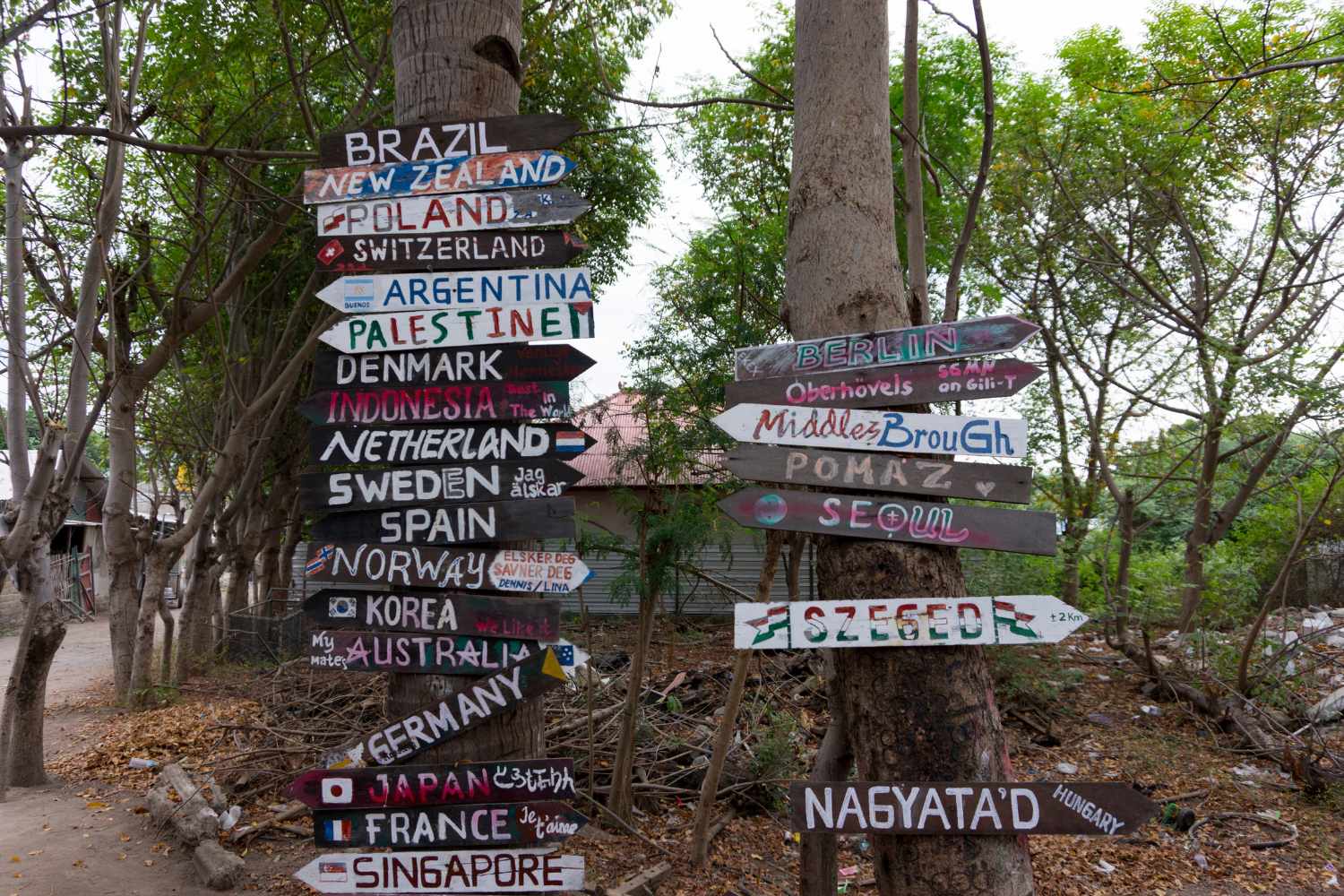
Three hundred million people already live outside their country of birth, almost double compared to 1990, and the number is constantly growing, year after year. Are you wondering where you could go to start a new life? Global Citizen Solutions, a consultancy company specializing in residences and citizenship, can offer you an answer, a starting point supported by data from the World’s Most Livable Cities for Expats, a ranking that covers 35 cities on six continents. This is not yet another index designed for managers on business trips, but a tool explicitly built for anyone who wants to move voluntarily, categories such as remote workers, pensioners, digital entrepreneurs and families looking for a new country.
How the ranking works
The GCS Global Intelligence Unit evaluated each city using seven indicators (cost of living, personal safety, air quality, healthcare, ease of integration, English proficiency and passport mobility) normalized on a scale of 0 to 100. Security and healthcare weigh the most (18% each), followed by cost of living (17%) and air quality (15%), integration, English and mobility share the remaining 30%. Passport mobility, i.e. the amount of country that can be reached without needing a visa, is an aspect that traditional rankings almost always ignore, whereas here it is a central axis.
The top 10
Lisbon occupies first place not for a record on a single indicator but for the coherence between them. It is among the least expensive capitals in the ranking, with costs far lower than Vienna, Amsterdam and Copenhagen, the air is clean, the security exceeds that of Barcelona, Paris and Rome, and Portugal offers dedicated residence paths, from the golden visa to the digital nomad visa, which make it structurally accessible for those coming from abroad.
In second place we find Amsterdam: high safety, excellent healthcare, the highest English proficiency among all the European cities in the sample. Between 2015 and 2022, over 72% of urban trips took place on foot, by bike and/or by public transport, a detail that says a lot about the quality of daily life. The cost, among the highest in the ranking, is the main obstacle.
Melbourne occupies third place, the first city outside Europe, with air quality among the best in the sample and English proficiency at the highest (equal to Singapore, Auckland and Vancouver). Vienna is fourth and leads in Europe for healthcare, globally surpassed only by Seoul, the limit is social integration, the lowest among the top ten.
Barcelona, in fifth position, has the highest integration score among the European countries in the ranking, 26.4% of the population is foreign, and thanks to the non-profit Spanish visa it is also accessible to those who do not work. Singapore, in sixth place, leads the entire ranking in passport mobility and shares the top for English proficiency; in 2025 Changi Airport was voted the best in the world for the thirteenth time.
Auckland in seventh excels for air quality, while Tokyo, in eighth combines high-level safety and healthcare (as of 1 January 2026 it had 783,701 foreign residents, 62,478 more than the previous year) but records the lowest English proficiency among the top ten. Copenhagen, ninth, has among the highest costs on the list and difficult social integration, but excels in mobility, healthcare and infrastructure. Seoul, in tenth place, has the highest health score in the entire ranking (in 2025, South Korea welcomed over 2 million foreigners for medical care).
The paradox of the “best” cities
The most uncomfortable data from the research disproves a widely held intuition, namely that the best cities to live in are not necessarily the easiest ones to be accepted by. Vienna and Copenhagen, two of the cities with the best infrastructure in the entire sample, have the lowest social integration scores of all 35 cities analyzed. The more efficient and safe a city is, the more difficult it tends to be to penetrate socially, an invisible trap for those who choose their next destination by looking only at traditional rankings.
The reverse exists just as clearly. San José of Costa Rica leads the entire ranking on social integration, followed by Mexico City, Bali, Rio de Janeiro and Bangkok. Low costs and accessible communities, but health and safety that limit the overall score. Southeast Asia (Ho Chi Minh City, Bali, Bangkok) and the Caucasus with Tbilisi dominate the affordability bracket, all competitive destinations for digital nomads and retirees with hard currency income, regardless of position in the composite ranking.
Lisbon and Barcelona emerge as rare cases in the global panorama, because they are the only cities where pensioners, families and independent professionals simultaneously find an adequate context. Perhaps it is this, in addition to the climate, that explains why the flows of transfers from the United Kingdom and the United States to the two Iberian cities have never stopped.
The 10 most livable cities in the world for expats (2026)
This is the ranking of the top ten:
- Lisbon, Portugal
- Amsterdam, Netherlands
- Melbourne, Australia
- Vienna, Austria
- Barcelona, Spain
- Singapore
- Auckland, New Zealand
- Tokyo, Japan
- Copenhagen, Denmark
- Seoul, South Korea
