
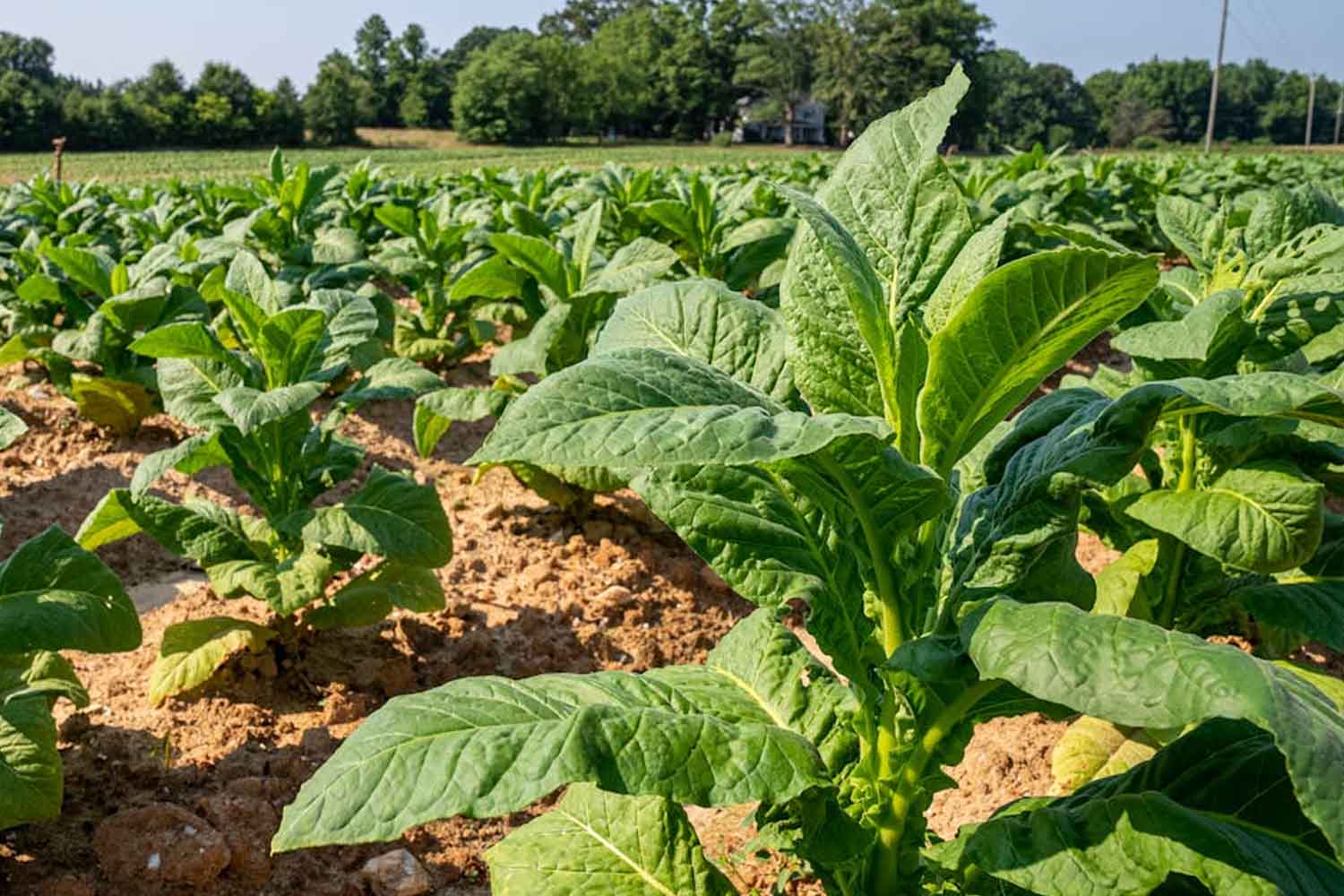
In tobacco roots, nicotine originates with a chemical trick that has remained invisible for almost two centuries: the plant uses a sugar to start a decisive reaction, then removes it before the molecule is complete. A small disappearance, elegant enough to send generations of researchers astray.
Now that passage has been rebuilt. A research team has identified the enzymes that allow the plant to build nicotinethe alkaloid that tobacco uses as a natural defense against insects and herbivorous animals. The discovery also matters outside the fields: some plants close to tobacco are already used as “biofactories” to produce vaccines, antibodies and proteins useful for medicine. Knowing how to turn off nicotine production at the source can make these processes cleaner and less expensive.
The hidden passage
Nicotine had been isolated in 1828, but the exact path by which tobacco produced it remained incomplete. The crux was in the union of the two chemical rings that form the molecule. Each comes from a different piece of plant metabolism; together they become nicotine.
The detail that has been overlooked for years concerns glucose. The plant attaches it to an intermediate of the reaction, uses it to make the pieces to be joined more reactive and then removes it. In the final mixture that sugar. That’s why it was so difficult to see him. The researchers identified a cascade of four enzymes: one adds glucose, others prepare and stabilize the reaction, the last removes it. The result is the natural form of nicotine produced by tobacco.
The verification was also done on a plant widely used in laboratories, Nicotiana benthamianaa relative of tobacco that does not normally produce nicotine in its leaves. By entering the enzymatic pathway and providing the starting material, the plant produced nicotine in the correct form.
Because medicine is of interest
Tobacco brings with it a heavy history, linked to smoking and addiction. In the laboratory, however, some species of Nicotiana they have a different use: they can produce molecules useful for pharmaceutical research. The problem is that nicotine can end up in the process and must be eliminated, with additional purification steps.
Knowing the genes involved allows you to work more precisely. In the future it will be possible to obtain plants designed to produce drugs or therapeutic proteins without accumulating unwanted nicotine. No shortcuts ready tomorrow morning: stable lines, tests, controls and scale production will be needed. But now the target is much clearer.
The discovery also says something broader about plant chemistry. Plants build complex molecules to defend themselves, attract pollinators, communicate with the environment or survive attacks. They often do this with temporary steps, small chemical scaffolds that appear only for the necessary time and are then dismantled. In the case of tobacco, the scaffold was a sugar. He puts it on, does the job, takes it off. The nicotine stays there. This time someone saw the trick.
