

Today the Giro d’Italia 2026 is not just sport. The twentieth and penultimate stage of the Corsa Rosa, starting from Gemona del Friuli and arriving in Piancavallo, crosses a land that still bears the signs of the 1976 earthquake. A symbolic, powerful, almost solemn passage in the year of the fiftieth anniversary of the earthquake that changed the face of Friuli Venezia Giulia forever.
The roads that the runners will travel pass through villages that half a century ago were rubble and silence. Today, however, they tell one of the most extraordinary Italian stories of reconstruction, identity and collective pride. Between legendary climbs and alpine landscapes, the Giro thus enters a different dimension: that of memory.
View this post on Instagram
The earthquake of 6 May 1976 which shocked Friuli
At 9pm on May 6, 1976, the earth shook for almost a minute. A devastating earthquake of magnitude 6.5 hit Friuli causing 990 victims, thousands of injured and over 100 thousand displaced people. Municipalities such as Gemona, Venzone, Osoppo and Cividale del Friuli were devastated in a matter of seconds. The images of those days remain engraved in the collective memory: collapsed bell towers, gutted houses, entire historic centers obliterated.
Yet, precisely from that tragedy something unique was born. Friuli reacted with impressive dignity. Help arrived from all over Italy and abroad, while the population chose not to abandon their countries. Even today a phrase that has become a symbol of the Friulian rebirth is repeated here: “first the factories, then the houses, then the churchesA concrete, organised, participatory reconstruction, which has become a model also studied at an international level.
Gemona del Friuli, the city that rose again stone by stone
I actually crossed these places during one of my camper trips and walked among medieval streets, stone climbs and open views of the Julian Prealps. And Gemona del Friuli is one of those places that are immediately striking, because here the memory is not hidden: it lives inside every reconstructed building. An elegant and intimate city, suspended between a medieval atmosphere and contemporary memory, its historic center retains a strong architectural identity, made up of stone facades, steep climbs and buildings rebuilt with an almost obsessive precision after the earthquake.
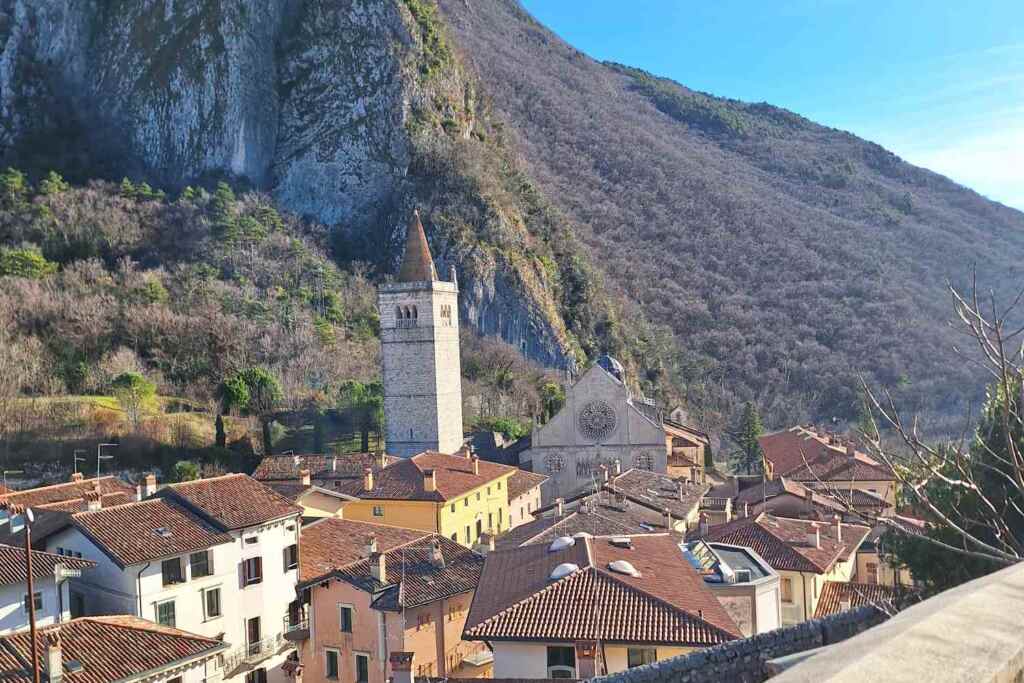
The symbol of Gemona is the magnificent Cathedral of Santa Maria Assunta, one of the most important Gothic-Romanesque monuments in Friuli Venezia Giulia. The facade leaves you speechless: it dominates the gigantic statue of San Cristoforo, about seven meters high, carved directly into the local stone. Above the portal stand out the refined rose windows and medieval decorations that survived the destruction of 1976. After the earthquake, much of the structure collapsed, but it was rebuilt by recovering original materials and faithfully respecting the historical layout. Entering the Cathedral you are struck by the silence and the light filtered through the windows. Even the bell tower, which collapsed almost completely during the earthquake, was rebuilt faithfully respecting historical proportions and materials.

Next to the Cathedral stands the bell tower, which was also reborn after the earthquake. Walking along Via Bini, the medieval heart of the city, you come across fourteenth-century porticoes, noble houses, historic buildings and ancient shops that tell of centuries of trade and passages between the Friulian plain and the Alpine passes. The path dedicated to the memory of the earthquake is also very touching. In various parts of the city, photographs, testimonies and installations tell what happened that evening in 1976, but also what happened before and after.

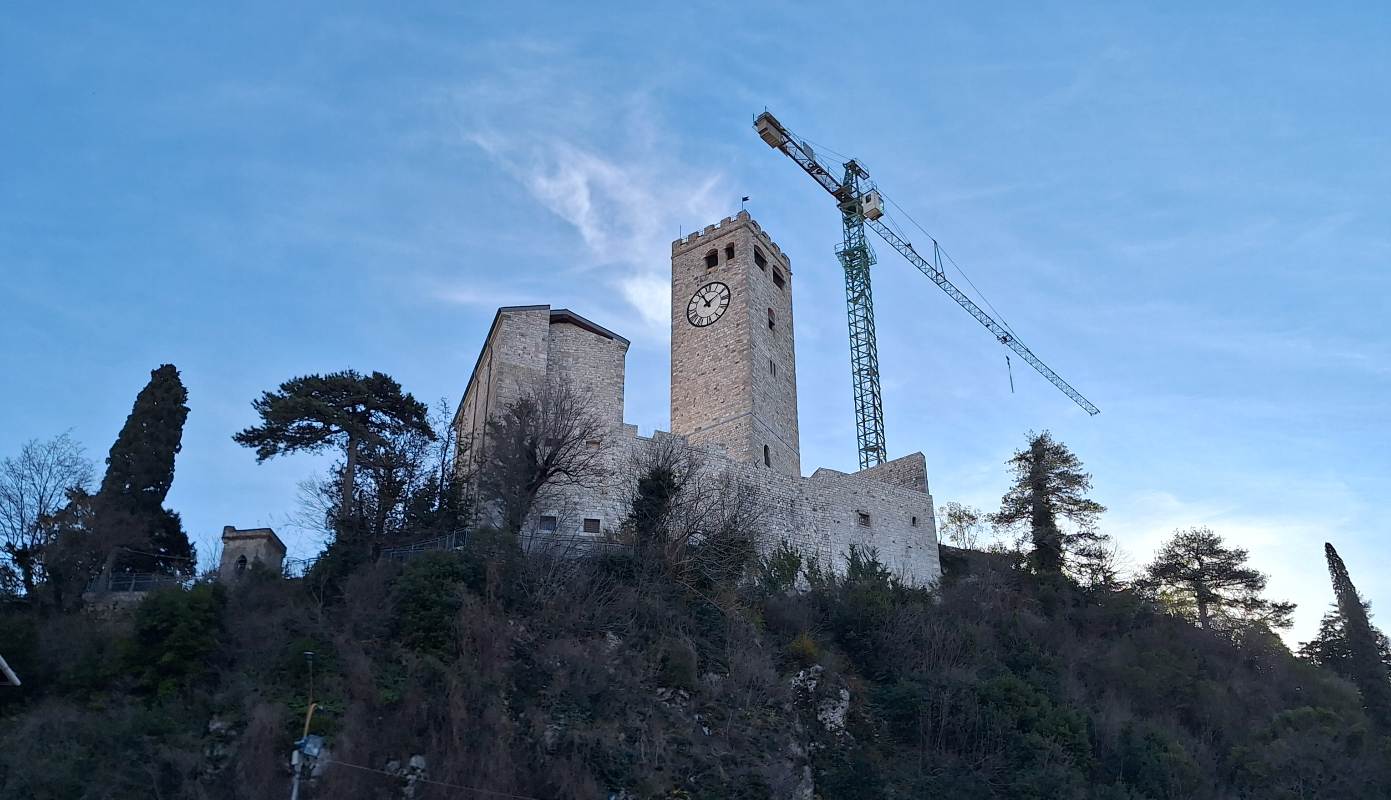
Also not to be missed is the climb towards the Gemona Castle, reachable via a long panoramic staircase, the Salita dei Lombardi. Located on the highest point of the city hill, today there remain bastions, walls and panoramic terraces from which a magnificent view opens up over the red roofs of the village and the Friulian mountains, immersed in the silence typical of the villages of this land.
Venzone, the medieval village rebuilt as it was and where it was
The passage then passes through Venzone, one of the most beautiful villages in Italy. If Gemona excites with its urban and monumental character, Venzone conquers with its almost unreal atmosphere. Surrounded by a double medieval wall, it is considered one of the most beautiful villages in Italy and represents the most spectacular symbol of Friulian reconstruction.
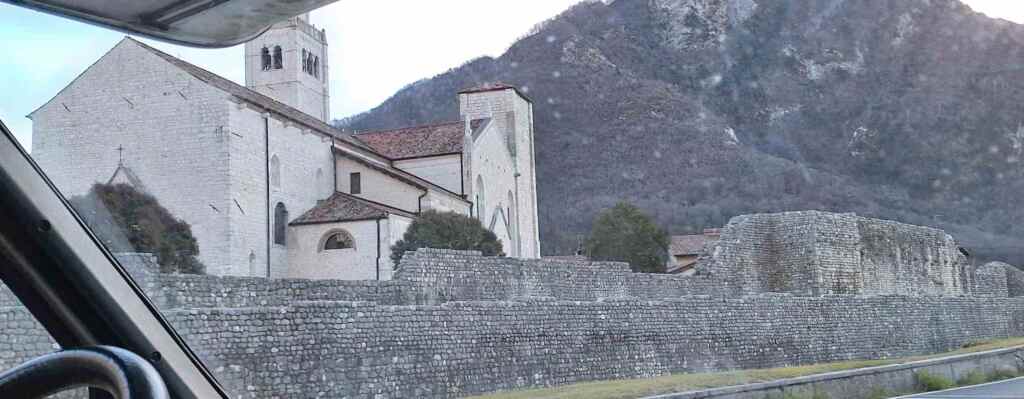
Entering through the ancient doors it really feels like crossing a gap in time. The stone streets, medieval houses and historic buildings appear perfectly preserved. Yet in 1976 the village was practically razed to the ground. The reconstruction of Venzone has become a unique case: the village was reassembled thanks to the anastylosis technique, used for the first time on a large scale: every stone of the collapsed buildings was catalogued, numbered and reassembled in its original position. An immense job that has allowed Venzone to be reborn exactly as it was before the earthquake.
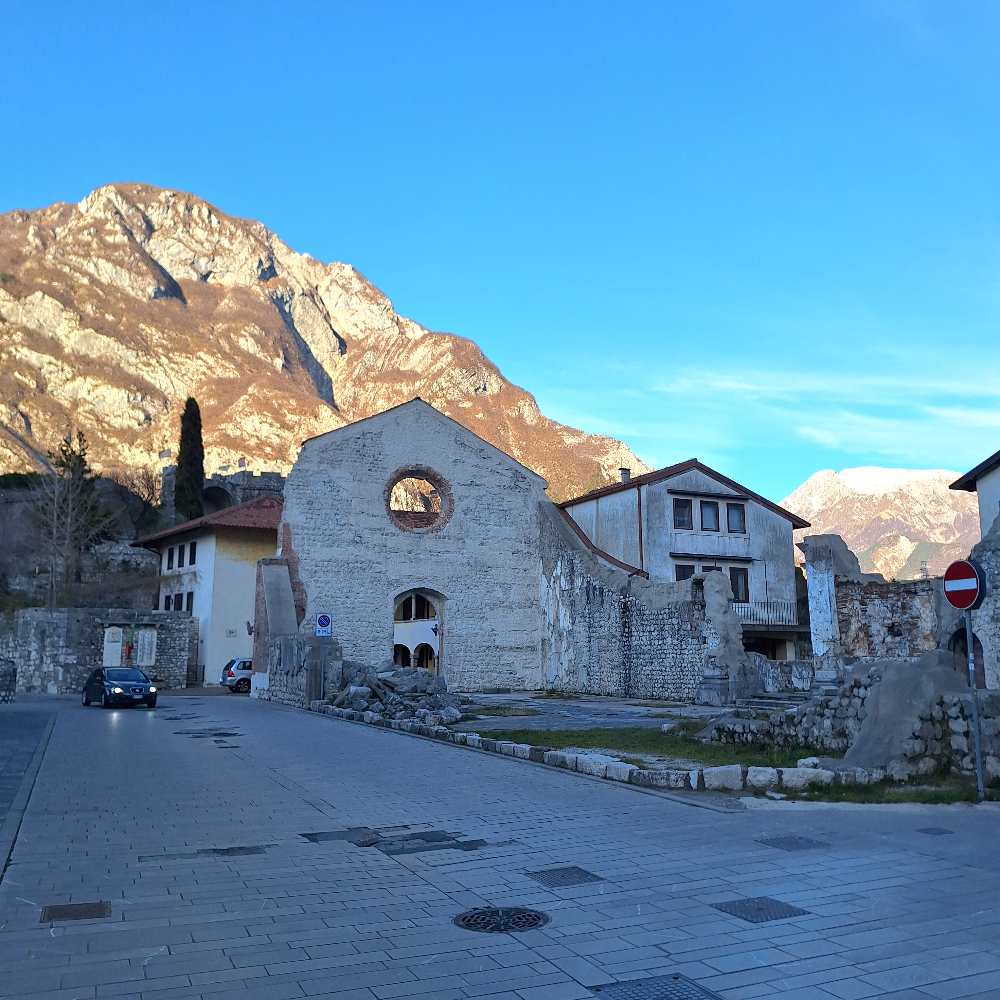
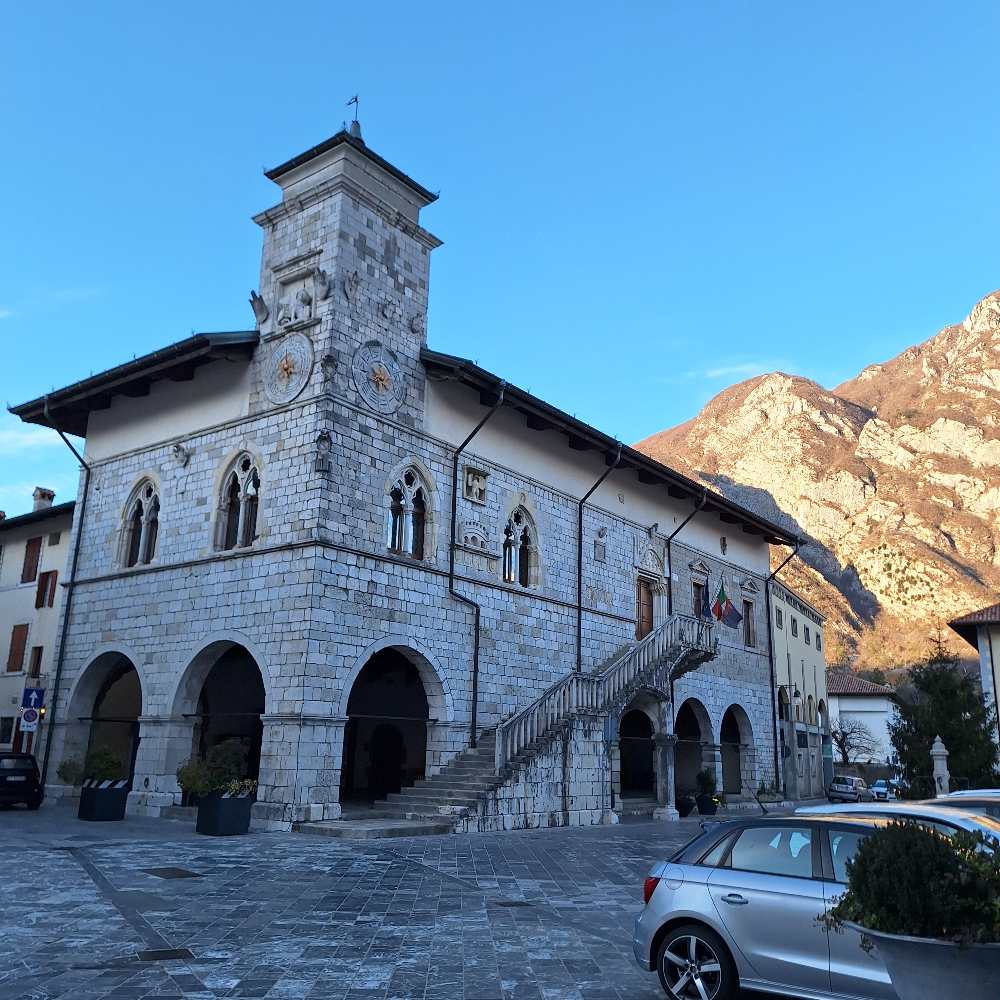
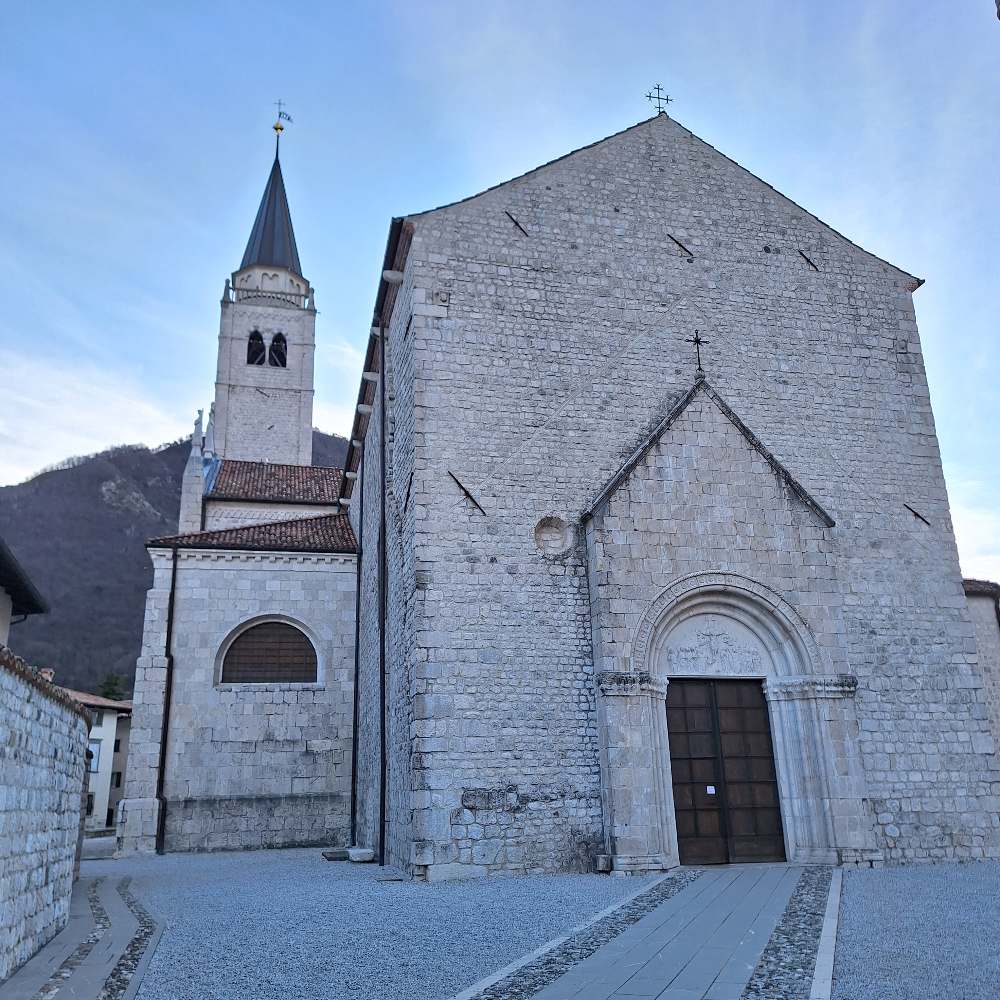
The heart of the town is Piazza Municipio, surrounded by historic buildings and dominated by the Venetian-style Town Hall. Not far away stands the suggestive Cathedral of Sant’Andrea, rebuilt piece by piece in local white stone thanks to an immense photographic archive. The Romanesque-Gothic façade is one of the symbols of historical Friuli. Inside there are medieval frescoes and evidence of the reconstruction.
Among the most particular curiosities are the famous mummies of Venzone, kept in the Crypt of San Michele in front of the Cathedral. Naturally mummified bodies between the 14th and 19th centuries which still attract scholars and visitors today. But Venzone is not just memory. Walking through the streets you come across lavender shops, artisan shops and small taverns where you can taste Friulian specialties. In summer the village becomes colorful with the famous Lavender Festival, while in autumn it goes back in time with the medieval Pumpkin Festival.
A stage that combines cycling, memory and territory
The twentieth stage of the Giro d’Italia 2026 thus becomes something more than a simple bike race. It is a journey into one of the most painful and courageous pages of recent Italian history. Friuli today shows the face of a land that has never stopped rebuilding itself. And while the runners face the final hardships towards the mountain, the public along the streets also applauds another victory: that of a community that fifty years later continues to remember, thank and start again.
You might also be interested in:
