
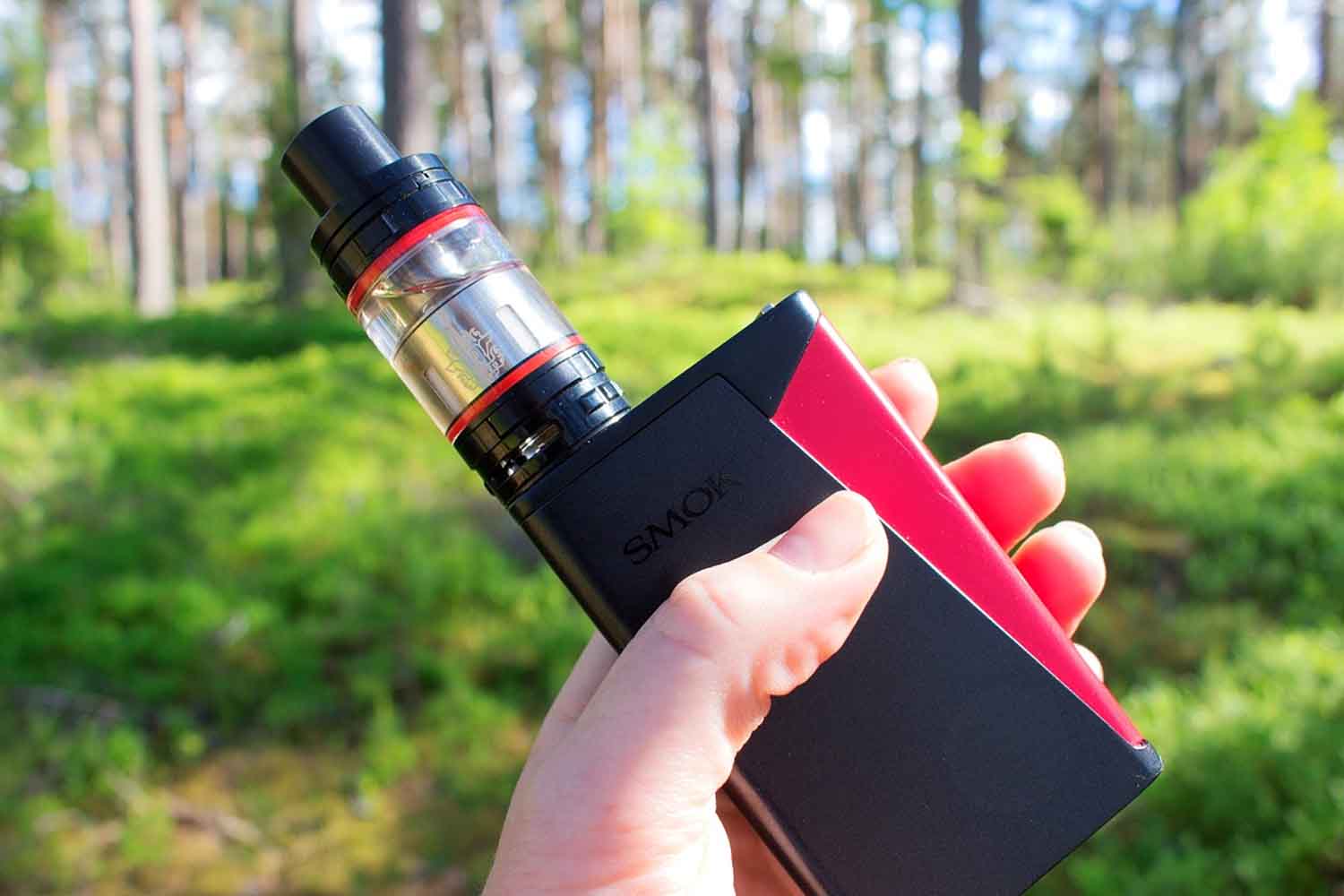
The electronic cigarette often enters conversations with that air of a modern compromise: less smoke, less odor on clothes, less ash in the ashtray, less scene of a crushed package on the bar table. Then chemistry, as usual, comes with its inelegant way of ruining easy reassurances. Toxic metals can travel inside that vapor which seems to disappear in a few seconds, and new research has tried to follow their path to the lung tissue.
The study, published on Analytical and Bioanalytical Chemistryused a very detailed analytical approach to examine liquid, aerosol, and the lungs of mice exposed to nicotine vapor. The researchers combined several mass spectrometry techniques to understand which elements were present, in what chemical form and where they ended up after inhalation. The most serious result lies here: after a short exposure, some metals were found in the lung tissue, with localized accumulations and an irregular distribution.
The steam gets where it needs to hurt
In the test, animals were exposed to e-cigarette aerosols twice a day, for 30 minutes, over four days. The model used was murine, so the transition to humans requires caution, without alarmist shortcuts. But the data remains inconvenient: the group detected more elements in the liquid and in the aerosol, including nickel, lead, copper, aluminum, tin, arsenic and traces of mercury. Increases in copper, nickel and lead emerged in the lung tissue, along with a significant reduction in iron.
The novelty also concerns the way in which these elements move. For the first time, according to the authors, evidence of the presence of metal-containing species, including organometallic forms, has been identified in e-cigarette aerosols. Translated without a coat on: some metal compounds can come in forms that are more mobile and potentially easier to absorb into the lungs than inorganic metals. The research specifies that the complete structure of these compounds requires further studies, but the chemical signal exists and opens a path that is little considered in safety assessments.
Deposition in the lungs, then, follows its own geography. Metals accumulate in patches, without spreading as a uniform patina. Lead, nickel and tin were observed mainly in the upper areas of the lung, while zinc appeared more often in the lower areas. This detail matters because biological damage also depends on where a substance arrives, how long it stays there and what cellular processes it encounters.
The problem also lies in the device
For years the debate on electronic cigarettes has focused above all on liquids: nicotine, flavourings, solvents, declared concentrations, tastes that are too sweet, colored packaging. This study shifts some of the focus to the device itself. The observed metal emissions are compatible with components such as resistors, heating coils and electrical parts. In practice, the risk can also come from the small machine that heats the liquid, especially when materials, production quality and wear change from model to model.
This makes any adjustment built only around the bottle more complicated. An electronic cigarette is a system: liquid, temperature, resistance, internal materials, frequency of use, maintenance, rechargeable or disposable device. Just change one of these pieces and what is inhaled also changes. The same research underlines the need to compare more devices, more formulations and longer exposure durations, especially for the products most used by young people.
Comparison with some limits used for inhaled pharmaceutical products makes the picture even more stark. Lacking specific equivalent standards for metal emissions from e-cigs, the authors used USP 232 limits, designed for inhaled medicines, as a reference. The comparison should be read for what it is: a health benchmark, not a rule built specifically for vaping. Even so, the values observed in the study are very high for several elements: arsenic about 480 times above that reference, nickel about 250 times, mercury about 180 times, chromium about 60 times and lead about 17 times.
Then there is the iron. In the lungs of exposed animals, levels dropped significantly. Iron participates in oxygen transport, immune response and cellular energy production. Its alteration in lung tissue, together with the increase in other metals, suggests a biological imbalance that deserves longer tests and closer to real human use. Caution is needed here: the study alone does not prove that four days of vaping causes chronic disease in humans. However, it shows a plausible and measurable mechanism, concrete enough to call for better controls.
Teenagers, disposable and still slow rules
The topic becomes even more delicate when we look at adolescents. Electronic cigarettes, especially disposable ones, have entered the youth imagination with embarrassing ease: colours, flavours, accessible price, small object, rapid consumption, no adult liturgy of traditional tobacco. The World Health Organization recalls that these products may contain nicotine, toxic substances and harmful compounds, and that the long-term effects still remain to be clarified precisely.
Australian research insists on this very step: studies on humans, longitudinal observations, tests on multiple models and stricter supervision of device materials are needed. Controlling the liquid alone risks leaving the most opaque part uncovered, that is, what happens when the resistance heats up, the metal degrades, the aerosol forms and is carried to depth.
The electronic cigarette will continue to be described by many as a less harmful alternative to burning tobacco. In some smoking cessation programs, under supervision and for adult smokers, the issue remains different from that of recreational use among adolescents or among people who did not smoke. The problem arises when the word “less” becomes “safe”, and “harm reduction” turns into a commercial pass.
You might also be interested in:
