
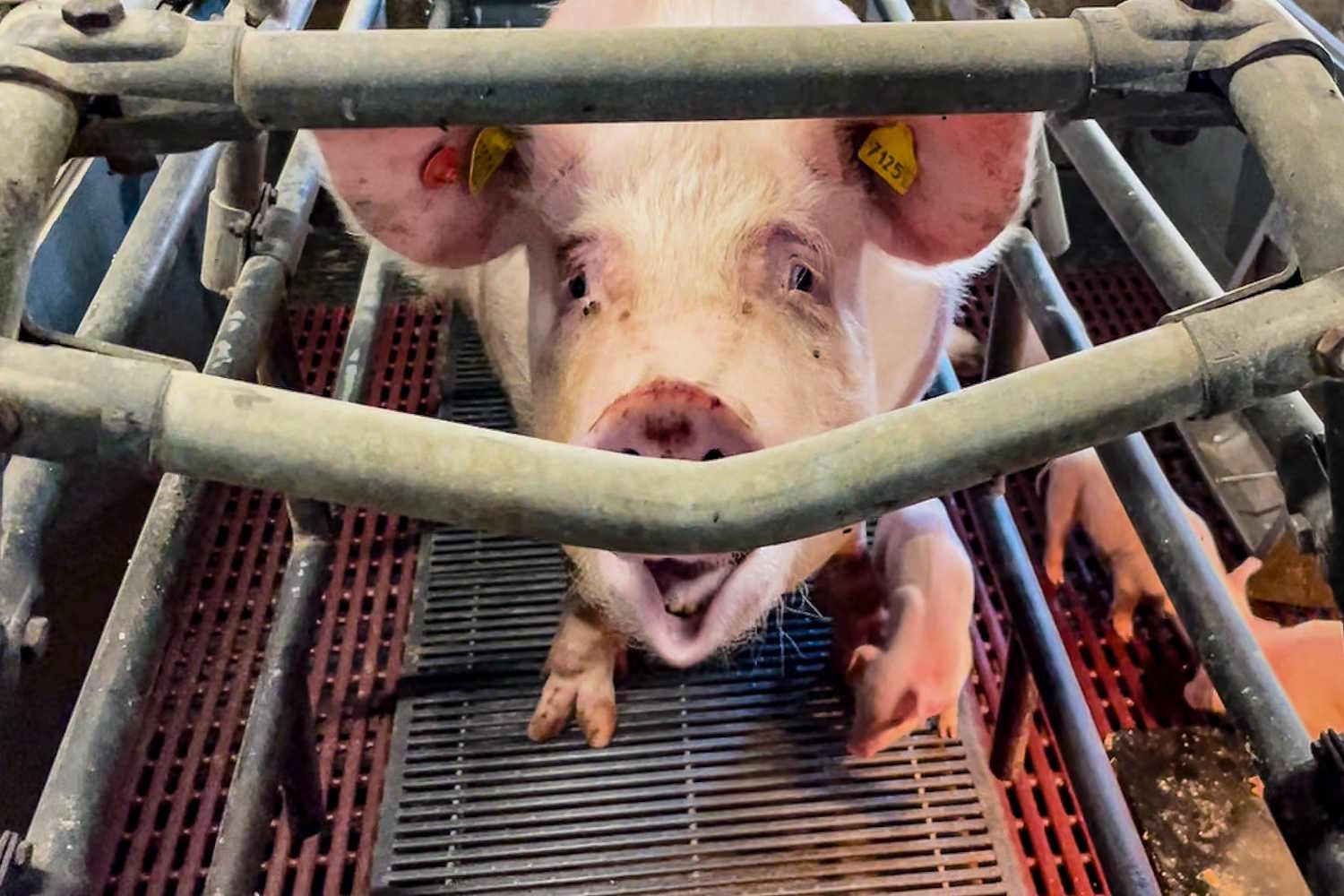
When we read the acronym DOP on a label we are led to think of quality, rigorous controls and, often, also high standards of animal welfare. But what really happens on the farms that feed some of the symbolic products of Made in Italy?
Reopening a question that has never really been resolved is a new investigation released byessereanimali, which shows images shot inside a large sow and piglet farm in the province of Treviso, destined for the Italian PDO production chain.
The footage, taken in December 2022 and delivered to the association by a former employee, tells of a reality of violence against animals, mutilations practiced without anesthesia, precarious hygienic conditions and deteriorated structures.
The investigation
The video, narrated by Selvaggia Lucarelli, documents disturbing episodes, which cannot help but raise serious questions about compliance with regulations and the level of protection guaranteed to farmed animals.
View this post on Instagram
Among the harshest scenes, there are those of sows with obvious motor difficulties being hit and kicked while moving between the sheds. Some pigs unable to walk are dragged by their ears along the corridors of the farm. Other piglets are thrown into the metal trolleys from several meters away, ending up crushed on top of each other.
The images also show a sow suffering from a serious prolapse, on which an operator attempts an improvised intervention instead of entrusting the animal to adequate veterinary care. In another sequence, two pigs remain trapped for days under the flooring of the farrowing room, surviving among sewage and feed residues.
Among the most controversial aspects is the management of piglets in the first days of life: the videos show young males undergoing surgical castration without anesthesia or analgesia. The systematic docking of the tail is also documented, a practice that European legislation has prohibited for over twenty-five years when carried out routinely and not justified by specific health needs.
According to numerous scientific studies, both procedures cause acute pain and stress in animals, which is why several European countries have introduced increasingly stringent restrictions in recent years. As if that wasn’t enough, numerous lifeless piglets appear in the farrowing cages, while the structures appear to be in highly degraded conditions. The plywood partition walls are damaged and full of splinters that can injure newborn animals. The metal bars are corroded by rust and have sharp surfaces in contact with sows and cubs.
Added to this is a particularly delicate problem: according to what the former employee reported, the systems designed to prevent the mother from accidentally crushing the babies have been out of use for some time, increasing the risk of neonatal mortality. The images also show massive use of broad-spectrum drugs and antibiotics, including amoxicillin, which is frequently used for collective treatments. A theme that recalls the global problem of antibiotic resistance, considered by the World Health Organization to be one of the main health threats of the coming decades.
Dozens of piglet carcasses then appear outside the farm, left exposed to atmospheric agents and accessible to wildlife, a situation that also raises questions in terms of biosecurity.
DOP does not mean animal welfare
This is perhaps the most important point of the whole story. Asessere Animali underlines, the DOP brand certifies the geographical origin and compliance with specific production regulations, but does not automatically guarantee high standards of animal welfare.
Many consumers associate these certifications with more ethical and animal-friendly production. However, if the regulations do not expressly prohibit certain practices, even PDO products can come from farms that use cages and other systems typical of intensive farming.
The battle to eliminate cages
The investigation comes as a mobilization is underway in Italy to ban the use of cages on farms. Last March,essereanimali filed a popular initiative law proposal as part of the “Empty Cages” campaign, supported by over 32 thousand signatures. The aim is to gradually introduce the ban for all farmed species.
The request is part of a process that began at European level with the citizens’ initiative “End the Cage Age”, which had collected over 1.4 million signatures, obtaining in 2021 the European Commission’s commitment to progressively overcome cage farming. A commitment which, animal rights associations denounce, has not yet been translated into a concrete legislative proposal.
Meanwhile, some European countries are already going in that direction. Sweden, Denmark, Austria, Finland, Germany and the Netherlands have introduced or planned significant restrictions on the use of sow cages. A change that could soon reopen the debate in Italy too.
HERE you too can sign to bring the bill for a cage-free Italy to Parliament.
