
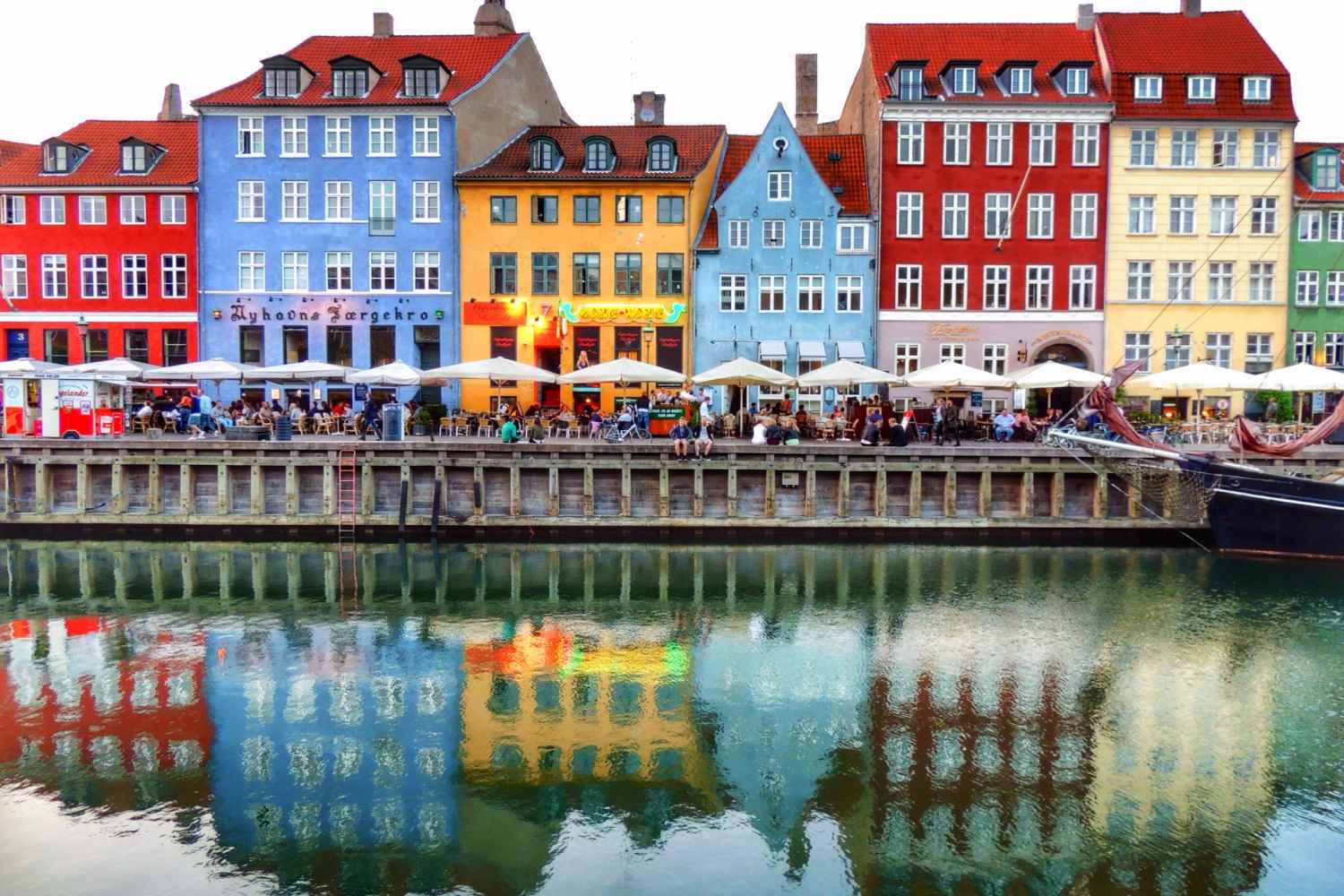
For the second consecutive year, Copenhagen is the happiest city on the planet. This is certified by the Happy City Index 2026, the international ranking that evaluates urban well-being through dozens of indicators linked to quality of life, services, health, sustainability, mobility and economy.
The Danish capital takes first place with almost 7,000 points, overtaking Helsinki and Geneva. Once again Northern Europe dominates the ranking, confirming an urban model that focuses on the well-being of citizens, the efficiency of public services and attention to the environment.
Because Copenhagen continues to be the happiest
The Happy City Index does not simply measure a city’s level of wealth. The survey takes into consideration 64 indicators distributed across six macro areas: citizens, governance, environment, economy, mobility and health.
What makes the difference in the case of Copenhagen is the combination of efficient transport, green spaces, accessible services, environmental sustainability and a high level of trust in institutions. Elements that contribute to making daily life simpler and more pleasant.
Behind the Danish capital are Helsinki, in Finland, and Geneva, in Switzerland, followed by Uppsala and Tokyo, the only Asian city present in the top five positions.
The 10 happiest cities in the world
According to the Happy City Index 2026, the global top ten is made up of:
- Copenhagen (Denmark)
- Helsinki (Finland)
- Geneva (Switzerland)
- Uppsala (Sweden)
- Tokyo (Japan)
- Trondheim (Norway)
- Bern (Switzerland)
- Malmö (Sweden)
- Munich (Germany)
- Aarhus (Denmark)
A result that confirms the dominance of the cities of central and northern Europe, considered an international reference for quality of life and urban sustainability.
And Italy?
The news is not particularly encouraging. In fact, no Italian city manages to enter the top 50 positions in the ranking.
The best placed Italian city is Bologna, which occupies 73rd place in the world. Parma follows in 77th and Milan in 80th, while Rome stops in 144th place. Even further behind are Verona, Messina, Bari, Naples and Salerno.
According to the authors of the report, what weighs above all are some structural critical issues that characterize many Italian cities: often insufficient public transport, complex bureaucracy, difficulties in urban planning and strong territorial inequalities.
This does not mean that Italian cities are not very liveable or unattractive. On the contrary, cultural heritage, food quality, climate and beauty of the area continue to represent internationally recognized strengths. However, to compete with the cities that lead the ranking, more incisive investments are needed in sustainable mobility, public services and the quality of urban spaces.
How the Happy City Index is calculated
The 2026 edition analyzed 251 cities around the world. Particular attention was paid to aspects related to physical and mental health, increasingly considered fundamental elements of urban well-being.
Hundreds of international scholars and researchers collaborated on the research, with the aim of identifying cities that manage to guarantee their inhabitants not only economic prosperity, but also a better quality of life in the long term.
The picture that emerges is clear: the happiest cities are not necessarily the largest or the richest, but those that manage to build a balance between development, sustainability, social inclusion and efficient services.
You might also be interested in:
