
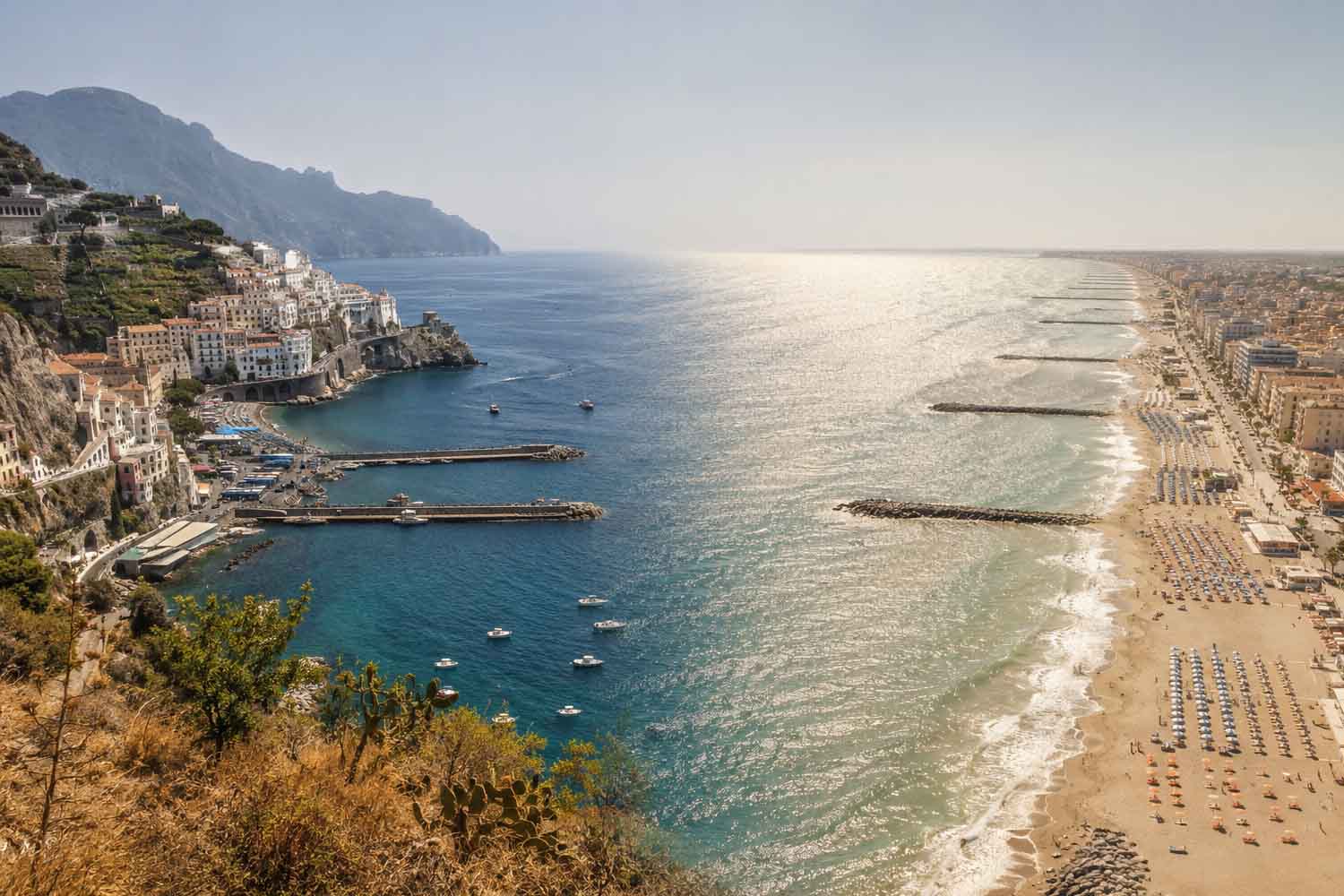
The Italian sea is warming faster than the global average. The data comes from ISTAT and concerns two basins that directly affect the life of the country: the Tyrrhenian and the Adriatic. Between 1940 and 2025, the average annual temperature in both countries rose by more than 1°C, twice as fast as the global average. In the same passage, ISTAT indicates this trend as a confirmation of the Mediterranean as an area of particular climatic vulnerability.
One degree more, in the sea, weighs. It means warmer water for longer periods, longer summer seasons, coasts more exposed to the effects of heat and coastal cities that retain more humidity even at night. ISTAT links this scenario to a climate picture already visible in Italian cities: between 2006 and 2023, compared to the 1981-2010 climate average, in the 21 regional capitals the summer days, i.e. those with maximum temperatures above 25°C, went from 101 to 114. Tropical nights, with minimum temperatures above 20°C, increased from 38 to 49.
The Mediterranean runs faster
The data on the Tyrrhenian and Adriatic must be read within a Mediterranean which, due to its position and characteristics, responds quickly to warming. ISTAT uses a clear formula: area of particular climate vulnerability. In the Italian case, this vulnerability has a very concrete impact because the sea surrounds a large part of the national territory and affects the local climate, tourism, fishing, coastal cities, quality of life and energy consumption in the hot months.
Sea warming is not confined to water. When surface temperatures increase, the relationship between coasts and urban areas also changes. Cities already exposed to heat islands receive additional pressure from longer summers and hotter nights. In fact, ISTAT reports that warming is even more accentuated in urban areas, where the phenomenon of heat islands amplifies the effects of higher temperatures.
Rome offers a clear example of this urban acceleration. In the comparison between four European capitals, the Collegio Romano station shows an increase in average temperature of around 3°C from the beginning of the 1980s to today, while Berlin, Madrid and Paris record an increase of around 2°C. ISTAT also underlines that in all four cities the maximum increase is concentrated in the last 15 years.
Tyrrhenian and Adriatic in the Italian climate
Tyrrhenian and Adriatic are not two geographical details. They are part of Italian everyday life: inhabited coasts, ports, bathing establishments, tourist areas, fishing, large and small cities overlooking the water. An increase of more than 1°C from 1940 to 2025 indicates a slow, continuous transformation that has already entered the country’s climatic normality.
The Tyrrhenian Sea concerns the western side, from the Ligurian and Tuscan coasts to Lazio, Campania, Calabria and the islands. The Adriatic affects the eastern side, from the lower and more urbanized northern area to the coasts of the Centre-South. They are different seas in terms of depth, circulation and relationship with the coasts, yet ISTAT records the same general signal for both: average annual temperature rising by more than 1°C since 1940.
This data fits into an already very hot 2024. Again according to ISTAT, compared to the period 1991-2020, ground temperatures in 2024 were higher by +0.7°C globally, by +1.3°C in Italy and by +1.5°C in Europe as a whole. ISTAT also recalls that 2022 and 2023 were, for Italy, the hottest years since the measurements were carried out.
The heat enters the daily data
The most useful part of ISTAT numbers lies in the connection between sea, city and ordinary life. The increase in summer days and tropical nights tells of an Italy where the heat lasts longer and allows fewer breaks. Going from 101 to 114 summer days means adding almost two weeks of days above 25°C compared to the reference climate average. Going from 38 to 49 tropical nights means having eleven more nights in which the minimum temperature remains above 20°C.
These changes weigh on homes, on consumption, on the health of vulnerable people, on outdoor work, on the management of cities. They also impact the way we use energy. In the ISTAT document, environment and energy travel together precisely because heating changes habits, needs and infrastructures. Warmer winters, longer summers, air conditioning, electricity demand, water management and urban adaptation enter the same trajectory.
ISTAT also reports a contraction of water outflows in some basins, with reference to the Tiber and the Arno since the 1980s, while for the Po basin the seasonal analysis shows a severe increase in summer low water levels, culminating in the crisis of 2022. The picture, therefore, does not only concern the warmer sea: it concerns an environmental system that changes together, between temperatures, available water, cities and consumption.
The Mediterranean as a vulnerable area is therefore not an abstract concept. It is a measurement that passes from the sea to the cities, from the coasts to the rivers, from annual data to the nights when the temperature does not drop. For the Tyrrhenian and Adriatic the signal is already written in the historical series: the sea around Italy is warmer, and it is doing so faster than the global average.
You might also be interested in:
