
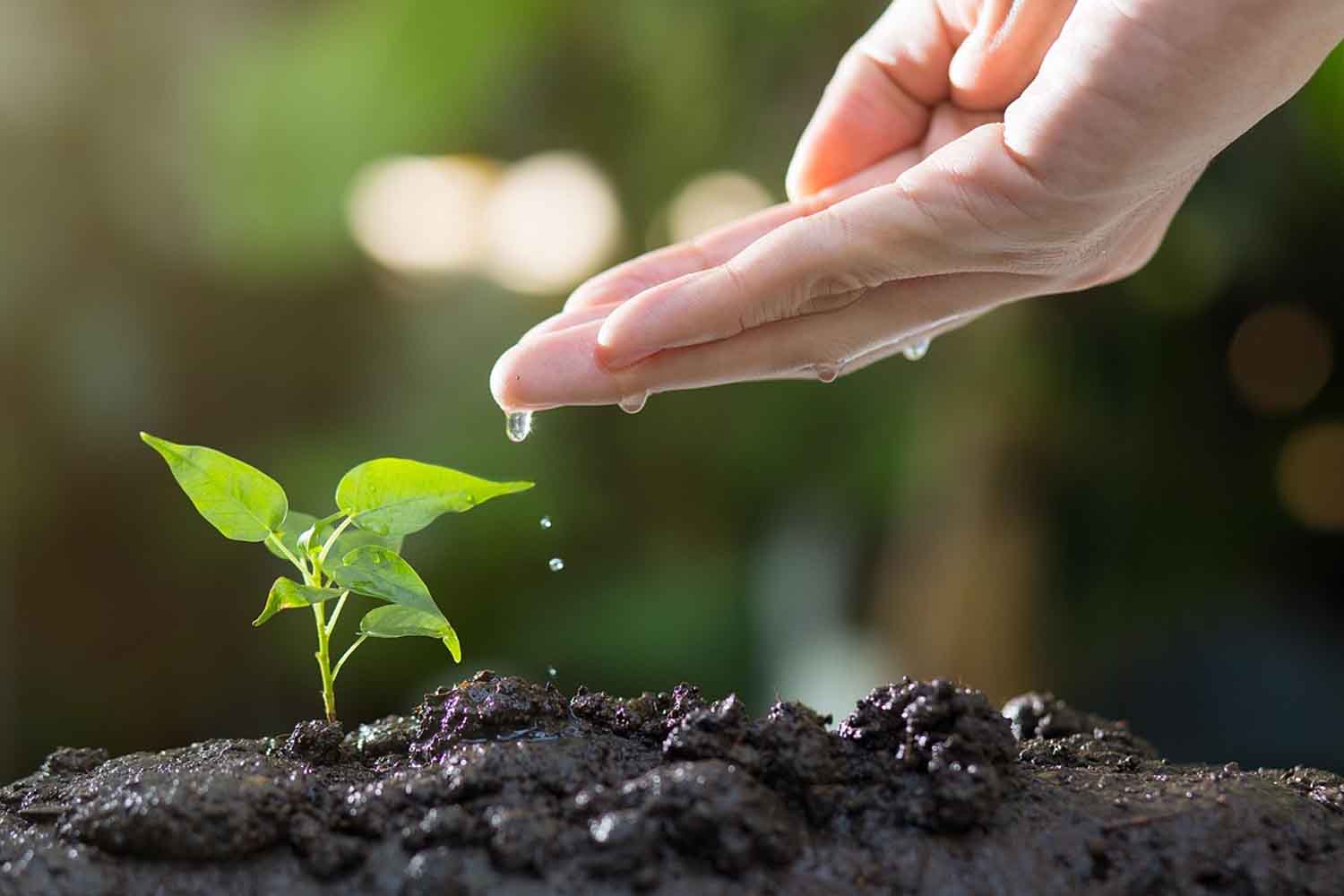
There is something profoundly fascinating in the solutions that come from the past and which, without fanfare, return to speak to the present. Biochar is one of these. It is not a futuristic technology nor yet another green promise yet to be verified. It is a material of plant origin, obtained from the controlled combustion of agricultural residues at high temperatures and in the almost total absence of oxygen, which is now attracting the attention of farmers and researchers for a very simple reason: it improves the soil and retains carbon.
The result of this process is a black, light and porous substance, capable of absorbing water and nutrients and slowly returning them to the earth. Inserted into the soil, biochar improves its structure, increases fertility and helps crops to better resist periods of drought. But its value doesn’t stop there. A substantial part of the carbon contained in biomass remains trapped in the soil for very long times, helping to reduce the amount of CO₂ returning to the atmosphere.
Because biochar is intriguing more and more farmers and scientists
In the United States, where agriculture is one of the main sources of greenhouse gas emissions, interest in practices capable of combining productivity and sustainability is growing rapidly. Biochar fits into this scenario as a concrete solution to close the circle of agricultural waste, transforming what was previously waste into a precious resource.
Those who use it report more stable soils, less dependent on chemical fertilizers and more efficient in water management. It is no coincidence that it is considered one of the most promising practices of so-called “climate-smart” agriculture. Improving the soil, reducing environmental impact and, at the same time, contributing to carbon sequestration is a combination that hardly goes unnoticed.
What we call biochar today, in reality, is not a recent discovery at all. The indigenous populations of the Amazon already used carbonized organic residues to enrich the soil centuries ago. The researchers found layers of dark soil, the famous “terra preta”, surprisingly fertile despite the environmental context. An ancient intuition that modern science is rediscovering and studying systematically.
According to Isabel Lima, chemist at the United States Department of Agriculture and member of the United States Biochar Initiative, biochar represents an effective response to two contemporary problems: excess organic waste and soil depletion. Its porous structure creates an ideal environment for beneficial microorganisms, promoting a more balanced and resilient soil ecosystem. There are still many variables to understand, such as the influence of starting biomass and production methods, but scientific interest is constantly increasing.
Between environmental benefits and costs, biochar as a long-term investment
Those who have already experimented with biochar speak of results that are not always immediate, but which become evident over time. In Iowa, farmer Scott Booher reports how, after applying biochar, his soil no longer required the addition of chemical fertilizers. The savings are not instantaneous, but in the long term the soil becomes more stable and productive, also reducing the environmental impact of the farm.
The initial cost remains one of the main obstacles to the spread of this practice, but the sector is expanding. Public incentives, such as those provided by the Inflation Reduction Act, and funding from the Natural Resources Conservation Service signal a clear direction: supporting agriculture capable of regenerating soils and contributing in a concrete way to mitigating climate change.
A signature in the soil that could last centuries
There is one aspect of biochar that makes it different from many other regenerative practices. Once buried, the carbon it contains can remain in the soil for hundreds of years. It is not something that is easily removed or replaced. This is why it is often described as a form of almost permanent carbon storage, a sort of footprint left in the soil.
Nick Cuchetti, a Missouri farmer and now also a conservation agronomist for Carbon Smart Ag, loves to tell customers at local markets in St. Louis how his vegetables are the result of far-sighted practices. For him, explaining the value of biochar also means educating consumers, making them part of an informed choice. Because knowing how the food we bring to the table is grown is, after all, the first step towards imagining a different agriculture, fairer and more attentive to the planet.
You might also be interested in:
