
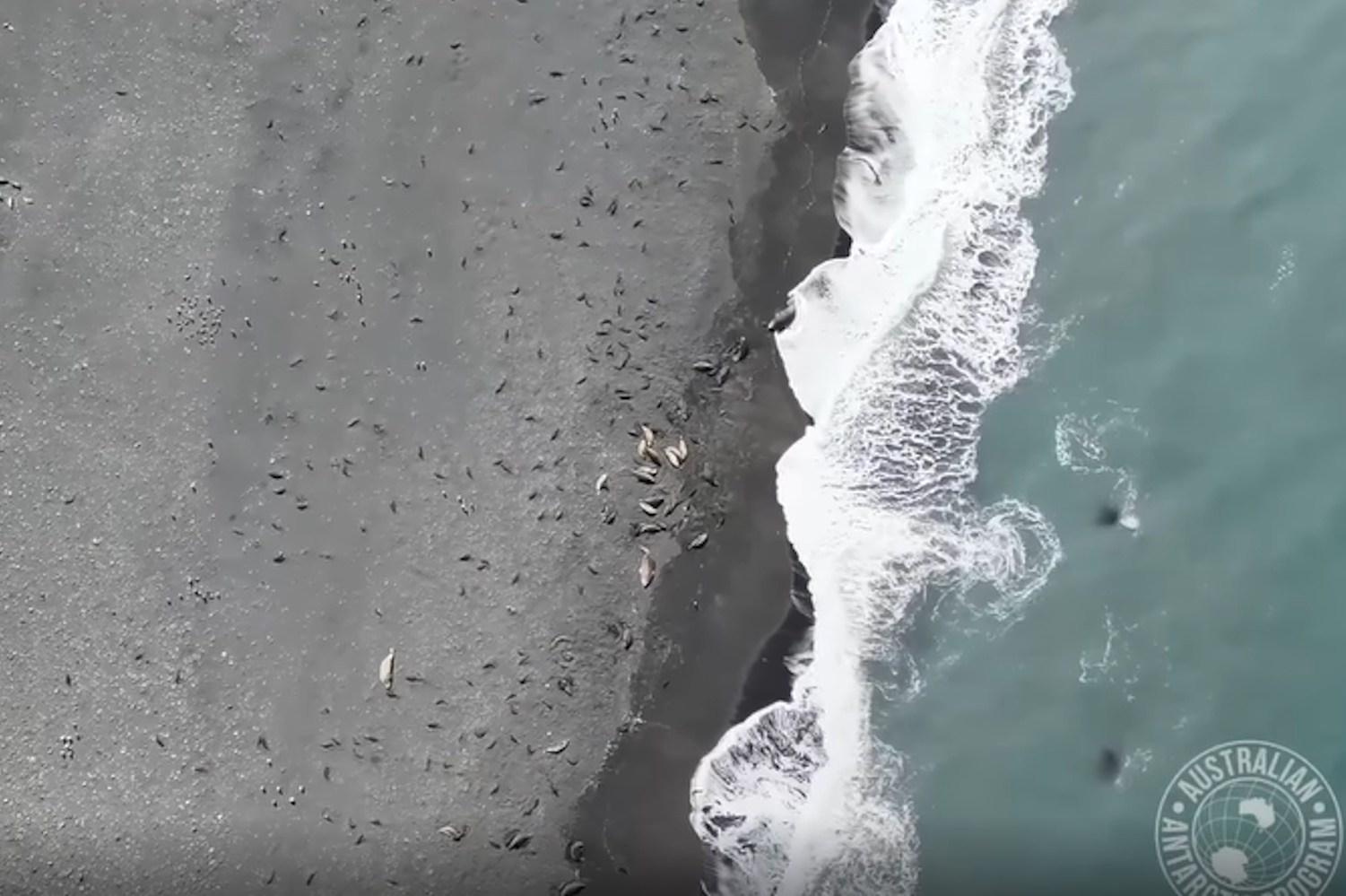
The feared avian flu is also spreading to remote areas of the planet: a research group led byAustralian Antarctic Programme documented a shocking discovery: the H5N1 virus, responsible for the feared avian flu, has also arrived in the Australian islands Heard And McDonaldkilling around 13 thousand elephant seal pups: a true massacre, which painfully affects an entire breeding community.
What is avian influenza
As reported by the Istituto Superiore di Sanità, avian influenza is anything but a new disease, in fact identified for the first time in Italy more than a century ago. The pathology affects birds, hence the name, and is caused by a type A influenza virus, which can be low or highly pathogenic.
Spread throughout the world, avian influenza is capable of infecting almost all bird species, although with very different manifestations, from the mildest ones to the highly pathogenic and contagious forms that generate acute epidemics. If caused by a highly pathogenic form, the disease appears suddenly, followed by rapid death in almost 100% of cases.
At least fifteen subtypes of influenza viruses are known to infect birds, and, depending on the type of protein combined with the virus (from N1 to N9), the virus acquires a different name (H5N1, H7N2, etc.). All highly pathogenic influenza epidemics have been caused by type A viruses of the H5 and H7 subtypes.
The possibility of transmission to humans exists and the fear that the virus could cause a pandemic like that of Covid has pushed the authorities to take a series of extraordinary prevention measures around the world, often culling entire farms.
What scientists have discovered now
The islands Heard And McDonald are an Australian external territory located in the Southern Ocean, approximately 4,000 km south-west of mainland Australia. Samples from nine vertebrate species were analyzed at the Australian Center for Disease Preparedness of Commonwealth Scientific and Industrial Research Organisationand six species tested positive for the viral strain that is spreading globally (Influenza A H5N1 clade 2.3.4.4b).
These include the southern elephant seal, king penguin, Gentoo penguin, Antarctic fur seal and South Georgian diving petrel, indicating spread to species other than birds.
And, unfortunately, the analysis of data collected with drones during two expeditions, in October 2025 and January 2026, revealed high mortality among southern elephant seal pups and between king penguins and Gentoo penguins, equal to 76% in the latest surveys, with peaks of 97% in a specific area. The numbers are truly scary: births have been estimated at around 17,000, and on Heard Island 13,000 of them have died.
Furthermore, in January 2026, widespread mortality was detected among elephant seal calves in all monitored breeding areas, with reports of mortality also on the island of McDonald (via drone reconnaissance). However, due to the remote location and protected area status, field sampling was not possible, so laboratory confirmation was not possible.
These observations of H5 avian influenza on Heard Island and McDonald Island represent the first detection in an external Australian territory – explains Julie McInnes, lead author of the study – and demonstrate the continued spread of the virus eastwards into the subantarctic area. Our results show a similar pattern to other sub-Antarctic islands, such as South Georgia, where elephant seals have been most affected
Data collected in January also revealed the deaths of several hundred adult king penguins on the island. Although this represented a low percentage of the population, the observed mortality was above normal levels.
No sign of unusual mortality was detected, however, during the censuses of the albatrosses or the two endemic species, the island cormorant Heard and the black-faced curlew (Thinocorus orbignyianus).
How the avian flu virus arrived in such remote areas (and how the study was conducted)
The data was collected on the island Heard in two short periods and it is not known how the virus may have spread or affected species since then. However, we know that the highest mortality of all species was initially concentrated in the south-eastern part of the island Heardbelieved to be the place where the virus first arrived.
Analysis of the genetic data also suggests that H5 avian influenza was likely introduced through the movement of wildlife from the French subantarctic islands Crozet1,800 km away, with an estimated arrival around August 2025.
Over the course of the two expeditions, scientists carried out 120 drone flights covering a total of over 1,600 km of distance traveled, as well as ground research over an area of 300 km, to study the spatial and temporal distribution of mortality among the different species present on Heard Island and the McDonald Islands.
Drones were essential in monitoring the coast of Heard Island and accurately quantifying the mortality of southern elephant seals in the breeding season – explains Jarrod Hodgson, co-author of the research – The long-range flights carried out by the RSV Nuyina allowed us to monitor inaccessible places such as reefs and offshore islands, to assess the status of populations of seabirds such as the black-browed albatross and the Heard Island cormorant, endemic species
The use of drone technology has also reduced the impact on animal populations.
These drone surveys identified king penguin carcasses scattered throughout their dense breeding colonies, which would not have been visible on foot without causing significant disturbance
The article is available on BioRxiv and evaluation in a journal is underway peer-reviewed. But the Program is continuing to monitor for signs of H5 avian influenza in the Australian Antarctic Territory and on theMacquarie Islandwhere however, at least so far, no suspected cases have been reported.
Sources: Australian Antarctic Program / BioRxiv
