
Those yellow dots on the peel are not seeds, they are the actual fruits of the plant. The red and juicy part that we call strawberry, and which we devour in whole baskets from May onwards, is actually the receptacle of the enlarged flower: botanically a “false fruit”, or aggregate fruit. This is confirmed by the works published in the Journal of Experimental Botany, according to which the fleshy part of the strawberry derives from the swelling of the floral receptacle, connected to the actual fruits, the achenes, located on its surface. This alone would be enough to ruin some certainties. But there are four more, and they concern how we choose and preserve them.
“The bigger they are, the better they are”
Size tells you nothing about flavor and a huge strawberry can be as watery and bland as a small one can be concentrated and sweet. Sweetness and aroma depend on the variety, the degree of ripeness reached on the plant and the time it was harvested, not on the centimeters. The large size, if anything, says something about the irrigation and the cultivar, not the taste.
“The reddest ones are always the best”
Not even the color is a guarantee, because each variety has its own shade: some strawberries remain light even when fully ripe, others turn to an intense red while remaining not very aromatic. Relying only on the eye leads one astray. The nose, in this case, is a more honest judge, because the scent of strawberry, the real one, which you smell when you bring the basket closer, says more than any chromatic nuance.
“They ripen in fruit bowls, like bananas”
In this case we find the most deep-rooted misunderstanding, with a precise explanation. The strawberry is a non-climacteric fruit, meaning it does not have the starch reserve or the production of ethylene that allow bananas, kiwis or avocados to continue ripening after harvesting. The Botanical Garden of the University of Bristol explains it bluntly: strawberries do not continue to ripen once picked, and for this reason they must be picked already perfectly ripe, otherwise the flavor will be inferior. Translated into the kitchen: the level of sweetness that the strawberry had when removed is what you will find on the plate. Leaving it on the table for days won’t improve it, it will only age it.
“They should be washed as soon as you get back from the supermarket”
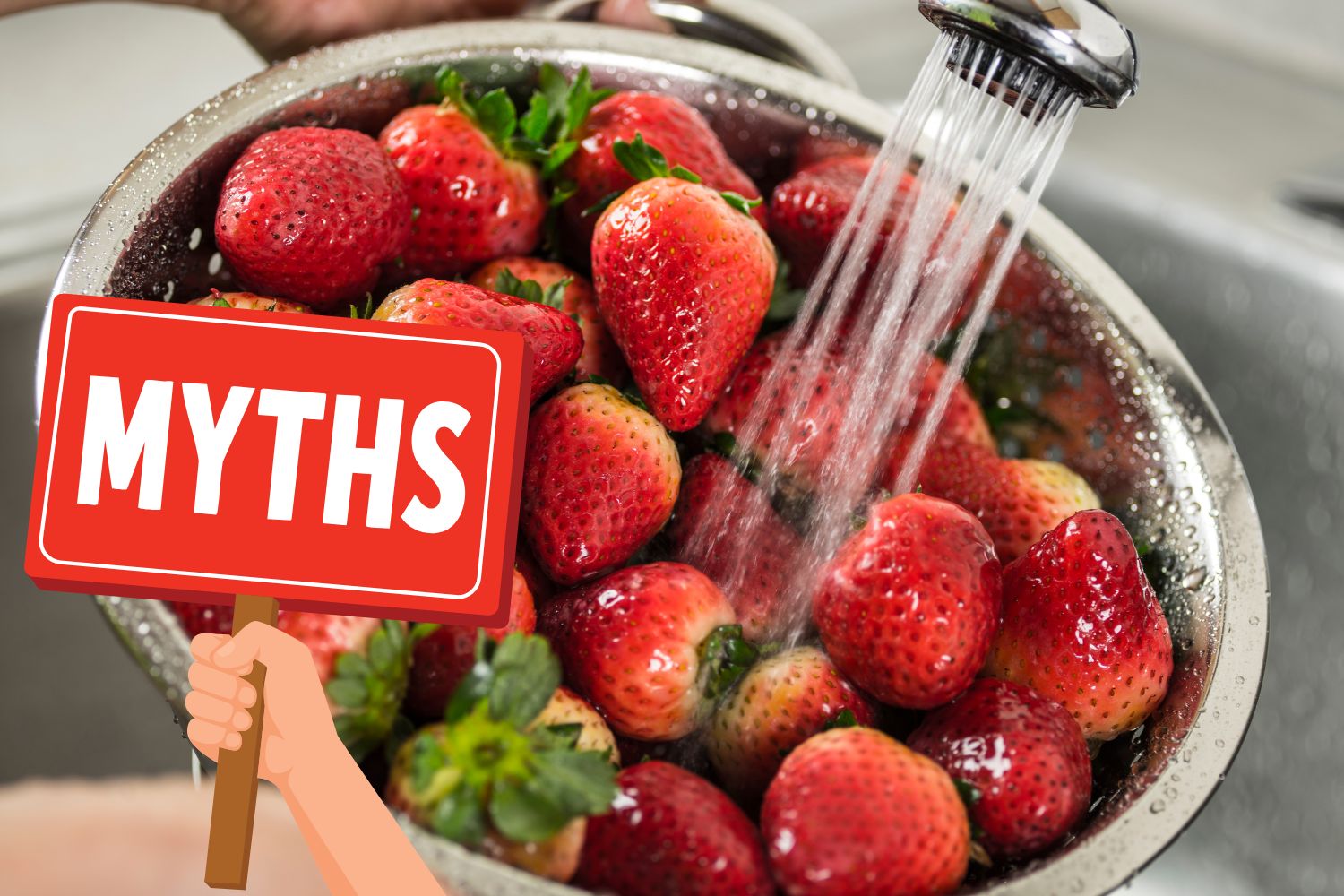
The instinct of the far-sighted housewife, here, works against it, since wetting the strawberries and then placing them in the fridge is the quickest way to find them moldy. The reason is the spongy structure: they absorb water and retain it, and humidity is the ideal breeding ground for mold. The University of Arkansas Extension, cited by Iowa State University, uses an effective image to explain the concept: strawberries are small sponges that absorb every drop they come into contact with, and once soaked they quickly become soft and moldy even if dried carefully. The rule, reiterated by practically all American agricultural universities, is only one: they should be washed just before eating them, under cold running water, never soaking and never with soap. And here a second automatism also occurs. Putting strawberries in the fridge does not slow down ripening, simply because strawberries do not ripen after harvesting: the cold serves to slow down the mold, not to make them “finish ripening”. They are best stored dry, in a ventilated container, in the coldest part of the refrigerator, and consumed within a few days. The Oklahoma State University Extension also reiterates the rule: fresh products should be washed just before use and not before storing them, because humidity favors the formation of mold and wet foods deteriorate more quickly. In short, the ritual of rinsing them all together as soon as you get back from shopping, drying them with love and putting them in the fridge ready for use, is exactly the sequence that will spoil them early. Next time it’s best to leave them alone, at least until it’s time to bring them to the table.
