
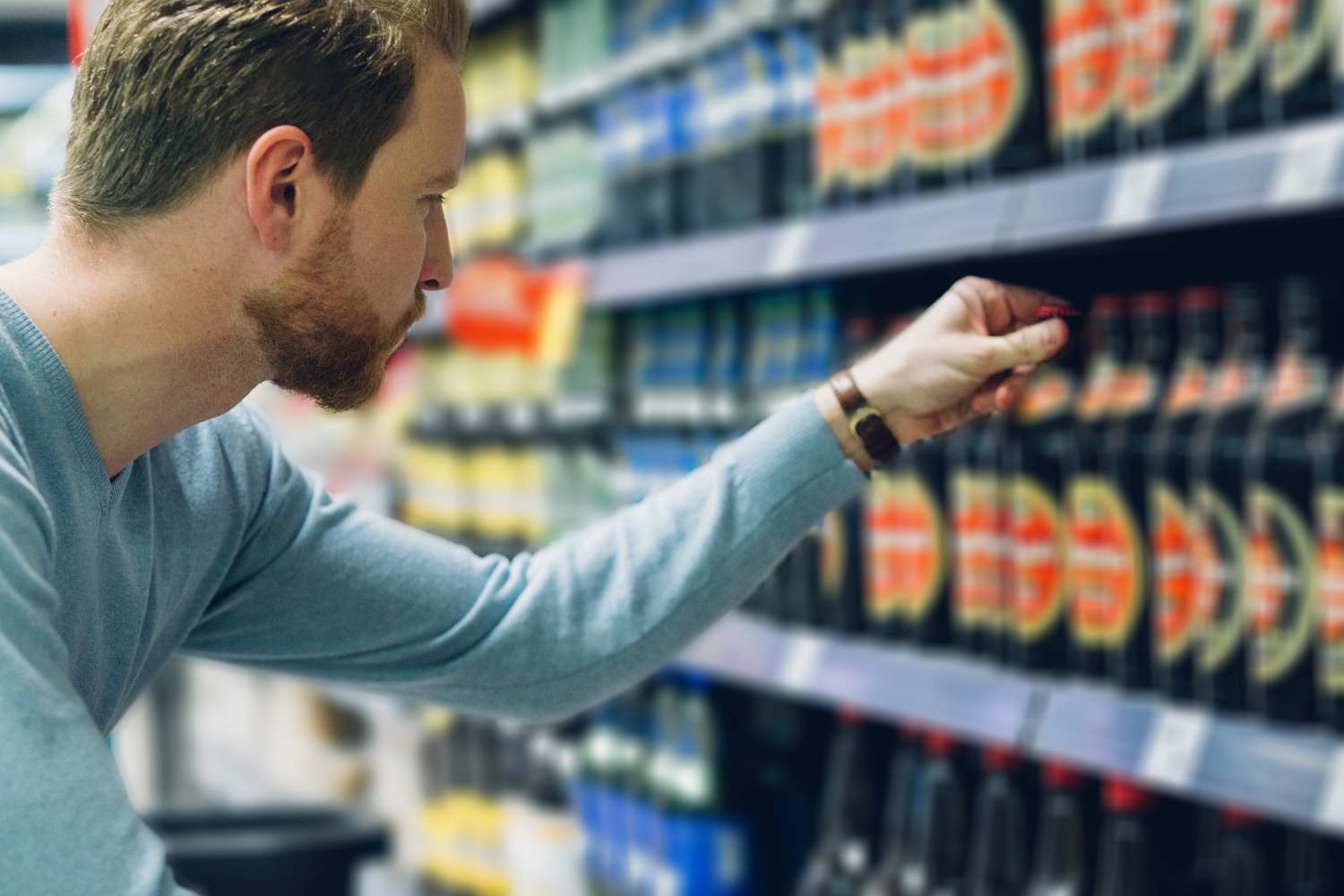
Beer is one of the oldest and most consumed drinks in the world, appreciated for its simplicity: it is produced from water, cereals, hops and yeast. But this “basic recipe”, codified centuries ago, is today intertwined with a much more complex agricultural and industrial supply chain, where phytosanitary treatments, environmental contamination and large-scale production processes can come into play.
Precisely to understand what really reaches our glasses, a new test by Salvagente analyzed 18 beers that are very popular in Italian large-scale retail trade. In detail, Forst, Moretti, Ceres, Peroni, Dreher, Heineken, Bud, Tuborg, Menabrea, Beck’s, Best Bräu (Eurospin), Nastro Azzurro, Raffo, Corona, Ichnusa, Messina, Poretti 4 Luppoli and Finkbräu (Lidl) were analysed.
These are very different brands in terms of origin, positioning and price range, but they have in common the fact that they are among the most frequent choices in Italian supermarkets and clubs. Precisely on these samples, the laboratory carried out analyzes in search of possible traces of two families of contaminants that are increasingly attracting attention: pesticides and PFAS.
And this time, the general picture that emerges is quite reassuring.
What the test found
Only minimal traces of pesticides were found in the beers analyzed, well below safety limits. In some samples, residues attributable to substances such as boscalid and spirotetramat were detected, but always in extremely small quantities.
These are therefore not alarming levels, but confirmation that the initial agricultural supply chain can still leave a “chemical signature” even in the finished products.
And what about PFAS? TFA (trifluoroacetic acid), one of their compounds, was found in all the beers analysed, albeit in very low quantities and much lower than the reference limits set for drinking water, which will come into force from 2027.
However, its widespread presence confirms a now well-known reality: TFA has become a practically ubiquitous environmental contaminant, difficult to avoid along the agricultural and industrial production chain.
The taste
Alongside laboratory analyses, the test also took into consideration an aspect that is often decisive for consumers: taste. To do this, the beers were evaluated by a group of specialized tasters, who tasted them anonymously to avoid any conditioning.
What emerges is a rather clear picture: industrial beers end up looking very similar to each other. Large-scale production, designed to guarantee product consistency and recognisability, tends to reduce the most marked differences between one brand and another. The result is a certain sensorial uniformity, in which the more complex aromatic notes are often attenuated in favor of simpler and more immediate profiles.
In this way you obtain a beer that is easily drinkable and always consistent over time, but you lose some of that richness of taste that is more often found in artisanal productions, where the raw materials and production choices leave more room for nuances and character.
The three beers with the worst results
Among the 18 products analysed, some references were positioned at the bottom of the ranking due to a combination of factors: presence of residues, higher than average TFA levels and unconvincing organoleptic judgements.
Here are the 3 worst products in the test:
In the end, the test on widely consumed beers gives us a rather clear image: from the point of view of chemical safety, no serious critical issues emerge, with very low pesticide residues and low TFA levels. The real difference today seems to be played out elsewhere. The brewing industry is increasingly focusing on uniform products, while aromatic variety, that is, what makes a beer truly recognisable, is losing ground.
And it is precisely here that artisanal productions, when accessible, can represent a certainly more interesting alternative.
