
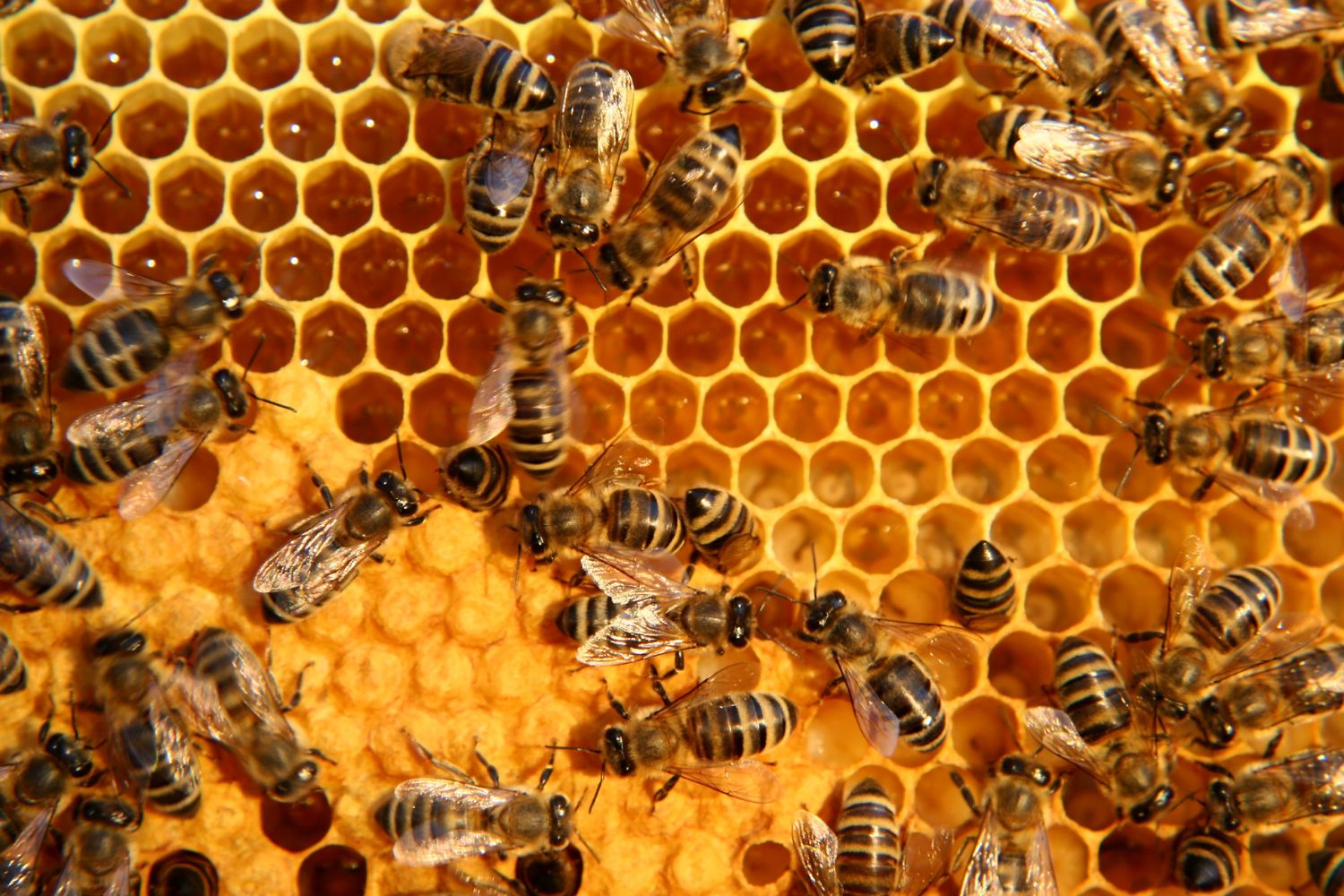
Among many genetically identical larvae, few become queens: among bees, the metamorphosis, which leads to different adults, is guided by some specific sequences of DNA enhancers, a sort of “molecular switches”. A research group led byHiroshima University (Japan) identified which of them “divide” queens and workers.
That extraordinary biological process called metamorphosis
Caterpillars transform into butterflies, tadpoles into frogs, larvae become bees, beetles, wasps and ants: metamorphosis is the extraordinary biological process through which some species of animals, including insects, physically transform into adults through sequential and very different stages of development.
In complete metamorphosis, approximately 75-80% of insect species go through four different life cycles, namely egg, larva, pupa and adult, before transforming into mature adults. From a genetic perspective, this process is truly incredible, as transforming insects and animals have the same genome at every stage of development, yet they often appear and behave very differently in the larval stage compared to the adult stage.
Researchers are beginning to understand the genetic mechanisms that regulate these complete transitions between developmental stages in metamorphosing species. Furthermore, several studies are revealing how insects such as bees, ants, wasps and termites can produce distinct social castes – queens and workers – from genetically identical larvae, by modifying gene regulation.
What scientists have now discovered and how they conducted the research
The researchers have now used CAGE technology (Capp-Analysis of Gene Expression) to evaluate the activity of sequences enhancers of the bee, identified through computational predictions (at the PC), which could increase the expression of nearby genes during the metamorphosis of worker bees.
The sequences enhancers they are in fact regions of DNA that function as “molecular switches”, helping to regulate the activation and “strength” of certain genes. And this study has now provided the first direct evidence of this activity during the metamorphosis of worker bees, identifying which sequences truly determine the “role in society” assigned to the larvae.
Our study aimed to identify which enhancers were actually active during the metamorphosis of worker bees (Apis mellifera) – explains Hidemasa Bono, who led the work – and which transcription factors were used to regulate key developmental genes
©Insects
In fact, a 2015 study had predicted the binding sites of transcription factors through computational calculations but based exclusively on the genomic sequence, and so far there was a lack of direct evidence of the activation of enhancers in the different developmental phases of worker bees.
Specifically, the team sequenced the first mRNA sequences of worker bees and mapped them onto the bee genome to identify transcription factor binding sites (TFBSs), sites in the genome where gene expression proteins bind to DNA resulting in the expression of some specific genes.
By identifying such sites, the team found the location of 842 potential enhancer sequences capable of binding activator proteins and increasing the likelihood of gene expression.
It is also important to highlight that this study identified enhancer sequences based on enhancer RNA from real worker bees, rather than simply predicting them from the genomic sequence alone.
Variations in gene expression levels can be easily identified via transcriptomic analysis – explains Kouhei Toga, first author of the research – However, the regulatory transcription factors driving these variations remain largely unknown, as the majority of TFBS within enhancers are inferred from sequence-based conservation rather than direct observation of activity. Providing experimental evidence of active enhancers is therefore valuable for understanding the evolution of the sophisticated sociality observed in the honey bee Apis mellifera
The researchers classified the 17,349 transcription start sites (TSSs) and 842 potential enhancers into five categories based on their overall expression patterns: These clusters were regulated by transcription factors that fell into these categories, and the team further narrowed down the regulatory relationships in worker bees to just 15 specific transcription factor-enhancer-target gene relationships that control metamorphosis.
What is missing from this research
Although the application of CAGE technology confirmed the presence of sequences enhancers of workers in honey bees Apis melliferathe team still needs to validate the findings using different assays to build a more complete picture of the gene regulatory networks that control worker development. Ultimately, the team would like to use this knowledge to address the challenges facing pollinators around the world.
Honey bees are the main pollinators of a wide range of crops, including strawberries, and play a fundamental role in maintaining biodiversity – concludes Bono – A deeper understanding of the molecular mechanisms that regulate the development of worker bees therefore has far-reaching implications, not only for beekeeping, but also for global food security and ecosystem conservation
This research was funded by Center of Innovation for Bio-Digital Transformation (BioDX), an open innovation platform for industry-university co-creation (COI-NEXT) of the JST (JPMJPF2010), and the RIKEN-Hiroshima University joint research program for the Science and Technology Hub.
The work was published on Insects.
Sources: Hiroshima University / Insects
