
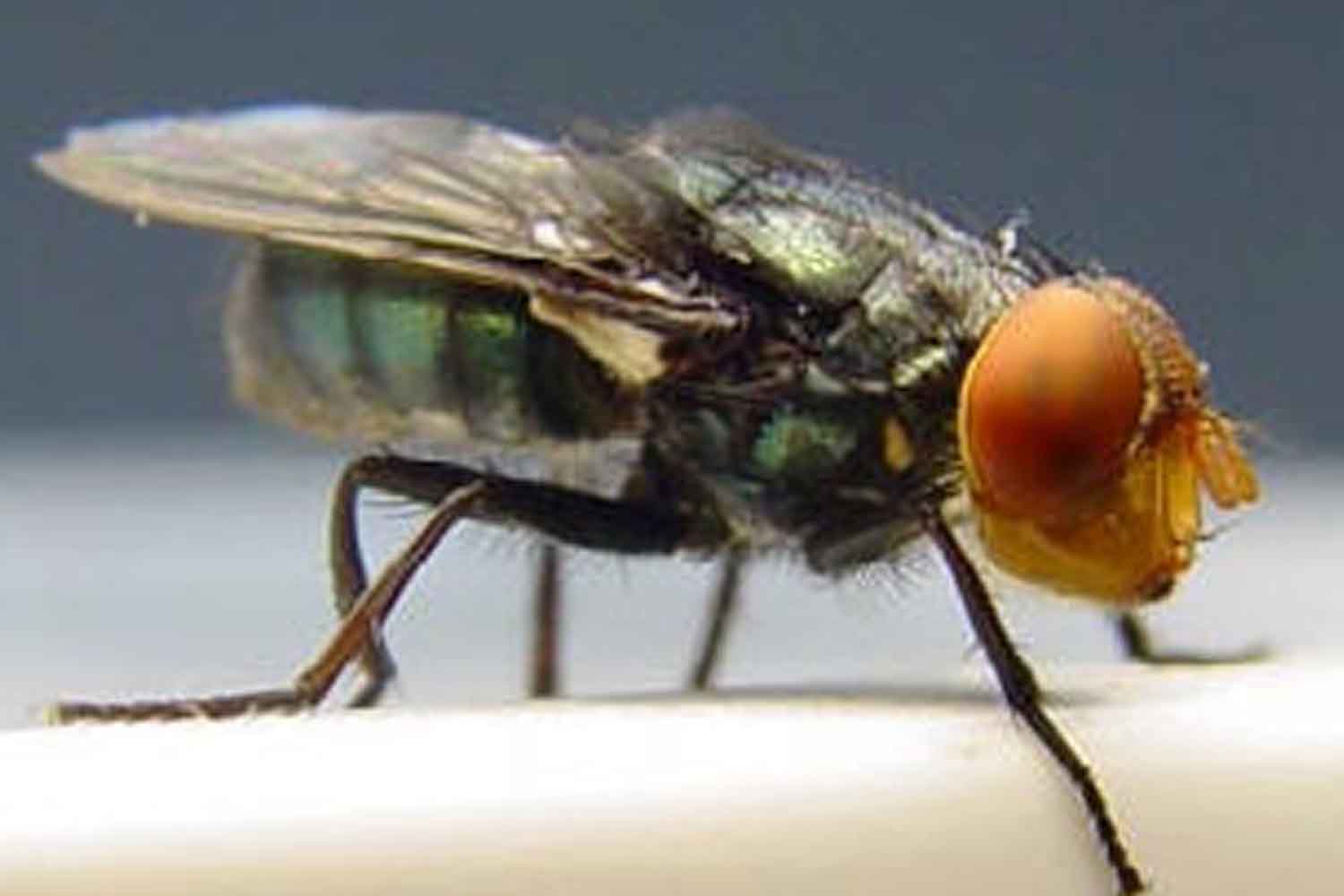
A tiny wound, even the mark left by a tick, can be enough. That’s where the problem begins: from a cut, from a freshly healed navel in a calf, from an irritated ear, from an exposed mucosa. The killer fly, a popular name much more theatrical than its scientific name, Cochliomyia hominivoraxlook for that very gap. The female is attracted by the smell of wounds or body openings and can lay hundreds of eggs at a time; the CDC speaks of 200-300 eggs in a single deposition and up to 3 thousand over the life of the insect. When they hatch, the larvae enter living tissue and begin to feed on it.
In the United States, the reappearance of the New World screwworm triggered a rapid response between Texas and New Mexico. The first case of the current U.S. outbreak was confirmed on June 3, 2026, in a three-week-old calf in Zavala County, South Texas. A few days later the monitoring expanded and the reports also involved pets, including a dog in New Mexico. The CDC, in the June 30 update, indicated 16 animal cases acquired in the United States as of June 26; the situation, however, is updated through an official dashboard because the numbers change with field surveillance. The USDA has officially confirmed the presence of the parasite and activated response measures.
The name is impressive, the cycle even more so
“Screwworm” literally means “screw worm”. The reference comes from the way in which the larvae penetrate the flesh: they advance like a screw in the wood, attaching themselves to the tissues with sharp mouth hooks. The image is unpleasant, but it clearly differentiates it from the larvae that feed on decaying material. Here the target is the living tissue of warm-blooded animals: cattle, horses, sheep, goats, wildlife, dogs, cats and, more rarely, humans. APHIS, the US animal and plant health service, describes it as one of the most dangerous parasites for livestock.
The infestation, called New World screwworm myiasis, can get worse quickly. The larvae make the wound wider and deeper, the wound may emit liquid, blood and a decaying odor. That bad smell becomes a call for other females ready to lay more eggs, transforming a wound into a kind of biological magnet. On farms, this dynamic is more frightening than a single case, because a neglected animal can become the starting point for a chain of new infestations.
Veterinary authorities ask pet owners to take a good look at wounds, newborns’ navels, noses, ears and genitals. Signs to take seriously are lesions that enlarge or drain, the presence of larvae or eggs, pungent odor, pain, irritation, constant shaking of the head, isolation, depression or loss of appetite. When in doubt, the delivery is simple: vet, immediately. Looking for the adult fly is of little use, also because in the affected areas sterile flies are released which are identical to the wild ones and are harmless for the purposes of infestation. Practical updates for breeders and animal owners are also collected on the USDA page dedicated to reporting suspected cases.
The return of a parasite that the USA had already defeated
The New World screw fly was eliminated from the United States in 1966 thanks to the sterile insect technique, an old and ingenious strategy: sterile males are bred, released into the environment, mated with wild females and the population collapses because the eggs remain without a future. The same technique also allowed the 2016-2017 Florida Keys outbreak to be extinguished.
The problem has once again moved from south to north. Since 2023, Panama and Costa Rica have reported new outbreaks, then the parasite spread to other Central American countries and Mexico. The CDC speaks of over 185 thousand animal cases and 2,193 human cases between Central America and Mexico in the context of the current re-emergence. The United States and Mexico have inaugurated a plant costing over 50 million dollars in Chiapas to produce up to 100 million sterile flies a week, in an attempt to crush the wild population before the contagion line rises further.
The agricultural frontier weighs heavily on this story. The United States has closed southern ports to live livestock trade and maintained restrictions on animals from areas considered at risk. The issue mainly concerns animal health, livestock farming, wildlife and economic impact. Commercial food remains safe: USDA reiterates that New World screwworm affects live and injured animals, with federal controls on the meat, poultry and egg supply chain. The page on the current status of the outbreak is updated to follow the evolution of the response.
The risk to humans remains low, surveillance remains high
The transition to humans exists, even if in the United States the risk for the population is defined as very low. At the moment the CDC reports no human cases acquired on US territory in the current outbreak; in 2025 a case was confirmed in a person who returned to the US after a trip to El Salvador. The advice in the affected areas is practical: cover wounds, use registered repellents, protect skin and clothes, sleep in environments shielded by mosquito nets when staying in exposed areas.
The precedents explain the caution. In Costa Rica, in June 2024, the Ministry of Health confirmed the death of a 19-year-old girl with chronic pathologies and diagnosis of gusano barrenador myiasis, the Spanish name for the parasite. At that time the country had already declared an animal health emergency and was also recording cases in humans.
For dogs and cats there is also a therapeutic novelty: the FDA has authorized the emergency use of nitenpyram to treat New World screwworm infestations in pets at least four weeks old and weighing a minimum of two pounds, just under a kilo. The same agency, however, clarifies that the drug acts quickly on the larvae, without protecting against new infestations, and that after treatment the physical removal of the residual larvae by a veterinarian may be necessary. Deep cleaning, wound management and infection prevention remain part of the work.
You might also be interested in:
