
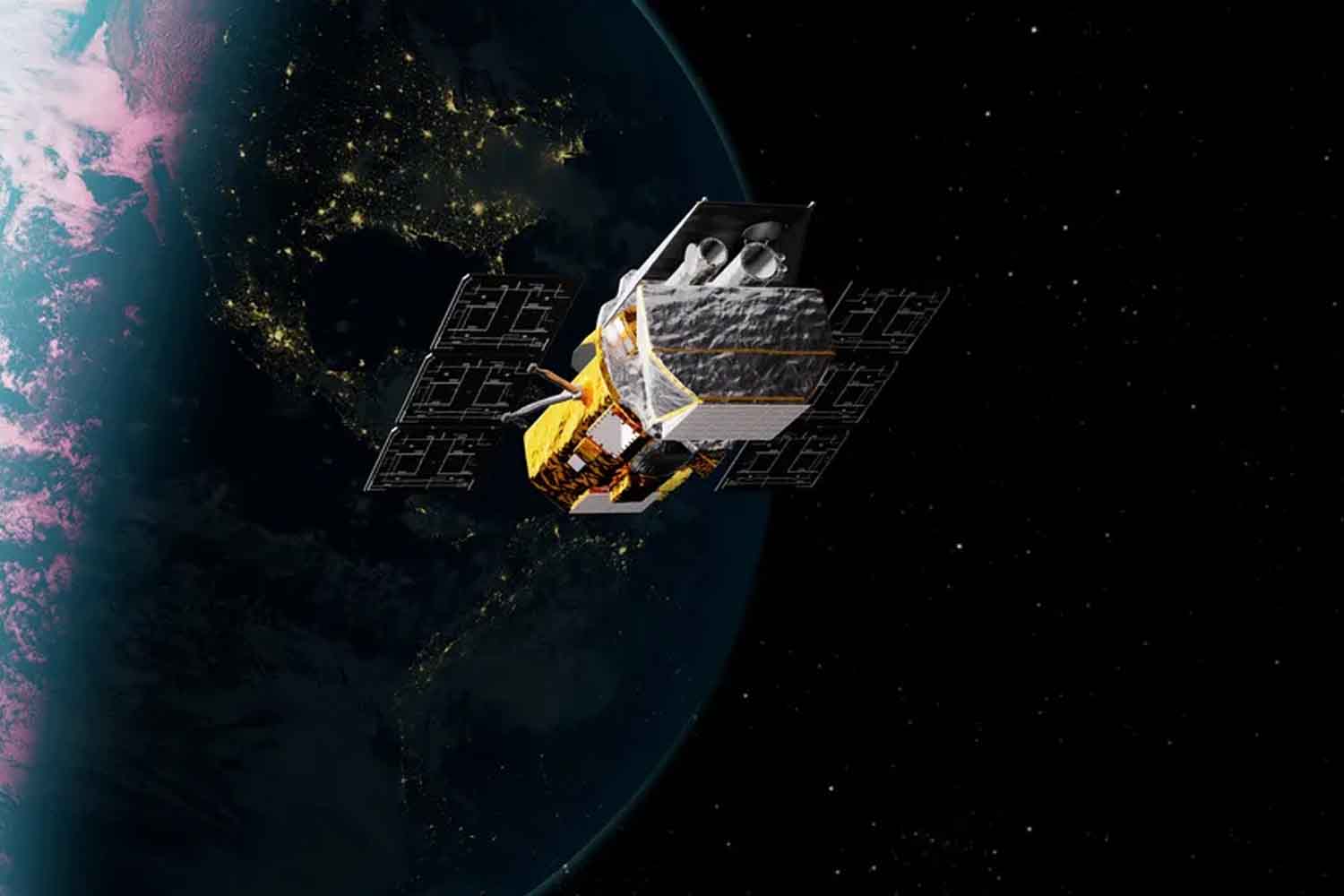
At the moment when everything was supposed to start, the rocket remained where it was. Under the belly of the plane, attached to the old Northrop Grumman L-1011 Stargazer, with the robotic vehicle inside called LINK and a rather delicate mission: to reach the Swift telescope NASA and push it higher, away from an atmospheric re-entry expected this year. The takeoff from Kwajalein Atoll in the Marshall Islands had gone ahead. Then, at the scheduled release altitude, something in the launch vehicle blocked the sequence. The Pegasus XL, instead of being released in flight, remained attached to the plane. The mission Swift Boost has been postponed.
NASA explained that the problem occurred after the L-1011 carrying the Pegasus XL. An anomaly in the launch vehicle temporarily prevented the teams from deploying the rocket, and the new date of the attempt will be set only after the analysis of the data collected during the test on 2 July 2026. This time the weather had little to do with it: in the two previous days, 30 June and 1 July, the launch had already been postponed due to unfavorable conditions; the third stop comes from the machine that was supposed to take LINK into orbit.
The Swift telescope is descending too fast
Swift is one of those space telescopes that work without making too much media noise, then you realize that it has been holding together an important part of contemporary astrophysics for twenty years. Launched on November 20, 2004, the Neil Gehrels Swift Observatory observe gamma-ray bursts, violent cosmic explosions and other transient phenomena using three telescopes capable of collecting data in visible, ultraviolet, X-ray and gamma light. In practice, when something short, powerful and difficult to chase happens in the Universe, Swift is one of the tools that can quickly turn around and alert other observers.
The problem is very terrestrial, in the most physical sense possible: the atmosphere. All low-orbiting satellites experience some atmospheric drag. When the Sun is more active, Earth’s upper atmosphere expands slightly and that friction increases. In Swift’s case, intense solar activity in recent years has accelerated its altitude loss more than expected. The telescope doesn’t have a propulsion system designed to correct the orbit on its own, so the descent became a race against time. NASA had already modified operations and stopped scientific observations to slow orbital decay and keep Swift above the critical altitude of about 300 kilometerswhere the upside mission has the best chance of succeeding.
This is where it comes into play LINKthe small robotic vehicle built by Katalyst Space Technologies. The plan is ambitious: launch LINK with a Pegasus XL, fly it near Swift, study possible grapple points, dock the telescope with robotic arms, and then slowly push it to a higher orbit over the course of several months. NASA describes the process as prudent and gradual: after the launch there would be weeks of checks, then the approach, the telescope images, the evaluation from Earth and only then the actual take-off.
A space rescue hanging from an old rocket
The launch scene, alone, seems to have come out of an aerospace archive. The Pegasus XL does not start from a traditional ramp: it is taken to altitude by a plane, released around 40,000 feetjust over 12 kilometersand only then turns on the engines to ascend to orbit. This solution was also chosen because Swift’s orbit is complicated to reach from many classic launch bases, and there is little time available.
Inside the rocket is LINK, a kind of robotic “rescuer” sent toward a telescope that wasn’t designed to be grabbed. This makes the mission very different from normal orbital maintenance. Swift has no comfortable handles, docking ports or details built for a close encounter. LINK will therefore have to approach carefully, use sensors and robotic arms, attach the structure without damaging the instruments and then begin a slow push. If all goes well, Swift could return close to its original share, around 600 kilometersand gain more years of observations.
The stakes go beyond this telescope. The Swift Boost mission is also a dress rehearsal for a future in which satellites and space observatories could be repaired, resurrected, refueled or moved more often, instead of being marooned in atmospheric reentry when the orbit begins to fail. NASA awarded Katalyst the contract in September 2025, leaving less than a year to design, build, test and launch the vehicle. A tiny time, by space standards.
The postponement of July 2 weighs heavily for this very reason. Every day counts, because Swift continues to lose share and the useful window is not infinite. At the same time, a launch held before release is still a launch stopped in time: better to bring the plane, rocket and cargo back to the ground than to force a delicate sequence with an anomaly already visible. The new date will come after examining the data, when the teams understand what prevented the Pegasus XL from separating from the aircraft.
Swift, meanwhile, remains up there. Lower than it should be, still operational as a mission, still valuable enough to justify a never-trivial maneuver. A telescope to be saved, a rocket left hanging, a robot waiting to do its job. In space, sometimes, even the rescue must first be able to leave.
