
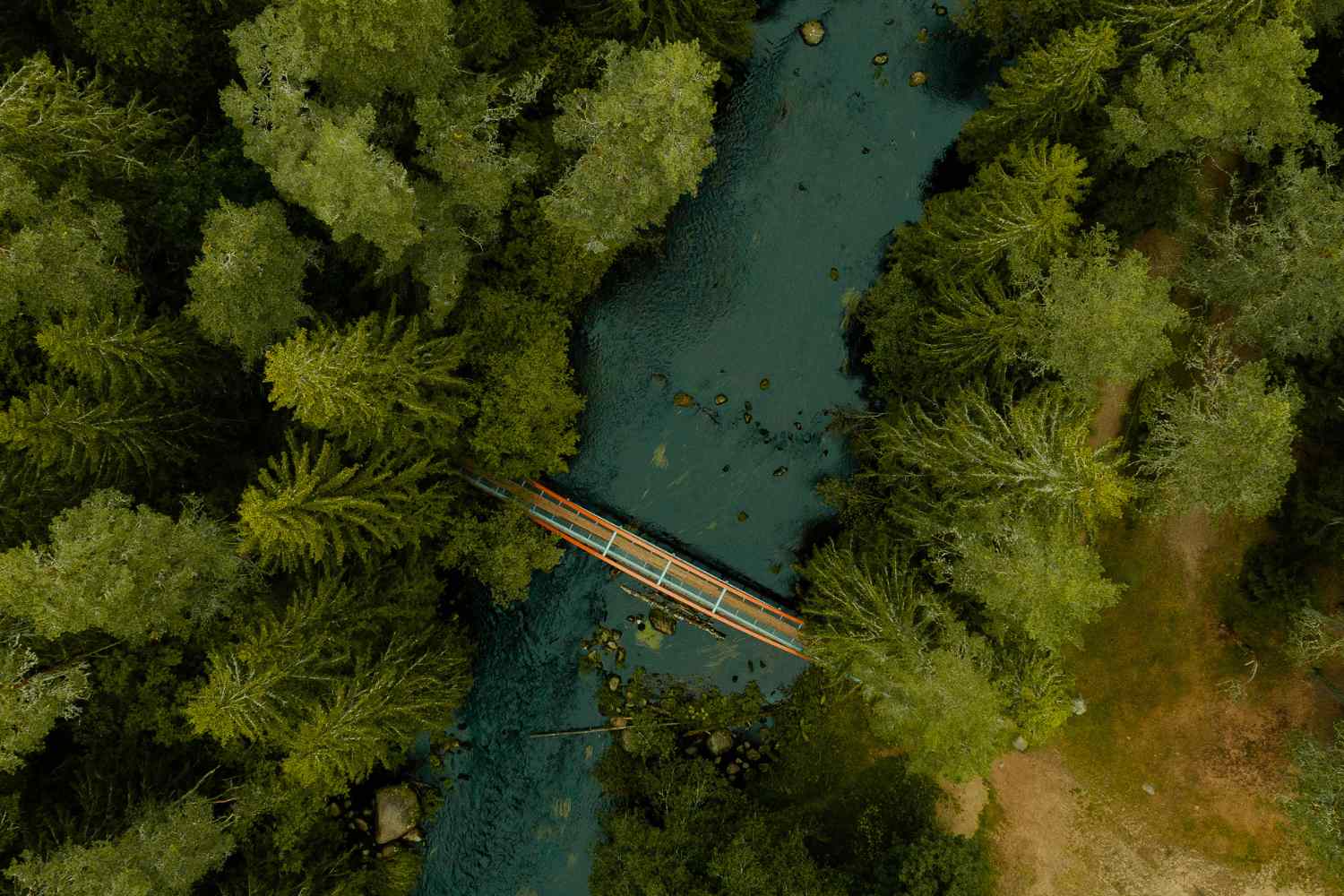
In Estonia, summer is not measured in degrees, but in hours of light. The sun sets with difficulty and the nights barely get longer, giving days that seem to never end: it is the so-called “fifth season”, a natural phenomenon that changes the way of experiencing free time, lengthening walks in the woods and transforming every evening into an opportunity to be outdoors. A detail that alone would be enough to explain why this small Baltic country is becoming an increasingly interesting destination for those looking for slow tourism, immersed in nature and away from large flows.
It is no coincidence that Tallinn was the European Green Capital in 2023: a recognition that speaks of a country that has made sustainability a concrete priority, between urban green spaces, clean mobility and a culture of digitalisation that reduces waste and unnecessary travel (here, it is said jokingly, you can do everything online except get married and divorce). But the true green heart of Estonia is found outside the capital, in its numbers: 51% of the territory is covered by woods, to which are added lakes, waterways and characteristic peat bogs, which in summer offer unique shades of colour.
The summer musical calendar
It is in this scenario that the country’s summer musical calendar moves, and the festivals themselves become a perfect excuse to explore places that would otherwise remain off the classic tourist routes. In Viljandi, from 23 to 26 July, the country’s most beloved popular music festival takes place between the castle park and the historic center: a context that invites you to explore on foot, among ruins and nature, even before dancing. On the island of Saaremaa, from 16 to 19 July, the immersive event I Land Sound combines music, art and landscape with the slow pace typical of island life, while the Saaremaa Opera Days bring opera into a rare and evocative natural setting.
Even more secluded is the experience of Hiiumaa, the second largest island in Estonia, where the small Sõru Jazz festival brings international musicians in a cozy maritime context, far from mass tourism. A similar atmosphere can be felt in Muhu, with the Juu Jääb festival, designed for those who want to discover less traveled territories by letting themselves be guided by a different, more intimate rhythm.
Even the most international events, such as John Legend’s concert in Tartu on 8 July or Moby’s at the Tartu Song Festival Grounds on 6 August, are part of a country that does not need large infrastructures to host events of global appeal: it allows them to coexist with its natural identity, without distorting it.
The result is a summer that can be experienced by moving from one city to another – from Tallinn to Tartu, from the islands to the coast – following the music but remaining, in fact, always immersed in nature. A different way of travelling, in which the cultural heritage is not closed in a museum but lives in the parks, in the woods and along the coasts, and in which the true luxury remains the simplest one: time, dilated by a light that in Estonia, in the summer, does not really know the sunset.
For more information: www.visitestonia.
