
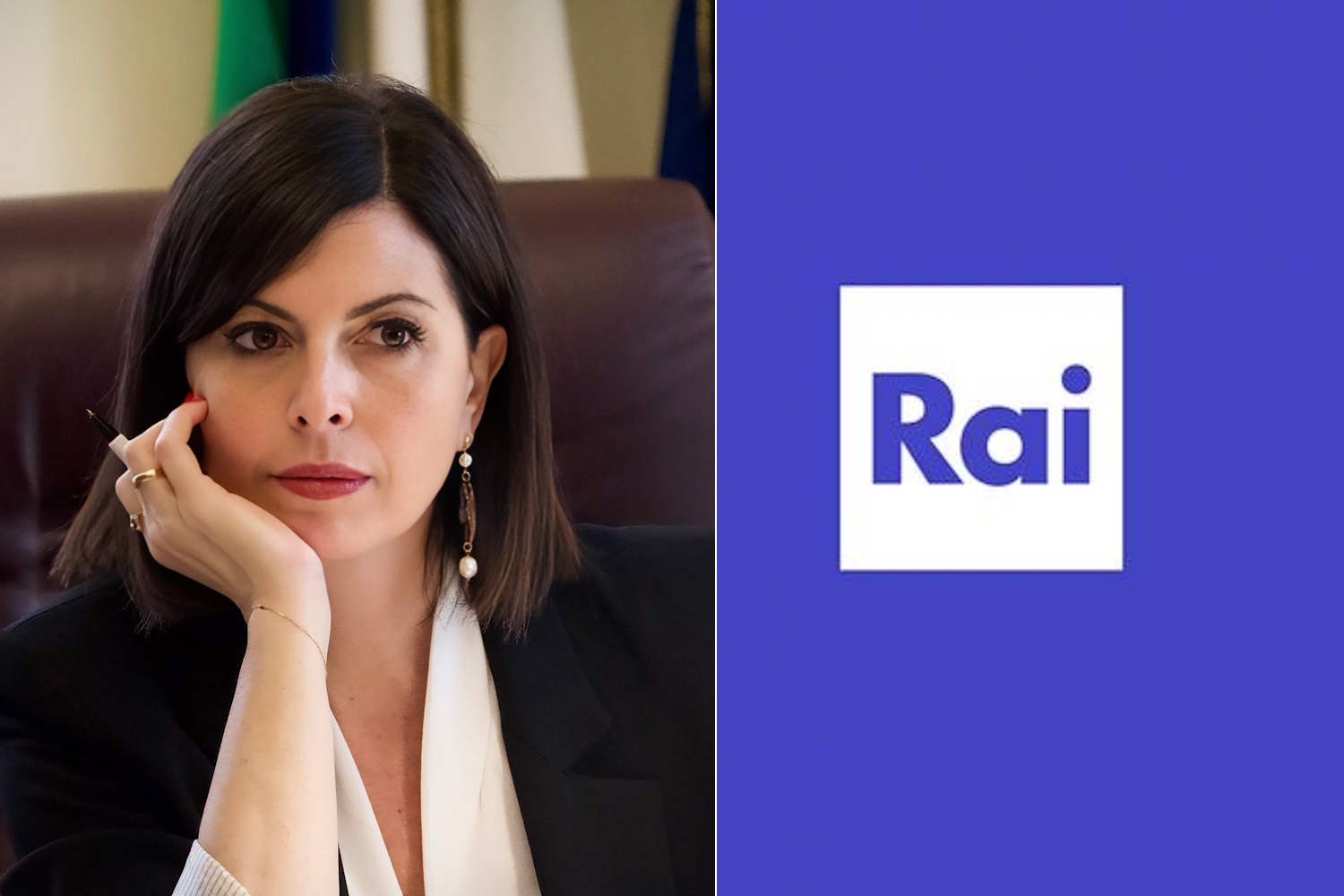
The crisis that has taken place in the Rai Supervisory Commission is not just yet another clash between the majority and the opposition. The collective resignation of the 16 members of the opposition represents a political and institutional fact of extreme importance, because it concerns one of the bodies called upon to guarantee the independence and pluralism of the public radio and television service.
All the opposition commissioners left office, including the president of the Commission, Barbara Floridia, a member of the 5 Star Movement, and the vice-president Maria Elena Boschi.
A choice that (finally) comes after almost two years of paralysis of the work and which, according to those who have resigned, would be the result of a real political block.
What is the Rai Supervisory Commission and why does it matter
The Parliamentary Commission for the general direction and supervision of radio and television services is a bicameral body made up of deputies and senators. Its task is to ensure that Rai operates in compliance with the principles of impartiality, independence and pluralism of information and – in a historical moment in which the role of public media is increasingly central in the formation of public opinion – the full operation of the Commission would be a fundamental democratic guarantee. In fact, it is not a purely formal body: among its functions there is also that of expressing its opinion on the appointment of the president of Rai.
The clash over the appointment of Simona Agnes
The origin of the impasse dates back to September 2024, when the Minister of Economy Giancarlo Giorgetti indicated Simona Agnes as president of Rai.
To make the appointment effective, the favorable vote of two thirds of the Supervisory Commission is required, a high threshold designed precisely to encourage a transversal agreement between the majority and the opposition. The minority parties, however, contested the method with which Agnes had been proposed, believing that the choice had been imposed without any real parliamentary discussion.
Since then the situation has progressively deteriorated. According to the opposition, the majority chose not to participate in the Commission’s sessions to avoid a formal rejection of the candidacy. The result was a stalemate that froze not only the appointment, but also the entire activity of the supervisory body.
In communicating its decision, Floridia spoke of a “systematic boycott of the supervisory commission by the majority“, underlining how, one year before the next electoral deadlines, the public service would instead need a fully operational Commission.
It goes without saying, in fact, that when a body responsible for monitoring information pluralism stops functioning for months, or even years, an institutional vacuum is created which weakens the mechanisms of democratic control. In fact, Rai remains the main public radio and television service in the country and its internal balance directly concerns citizens’ right to pluralist and independent information.
A precedent that dates back to 2008
Collective resignations are not entirely unprecedented in the history of Rai Supervision. A similar case occurred in 2008, when Senator Riccardo Villari was elected president of the Commission, despite the opposition having indicated Leoluca Orlando as the candidate. At the time, the center-left interpreted that choice as an attempt by the majority to strengthen its control over the Commission. After months of tension, most of the members resigned en bloc, making it impossible for the organ to function. The presidents of the Chambers therefore decided to dissolve the Commission and reconstitute it.
Now, the Commission regulation regulates the replacement of individual resigning members, but does not explicitly contemplate the case of collective abandonment by an entire political group. Precisely for this reason the current situation opens up an unprecedented and complex scenario from an institutional point of view.
